Cameron Park is two miles from our shop in Brownsville, which matters more than it sounds like it should. A short drive means we're not padding a service call with an hour of windshield time, and it means a maintenance visit here doesn't get scheduled around a longer route the way a job out past might. We don't have a posted price to quote you here - what a tune-up runs depends on what your door needs once we're looking at the springs, rollers, and opener, not on the mileage to get there. What we can tell you is that the short drive keeps that part of the bill out of the conversation.
Cameron Park is a small piece of the area we cover - about 1,588 households here, against roughly 19,980 across the whole service territory. That's worth knowing because it's part of why we can run out for a single maintenance call instead of needing to bundle it with other work nearby.
Getting It Booked In
Because Cameron Park sits right at the edge of Brownsville, getting a maintenance appointment here doesn't require much lead time on our end - it's not a trip we have to plan a whole day around. That doesn't mean we're a branch office in the neighborhood; we still run out of Brownsville, and every job here starts as a scheduled visit, not a walk-in.
What we ask for up front is simple: the age of the door if you know it, whether the opener has ever been serviced, and whether anything is currently making noise or catching. Median household income in Cameron Park runs around $37,140, noticeably below the wider service area's $55,387 median - we mention that because it's part of why a lot of homeowners here ask us to prioritize maintenance over full replacement when a door still has life in it. That's a reasonable ask, and it's usually the right call on a door that's just neglected, not failing.
Can You Do This Yourself
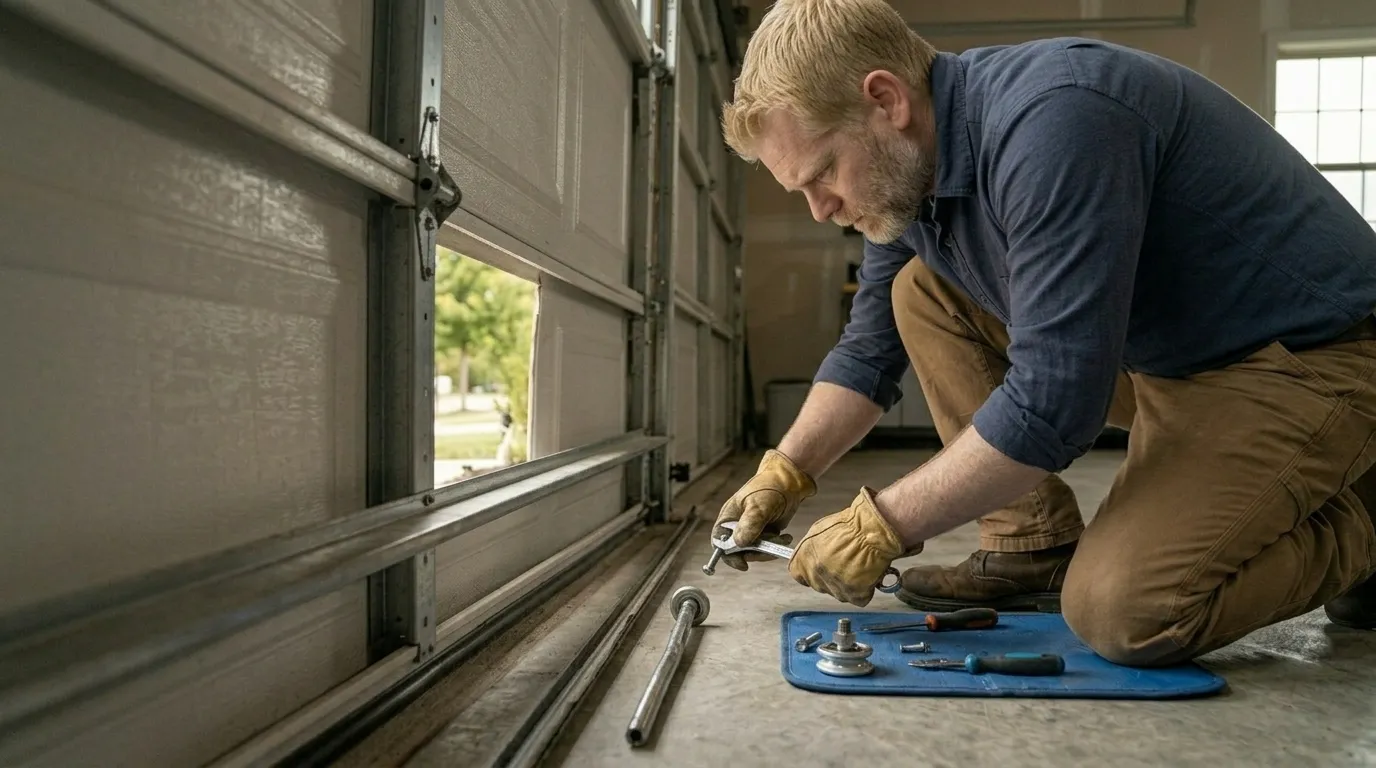
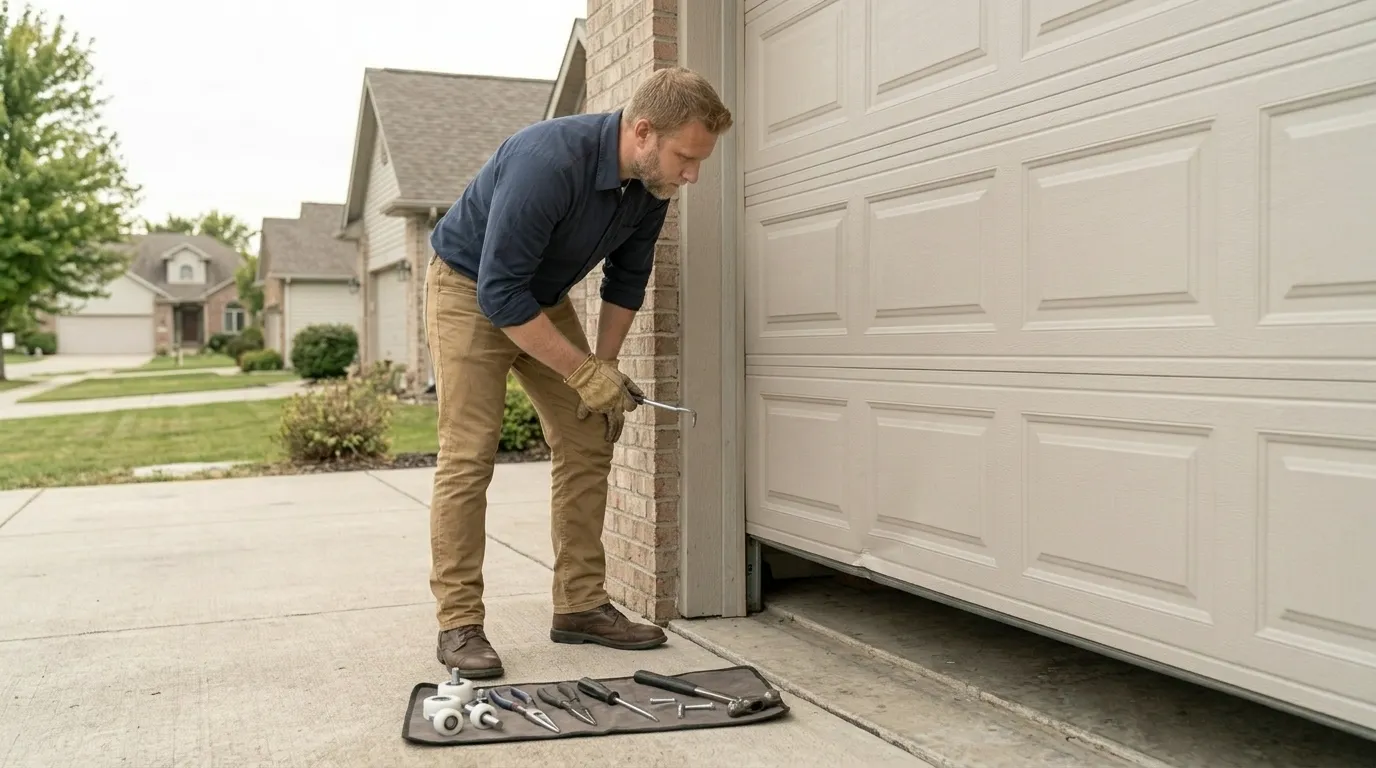
Some of it, yes. You can vacuum the tracks, wipe down the rollers, and check that the door doesn't drift when you disconnect the opener and lift it by hand halfway - if it won't hold there on its own, the springs are losing tension and that's not a DIY fix. You can also listen for the specific sound of a worn roller versus a loose hinge bolt, and tighten the bolt yourself with a socket wrench.
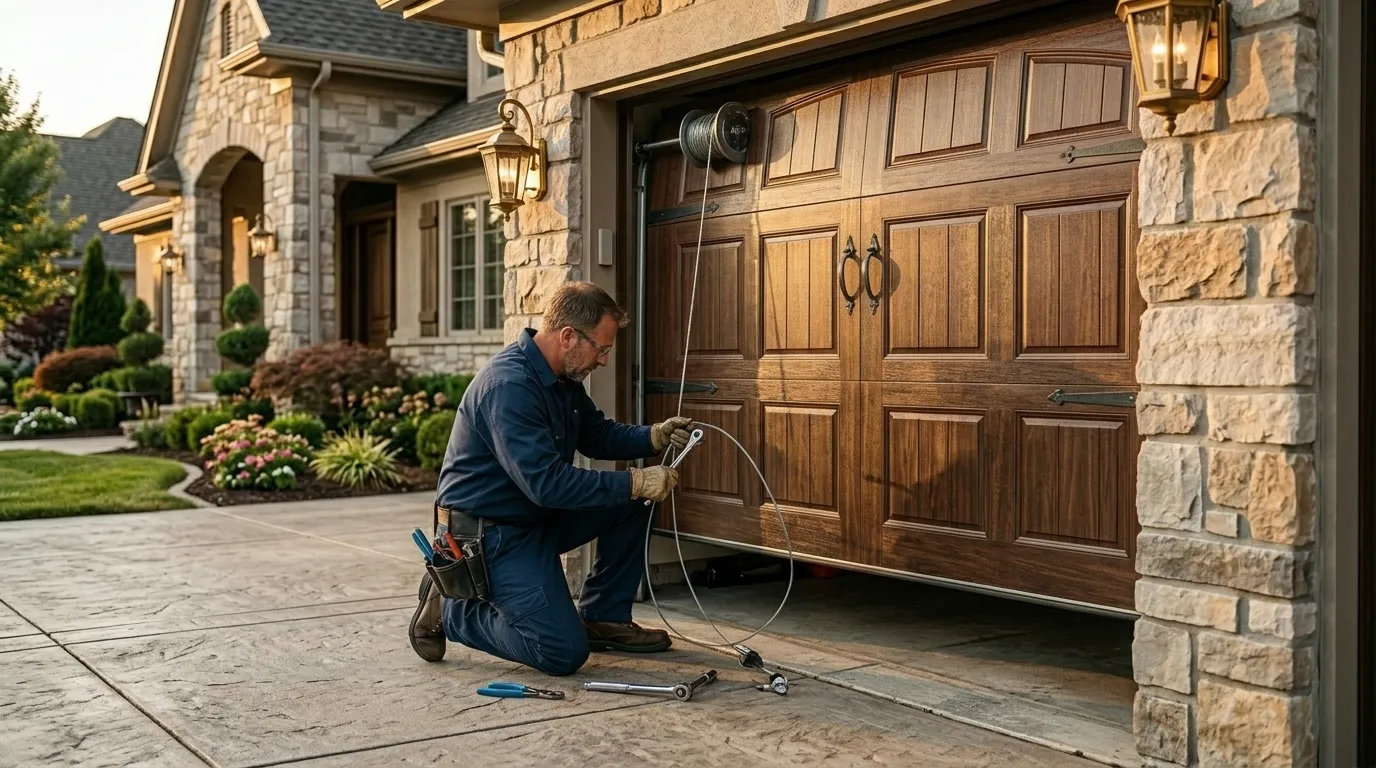
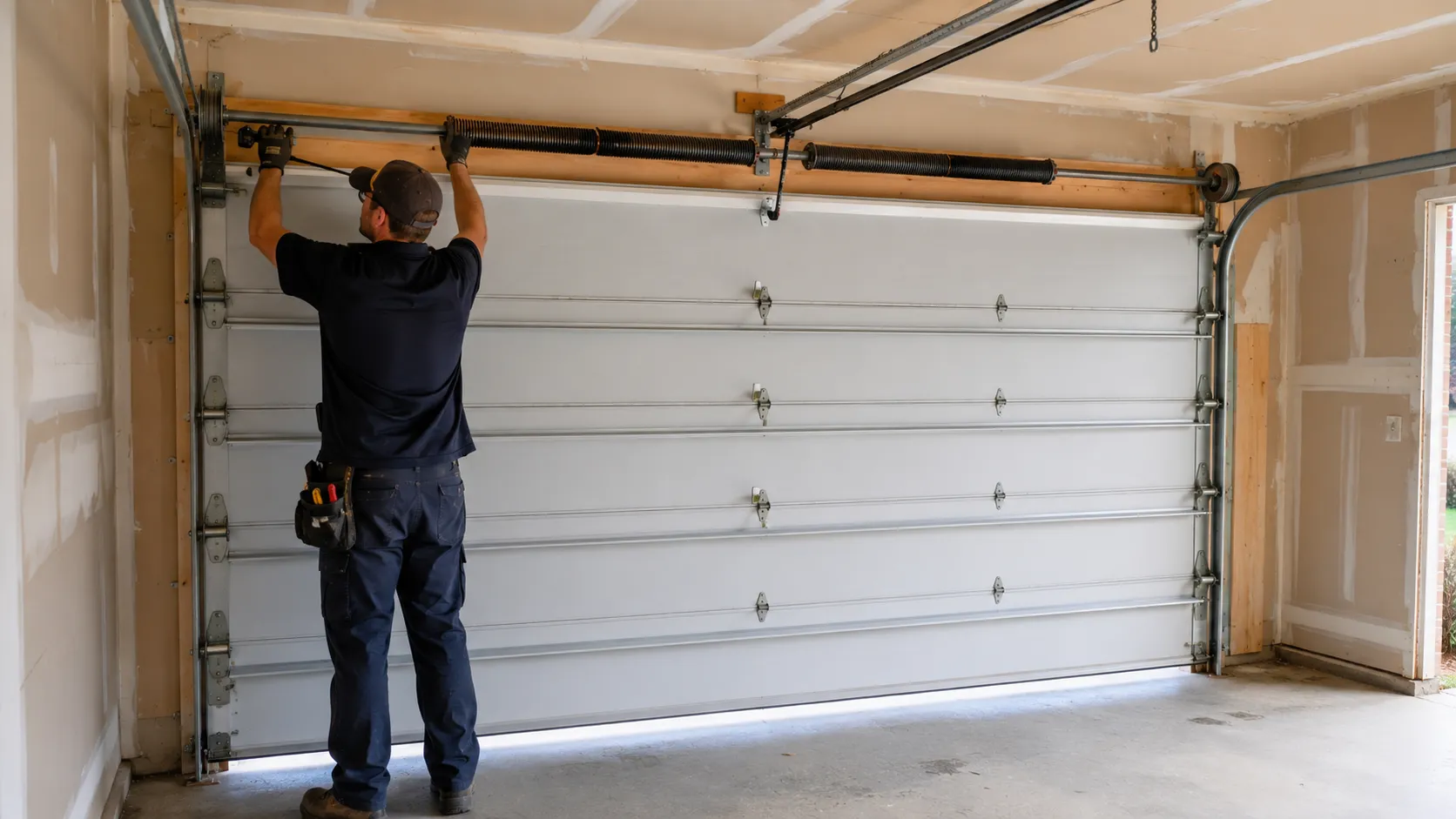
What you shouldn't touch is anything under spring tension. A door built around 1988, which is the median build year for houses in this area, is old enough that a lot of them are still running original torsion or extension springs that have never been replaced. Those springs are wound under enough force to break a bone if the winding cone slips, and there's no safe way to adjust that tension without the right bars and a clamp. That part of the job is ours, every time.
Parts We Carry
Houses in Cameron Park's part of the service area were mostly built between 1983 and 2001, with a median closer to 1988, which puts a lot of doors here squarely in the late-1980s-to-90s stock that's common across the ten areas we cover. That matters for parts because hardware from that era isn't universal - a lot of these doors still use the extension-spring setup or first-generation torsion assemblies that were standard before the mid-90s shift to safety cables, and a fair number of openers are older chain-drive units, not the belt-drive kind sold today.
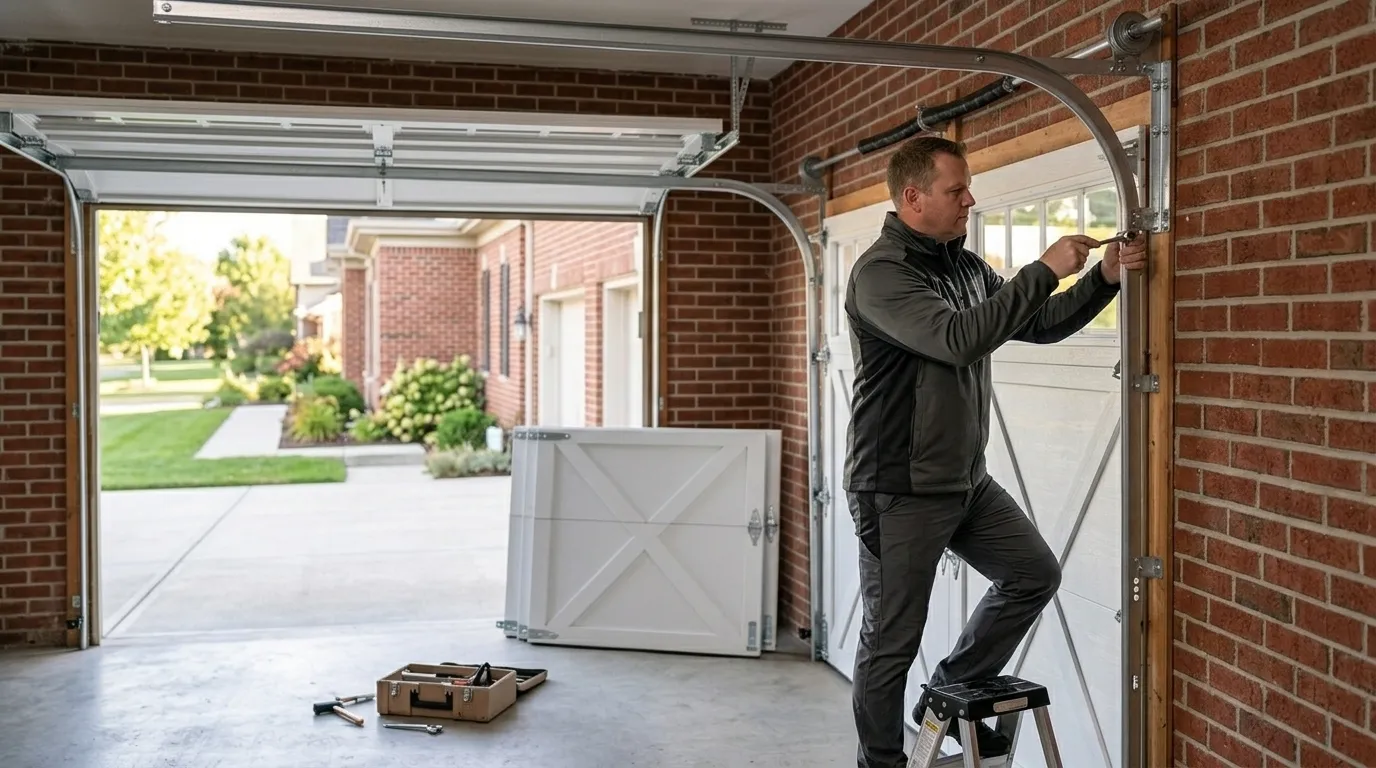
We carry standard rollers, cables, and torsion springs sized to the common residential door widths from that build era, along with photo-eye sensor kits for openers that predate them. What we don't stock are obsolete panel sections for discontinued door models - if your specific panel isn't made anymore, that's a real limitation, and replacement of that section (or the door) becomes the honest answer instead of a repair.
What the Repair Takes
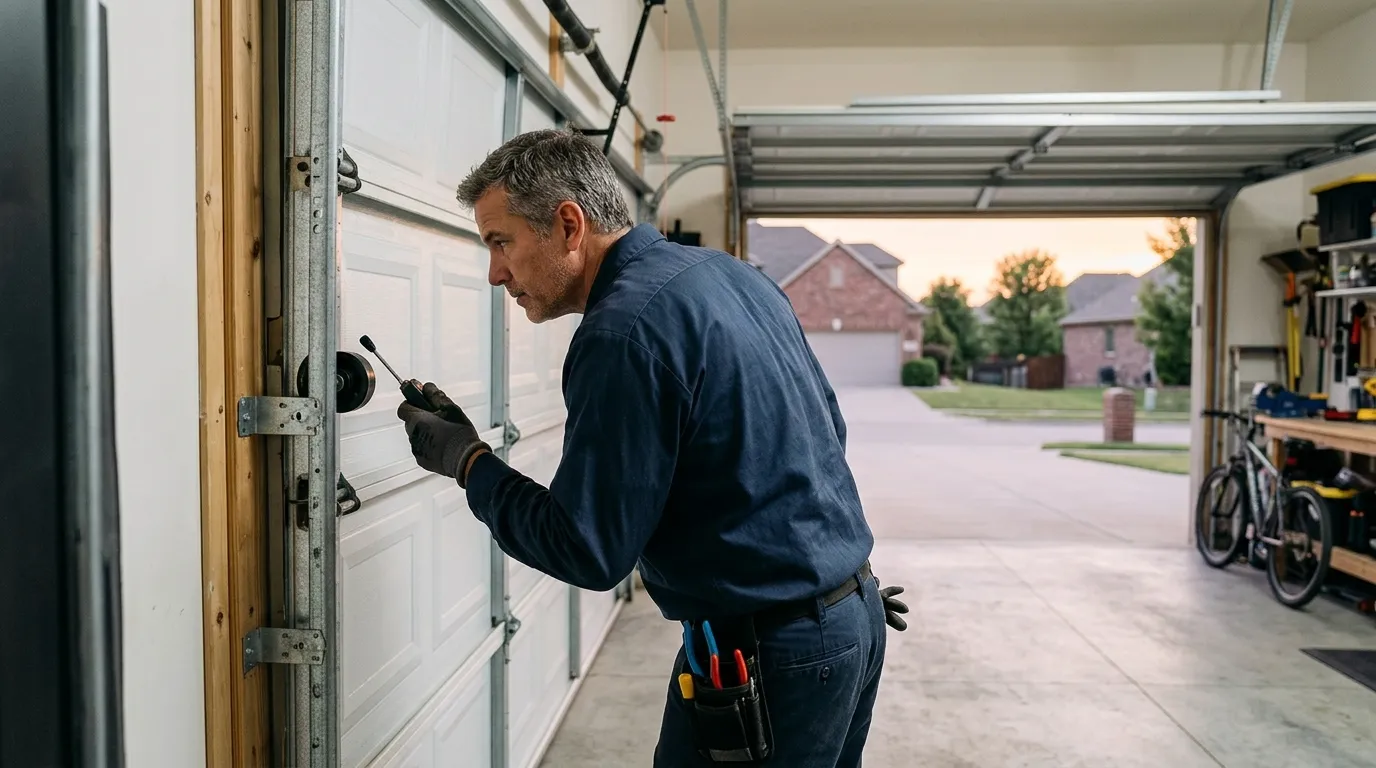
A standard maintenance visit - lubrication, hardware check, balance test, opener inspection - usually runs the length of a single stop, not a return trip. Where it runs longer is when a door built in the late 1980s hasn't been touched in years: rollers seized in their tracks, a spring with visibly stretched coils, or an opener whose safety reversal doesn't trip when it should. Any of those turns a routine visit into a repair call on the spot, since we're already there with the tools.
The mild temperate climate this part of Texas sits in works in your favor here - you're not fighting the freeze-thaw swings that crack seals and warp tracks the way a colder region does. That means the wear we mostly find is age and use, not weather damage, which is usually simpler and cheaper to correct.
What Can Go Wrong
The most common thing we run into on Cameron Park's older stock is a spring nearing the end of its cycle life - not broken yet, but stretched or unevenly wound, which shows up as a door that struggles more on one side than the other. Left alone, that unevenness accelerates wear on the opener trying to compensate for it.
Second most common: openers from before photo-eye sensors were required, where the safety reversal either doesn't exist or doesn't work anymore. That's not a maintenance item you patch - it needs a sensor kit installed, which we carry. Rollers seized from years without lubrication are third, and usually the easiest fix in the visit. None of these are unique to this address, but on a housing stock centered around 1988, they show up often enough that we expect to find at least one of them before we start.
How it works
From “it’s stuck” to “it’s fixed”
01
Tell us what’s wrong
Describe the symptom - won’t open, loud bang, opener runs but the door won’t move.
02
On-site diagnosis
A technician tests the door under power and by hand and finds what actually failed.
03
Clear, up-front plan
You get the fix that’s needed and what drives the cost - before any work starts.
04
Repaired & tested
The repair is done, the door is set true and tested, and the work area left clean.
Serving Brownsville, TX - tell us what your door’s doing and we’ll take it from there.
Straight answers about garage door repair in Brownsville. Still unsure? Ask us directly.
How far out is Cameron Park from your shop, and does that affect scheduling?
It's about two miles from our Brownsville location, which is close enough that it doesn't need special routing. We still book it as a standard scheduled visit, not a walk-in, but the short drive means it's easy to fit into a normal day without pushing your appointment out.
Do you have a branch or crew based in Cameron Park?
No. We operate out of Brownsville and travel to Cameron Park for every job, including maintenance visits. There's no separate depot or local office here - just a short drive from where we're based.
My door is original to a house built in the late 1980s. Is that a problem for maintenance?
Not usually, but it does mean the hardware is older - often extension springs or early torsion setups and sometimes a chain-drive opener without a photo-eye sensor. We carry parts sized for that era, though some specific panel styles may no longer be made.
Is it worth maintaining an older door instead of replacing it?
Often, yes. If the springs, rollers, and opener are still within working life, a tune-up can extend that considerably. Replacement makes more sense once panels are damaged, the opener has no safety reversal and can't be retrofitted, or repair costs start stacking up faster than a new door would.