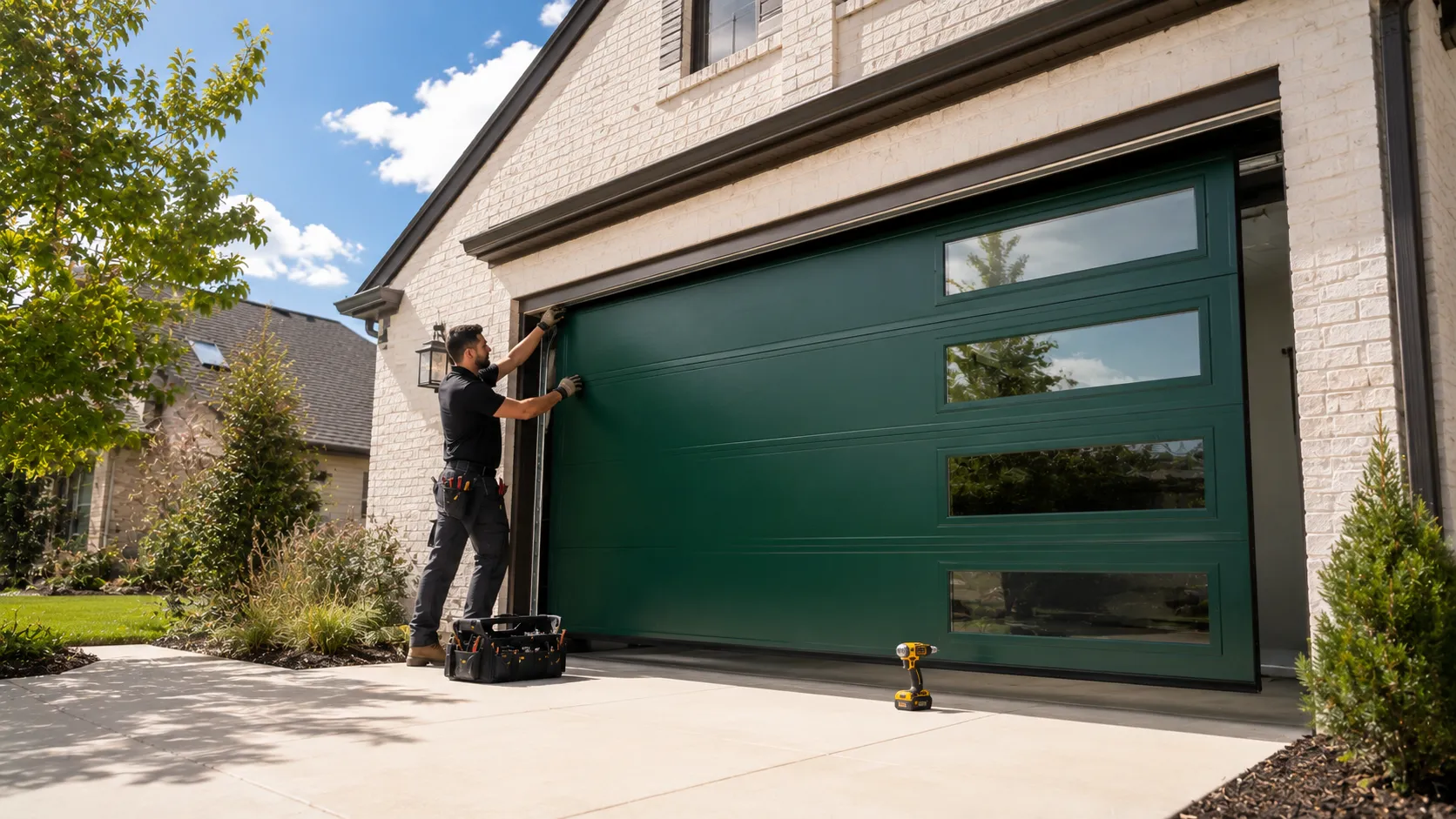
Garage door repair for San Benito's 1980s housing stock - worn rollers, uncontained extension springs, and openers built before the 1993 photo-eye rule. Brownsville Garage Door Pros travels 15 miles to reach you.
We run out of Brownsville, about 15 miles up the road, so booking a San Benito job means a call gets scheduled onto a route rather than dispatched from a depot down the street. That's the honest limitation: we don't keep a branch here, and we're not going to pretend otherwise. What we do have is a service page built for this town specifically, because a 1985-built house doesn't have the same door problems as a house built in 2005.
When you call, tell us the age of the house if you know it - San Benito's stock clusters tight around the mid-1980s, and that one detail tells us more about what's probably wrong than a description of the noise does. Torsion versus extension springs, chain drive versus belt, steel gauge - all of it tracks with build year here more reliably than in newer subdivisions. We'll ask, and it saves a trip for the wrong parts.
The Symptom
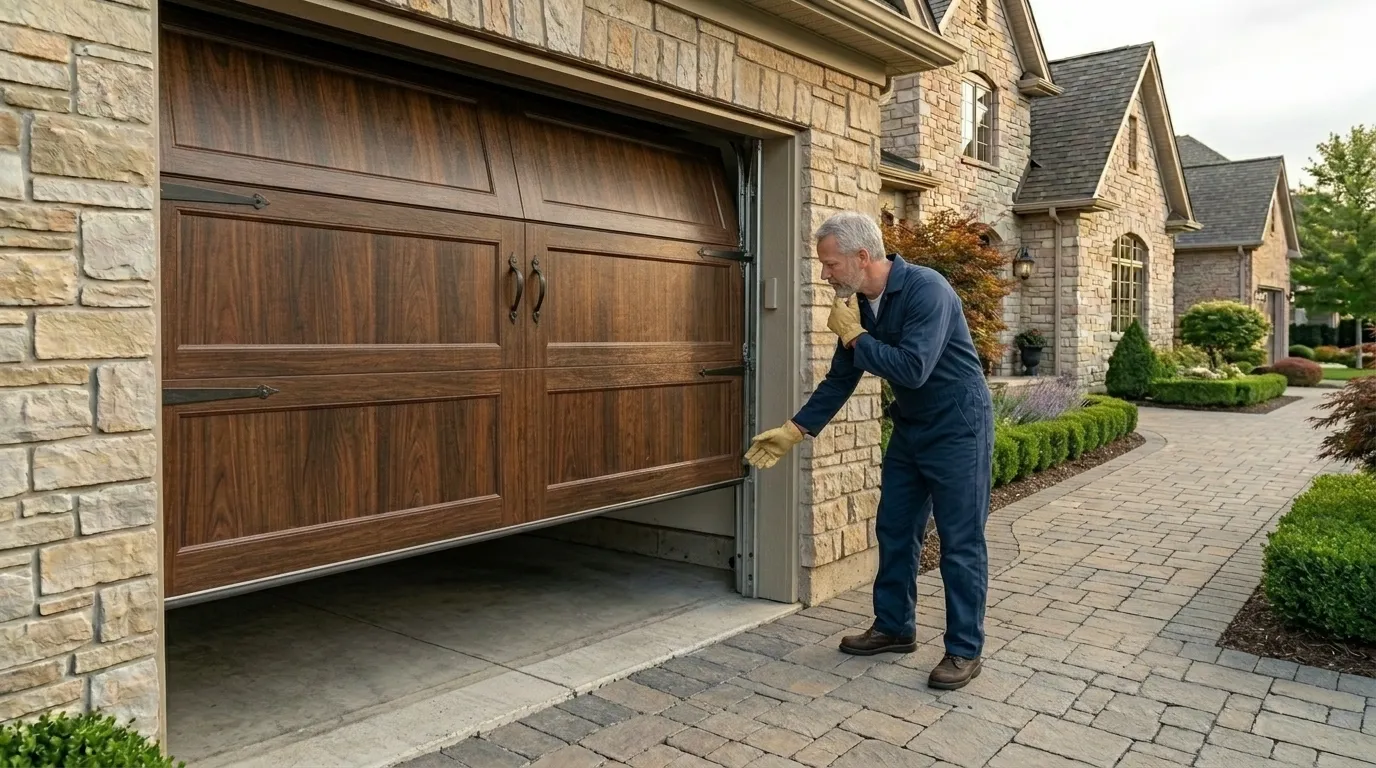
The fault we see most in San Benito starts the same way almost every time: a door that used to close smooth now drops the last foot instead of gliding, or it reverses off the floor for no reason anyone in the house can explain. That's almost always a spring problem on a house from this era, not an opener problem, even though the opener is what people blame first.
Here's why the year matters. Median homes in San Benito went up around 1985, which puts this town square in the middle of the wider area's 1983-2001 build window with a median around 1986. Houses from that stretch predate the 1993 federal rule requiring photo-eye reversal sensors on residential openers. A lot of these houses got a new opener at some point that meets the newer code, but the door itself - the track, the rollers, the spring setup - is often original or close to it. Combine that with the mild, humid Rio Grande Valley climate and you get corrosion on hardware that's rarely seen a hard freeze but has sat through decades of damp air. Rust on a spring coil, not cold-snapped metal, is the failure mode here.
What You Pay
We're not going to hand you a number that isn't grounded - no price sheet was handed to us for this page, and quoting one we can't back up does you no favors. What we can tell you is what drives the cost on a house like the ones common in San Benito.
Median household income in San Benito runs around $41,445, noticeably below the wider service area's $55,387 median. That gap shows up in what people ask for: more repair-and-keep-going calls, fewer full-door replacements requested up front. A repair on original 1980s hardware is often cheaper than replacement, right up until the door itself is bent, delaminated, or the track is warped - at that point a repair is just delaying a bigger bill.
The other factor is parts. A door built in the mid-1980s may need a panel or spring size that current manufacturers don't carry as a stock item. When that happens, cost shifts from labor to sourcing, and we'll tell you that up front rather than let it surprise you on the invoice.
What Can Go Wrong
On the 1980s-era doors common through San Benito, four failures show up again and again:
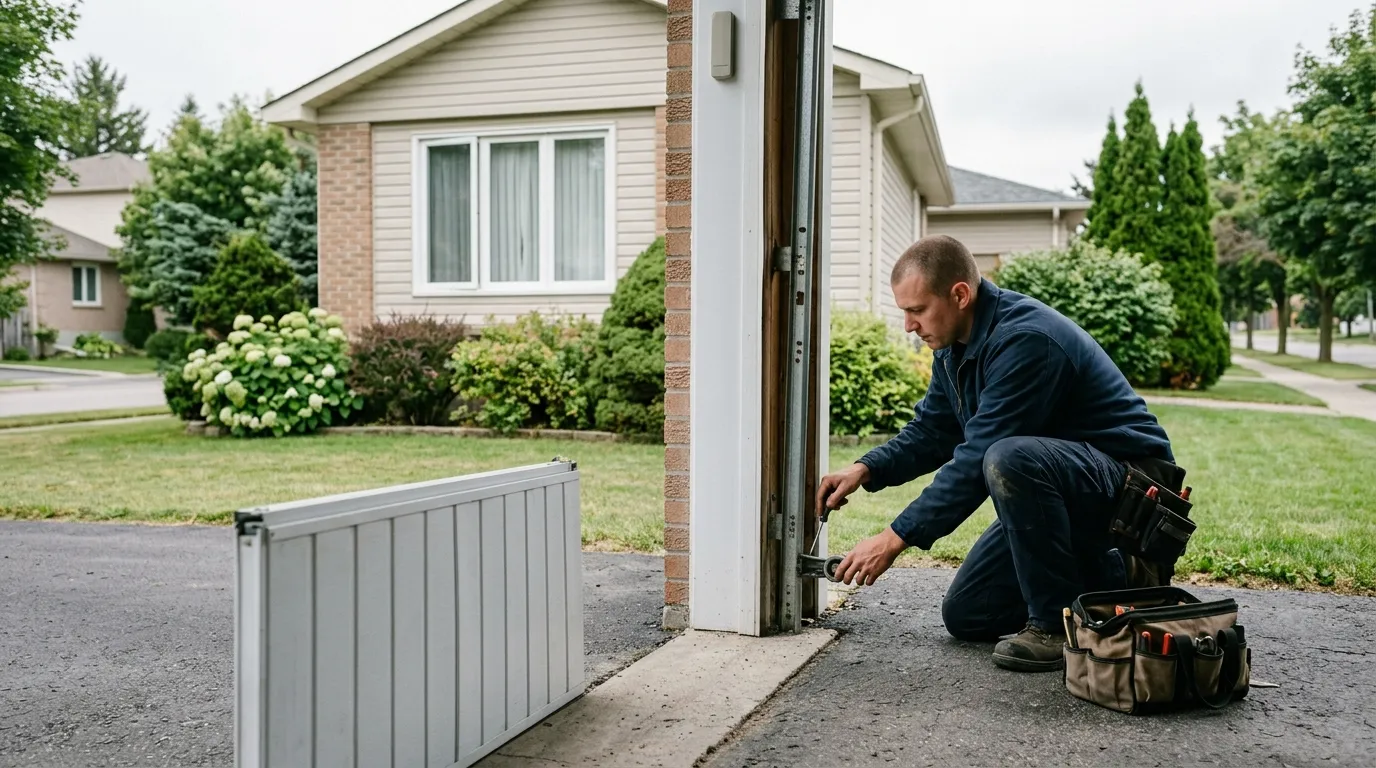
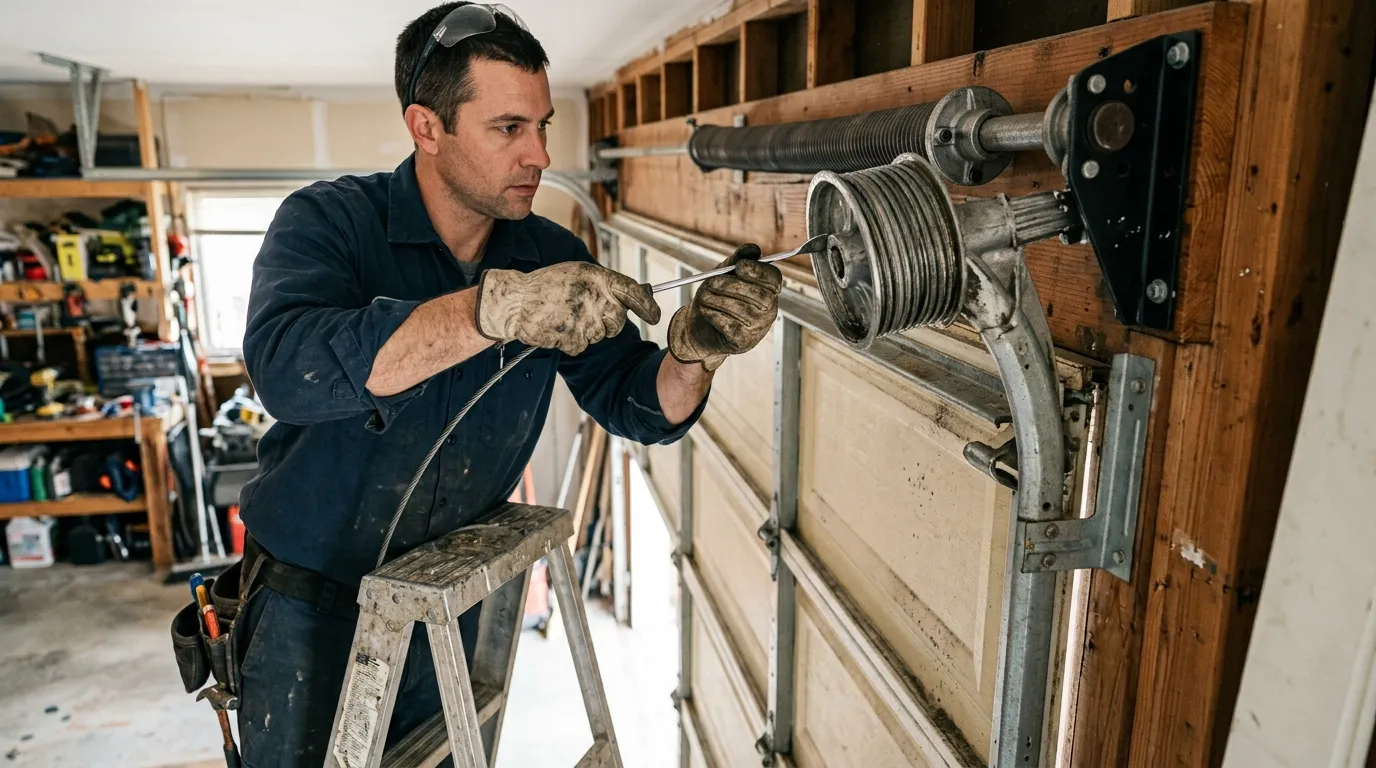
Extension springs without a safety cable. Older installs, especially pre-90s, sometimes went in before containment cables were standard practice. If one of these breaks, the spring can whip loose instead of staying pinned to the track.
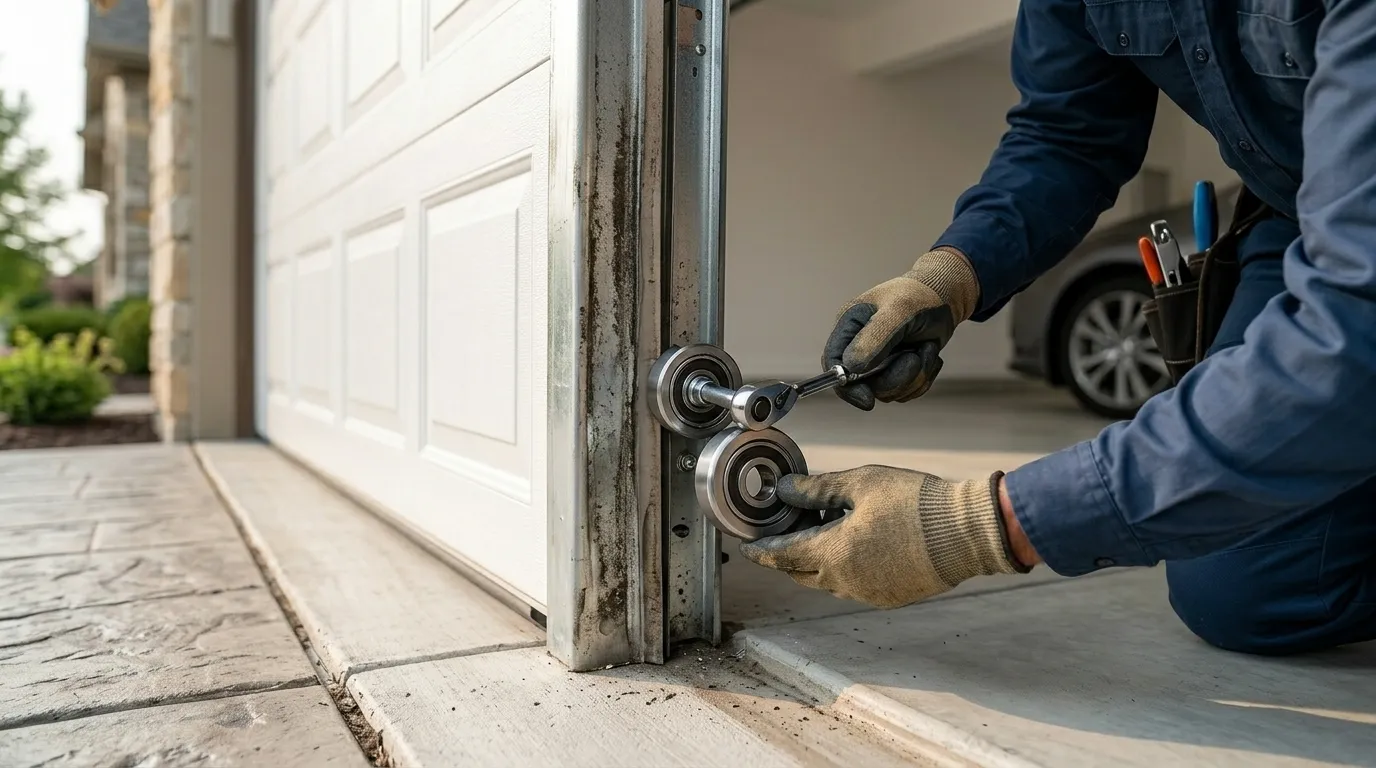
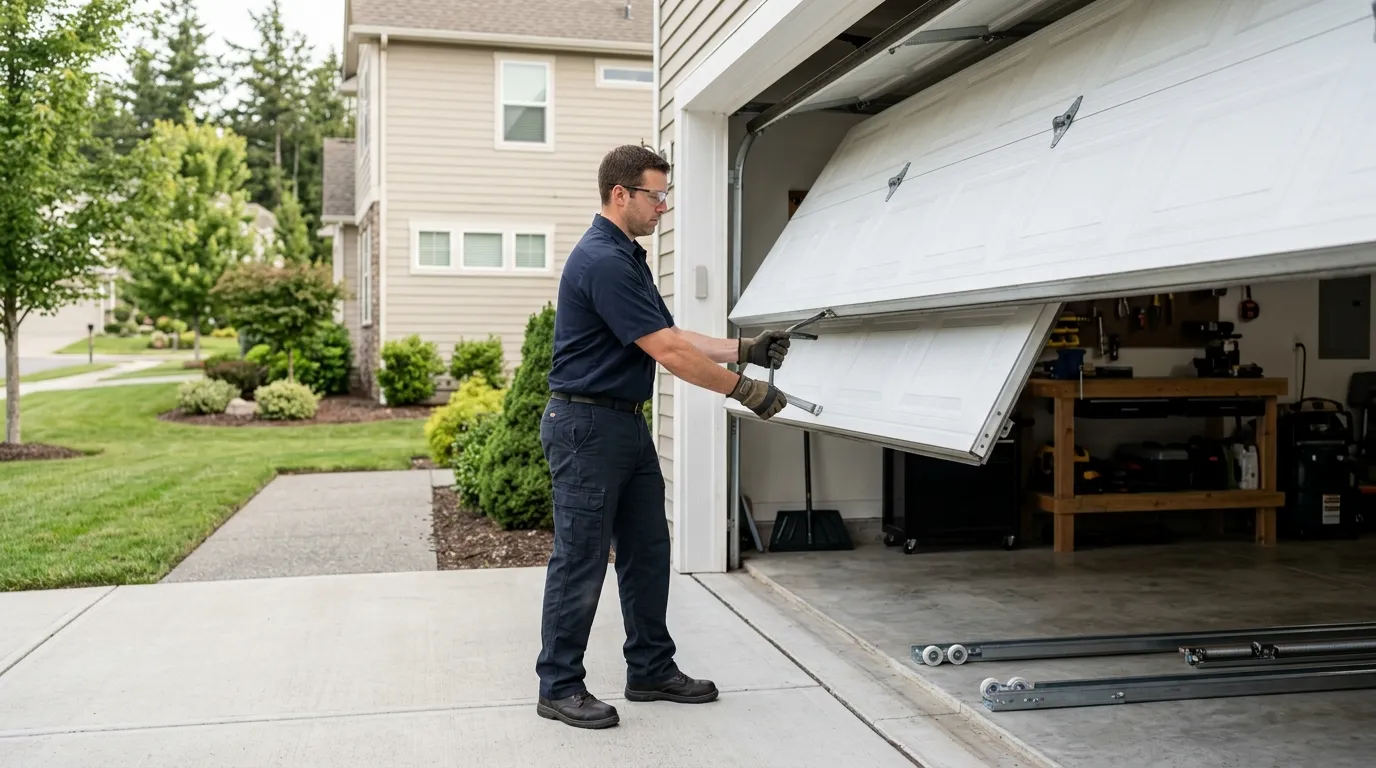
Worn rollers on original track. Steel or nylon rollers from a door this age have usually logged tens of thousands of cycles. They don't fail all at once - they grind, then bind, then jump the track.
Chain-drive gear wear. A lot of openers from this stretch of housing run chain drive rather than belt. The nylon gear inside the unit wears down over the years and strips, which sounds like the motor running with the door not moving.
Openers without a working photo-eye. If the opener predates 1993 and was never upgraded, there's no safety reversal at all - the door just keeps closing on whatever's underneath it. This one we treat as a stop-what-you're-doing fix, not a maybe.
How Long You Are Without the Door
Since we're coming from Brownsville rather than a local yard, we're not going to promise a same-hour window for San Benito - that's not honest and we won't claim it. What we can say is that the length of the job usually comes down to parts, not distance.
A broken torsion spring or a worn roller set is stock work - we carry standard sizes on the truck and most of these get closed out in one visit. Where it stretches out is the older housing stock issue again: if the door needs a panel section or a spring dimension that's no longer a current production size, that part has to get sourced, and that can push a job from same-visit to a return trip.
Given that San Benito's housing clusters around 1985, we go into most calls here expecting original or near-original hardware, and we plan the parts we bring accordingly. That's the difference a few decades of build-year data makes over just showing up and guessing.
How it works
From “it’s stuck” to “it’s fixed”
01
Tell us what’s wrong
Describe the symptom - won’t open, loud bang, opener runs but the door won’t move.
02
On-site diagnosis
A technician tests the door under power and by hand and finds what actually failed.
03
Clear, up-front plan
You get the fix that’s needed and what drives the cost - before any work starts.
04
Repaired & tested
The repair is done, the door is set true and tested, and the work area left clean.
Serving Brownsville, TX - tell us what your door’s doing and we’ll take it from there.
Straight answers about garage door repair in Brownsville. Still unsure? Ask us directly.
Why does my garage door drop suddenly near the bottom instead of closing smooth?
That's a classic worn-spring symptom, and it's common on houses from San Benito's building era. The spring has lost enough tension that it can't control the door's weight through the last stretch of travel. It's not something to keep operating - a spring that's failing can let the door drop hard, and it's a repair, not an adjustment.
Do you have a branch in San Benito?
No. We run out of Brownsville, about 15 miles away, and route San Benito calls onto the schedule from there. We don't keep a local depot in town, so we won't promise a response time that assumes one.
My opener is old - does it have the safety sensor?
Depends on when it was installed, not just when the house was built. Federal rule required photo-eye reversal sensors on new openers starting in 1993. If your house dates to the mid-1980s and the opener has never been swapped, there's a real chance it predates that rule and has no safety reversal at all.
Is it cheaper to repair or replace an old door?
On original 1980s hardware, repair is usually the cheaper route as long as the door panel itself is straight and the track isn't warped. Once the panel's bent or delaminated, repair costs start approaching replacement, and at that point replacement is usually the better spend.