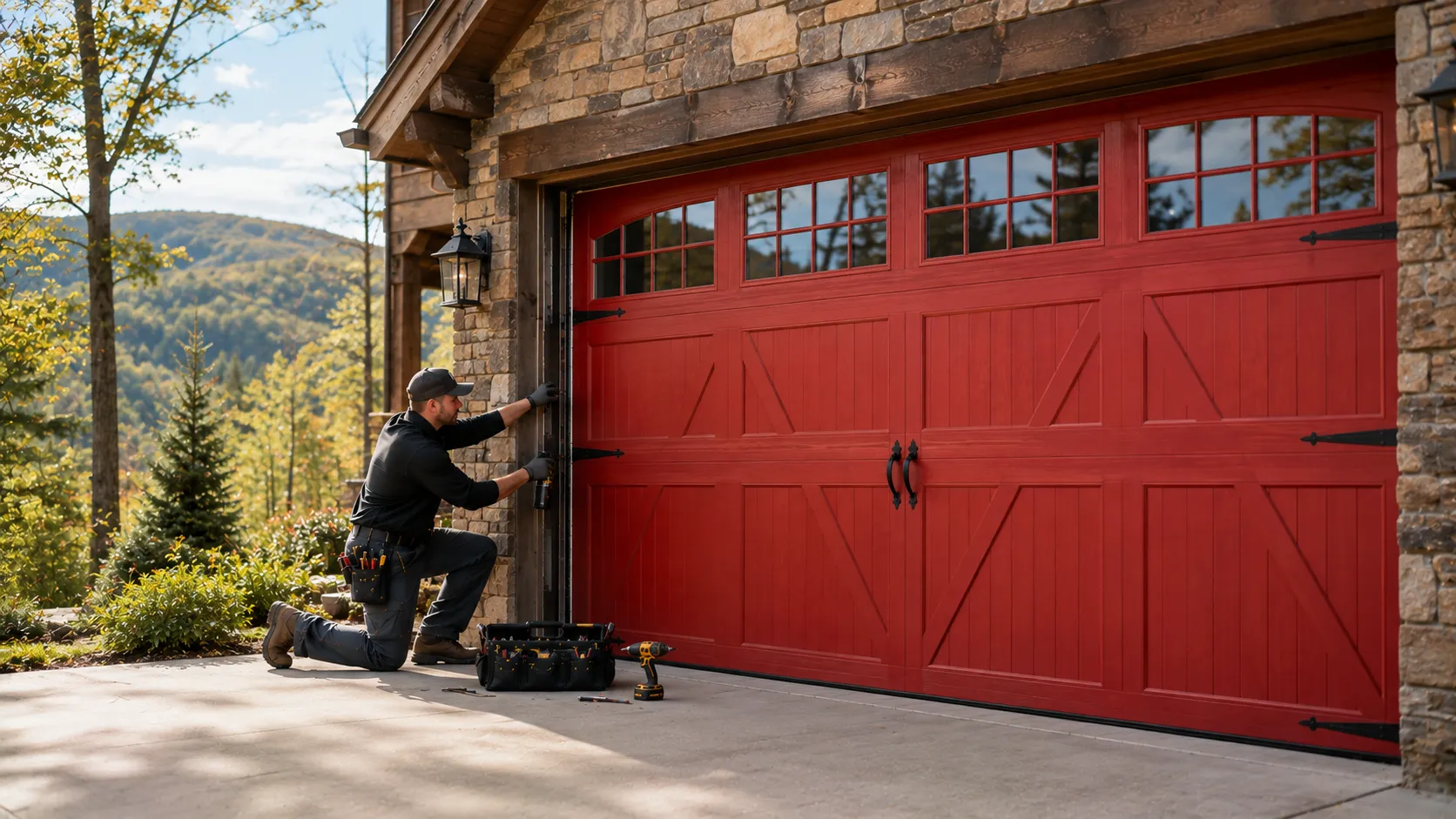
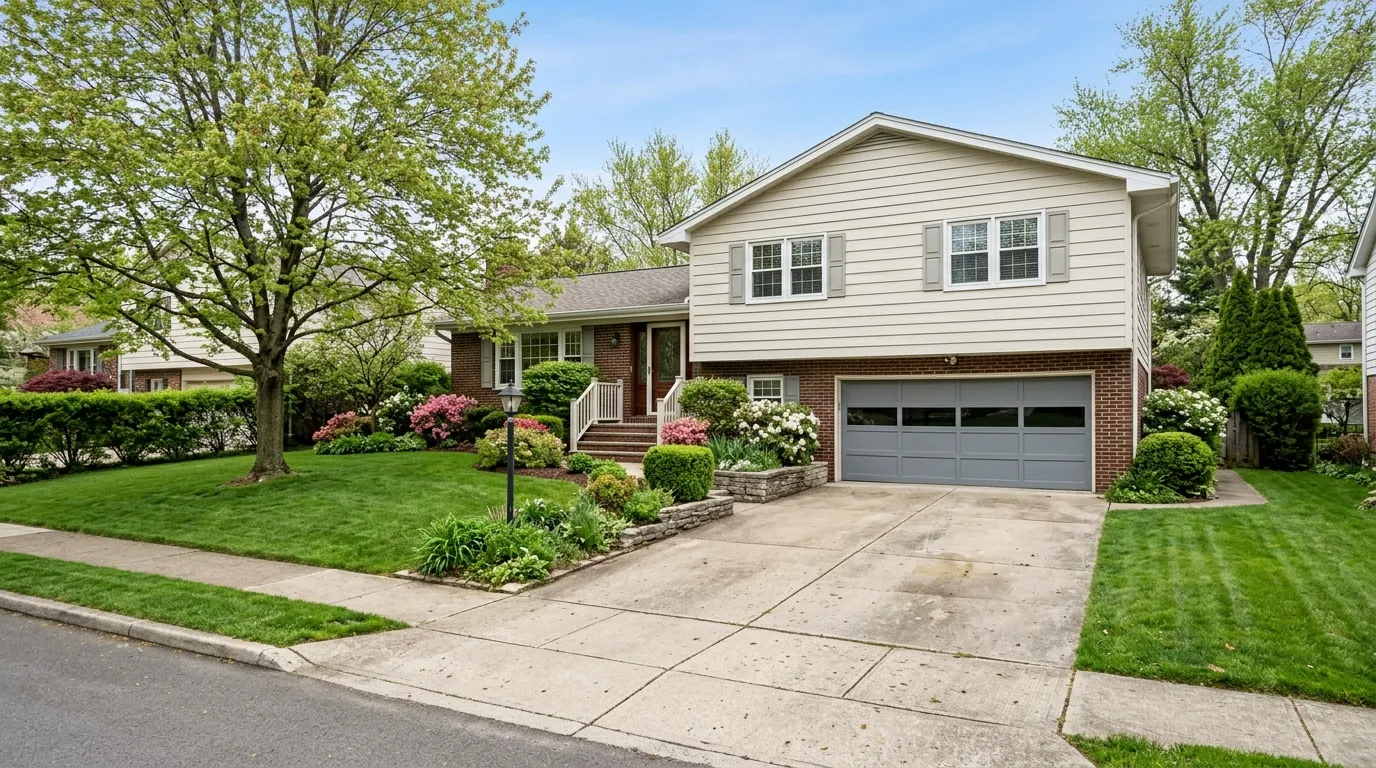
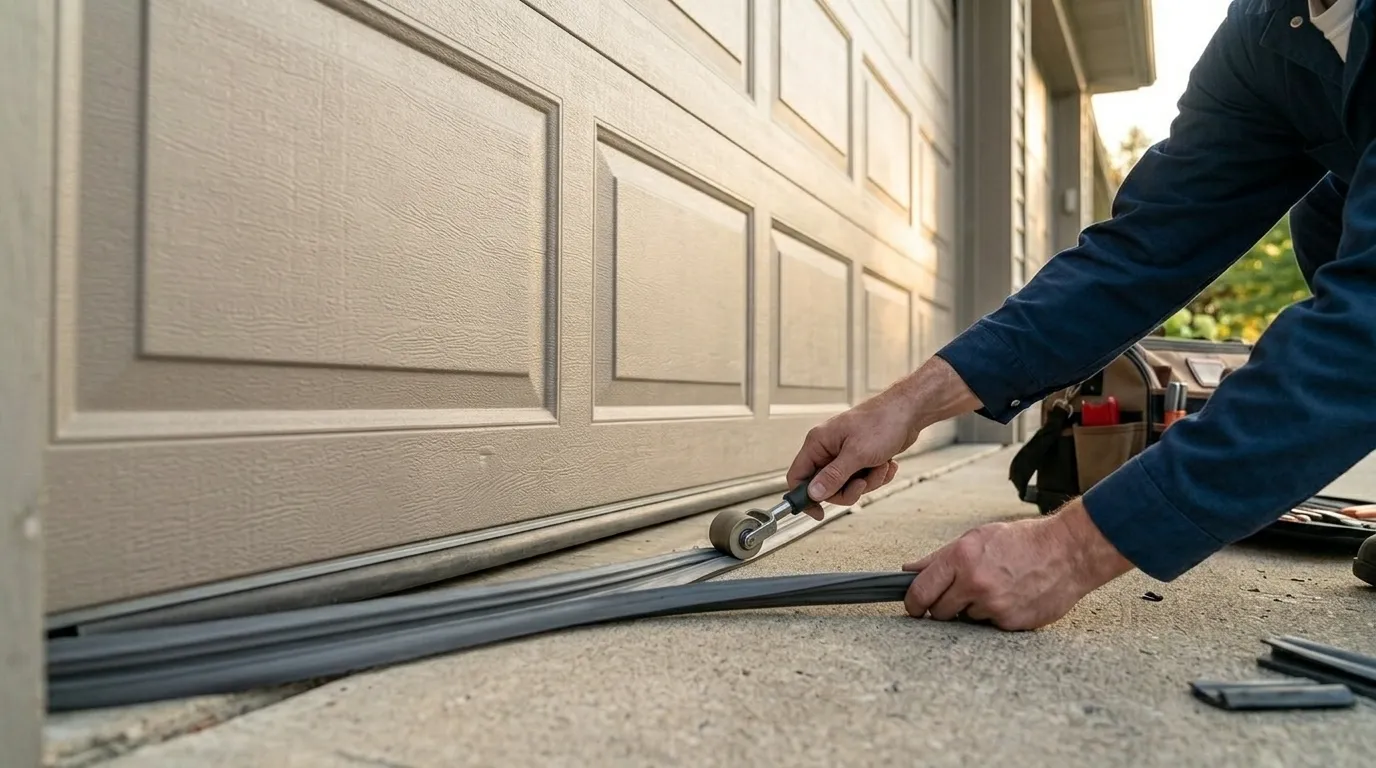
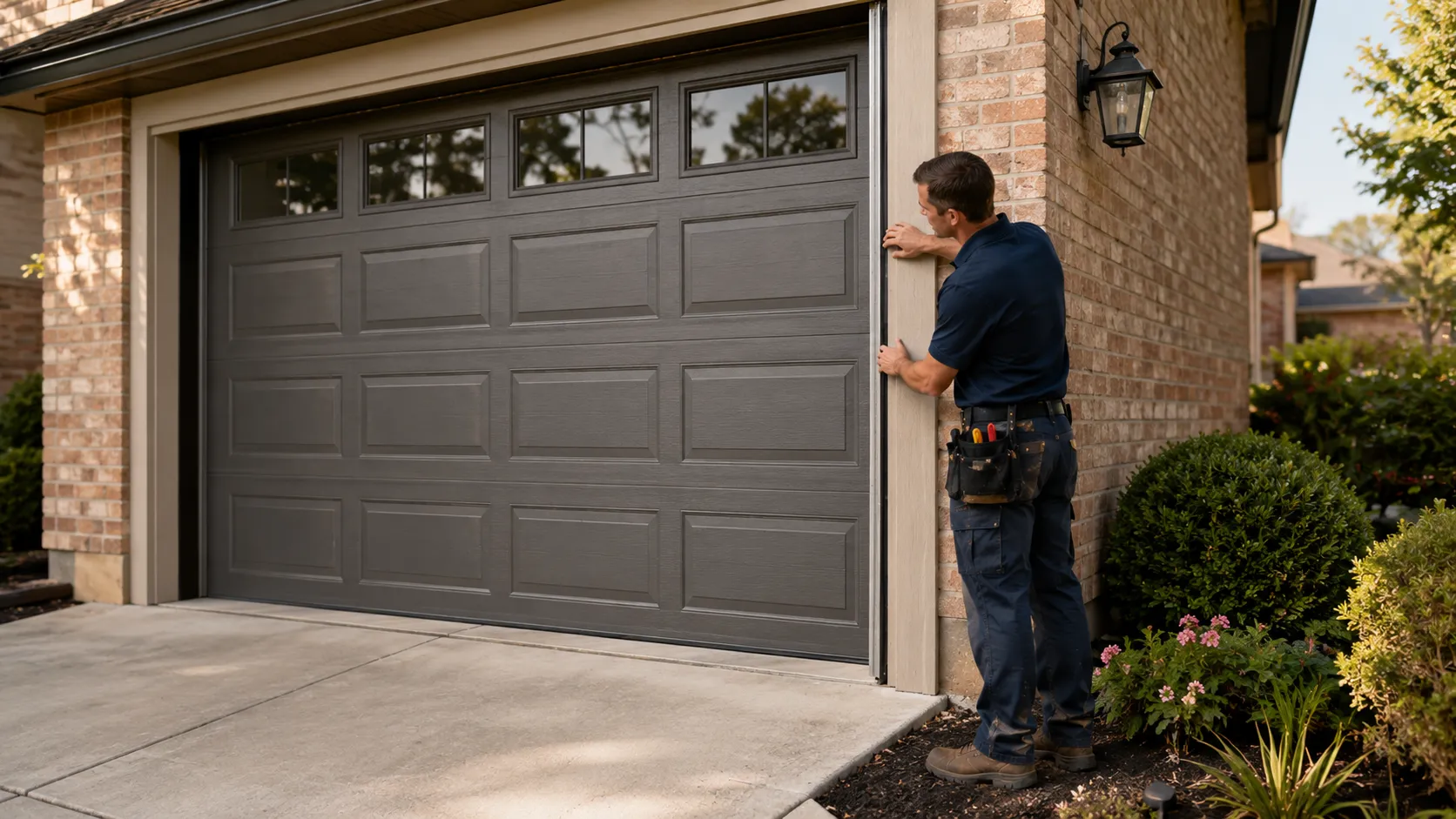
San Benito's houses mostly date to the 1980s and 90s. We service the springs, openers, and tracks that come with that era, scheduled out from our Brownsville base.
San Benito has around 7,854 households, which is a smaller pool than the rest of our coverage area, and it shows in the calls we get: fewer of them, but they cluster around the same handful of door types instead of a wide mix of ages and brands. That's useful for us on a maintenance visit, because we're not guessing what we'll find when we open the panel.
We run out of Brownsville, about 15 miles from San Benito, so we don't have a local branch or a truck sitting nearby waiting on a walk-in. A maintenance visit here gets scheduled ahead, not squeezed in same-day. That's the honest limitation: if you need someone standing at your door in twenty minutes, we're not that. If you can give us a window, we'll fill it and do the job right once we're there.
Booking maintenance instead of waiting for a breakdown call is the cheaper path either way. A spring or roller that's inspected on a schedule gets swapped on our terms, not on a Saturday morning when the door won't move and everyone's late for something.
The Symptom
Most houses in San Benito went up between 1983 and 2001, with the median landing around 1985. That means a lot of doors on original extension or early torsion setups, openers from the chain-drive generation, and hardware that's now been through fifteen-plus years of cycles without ever being looked at.
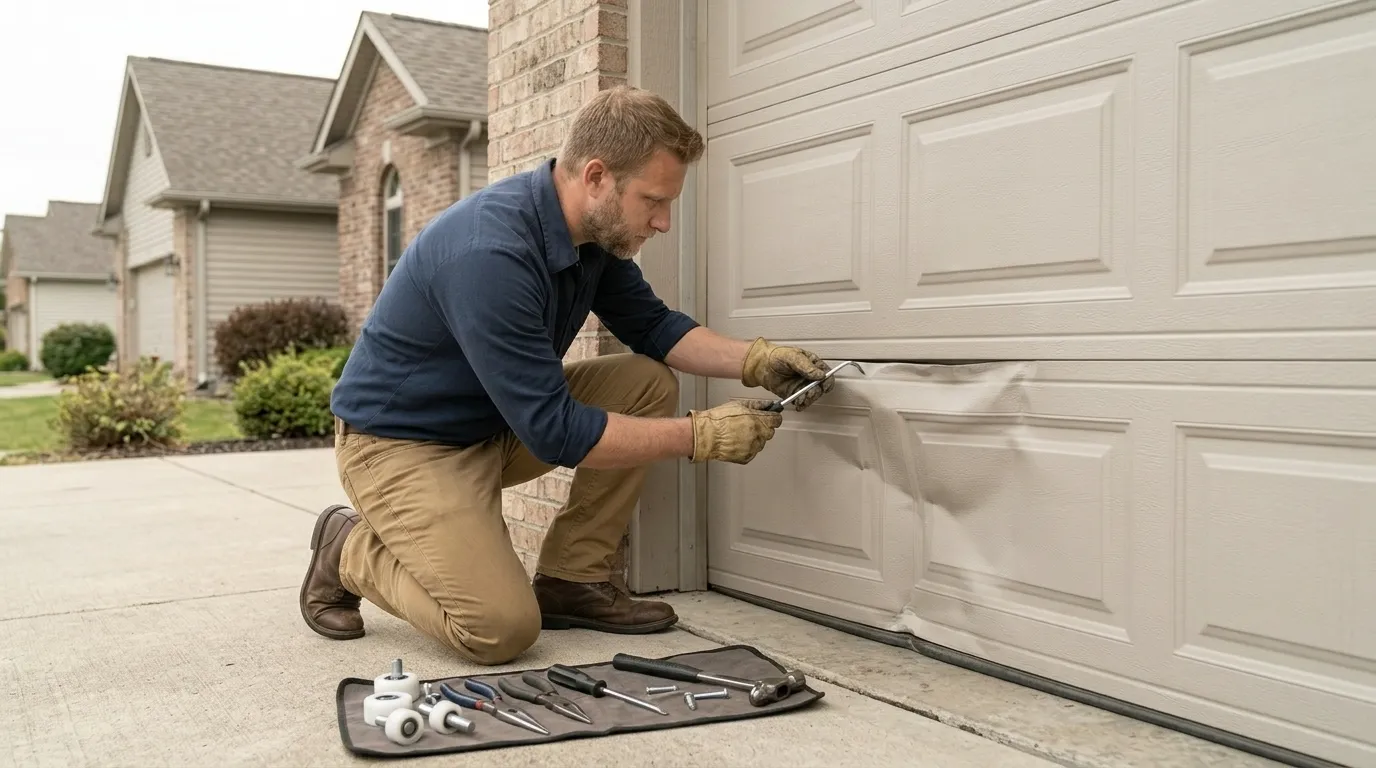
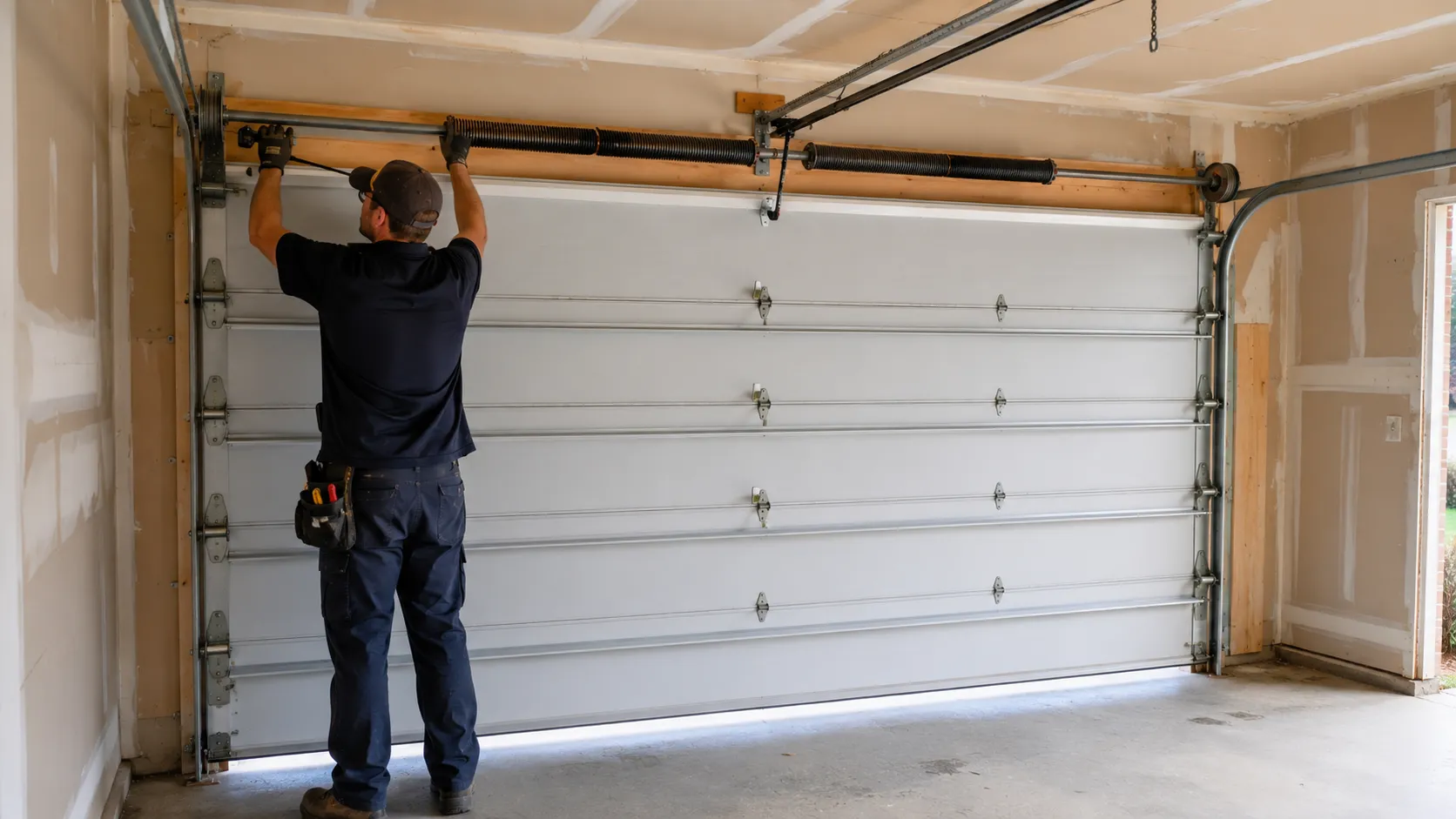
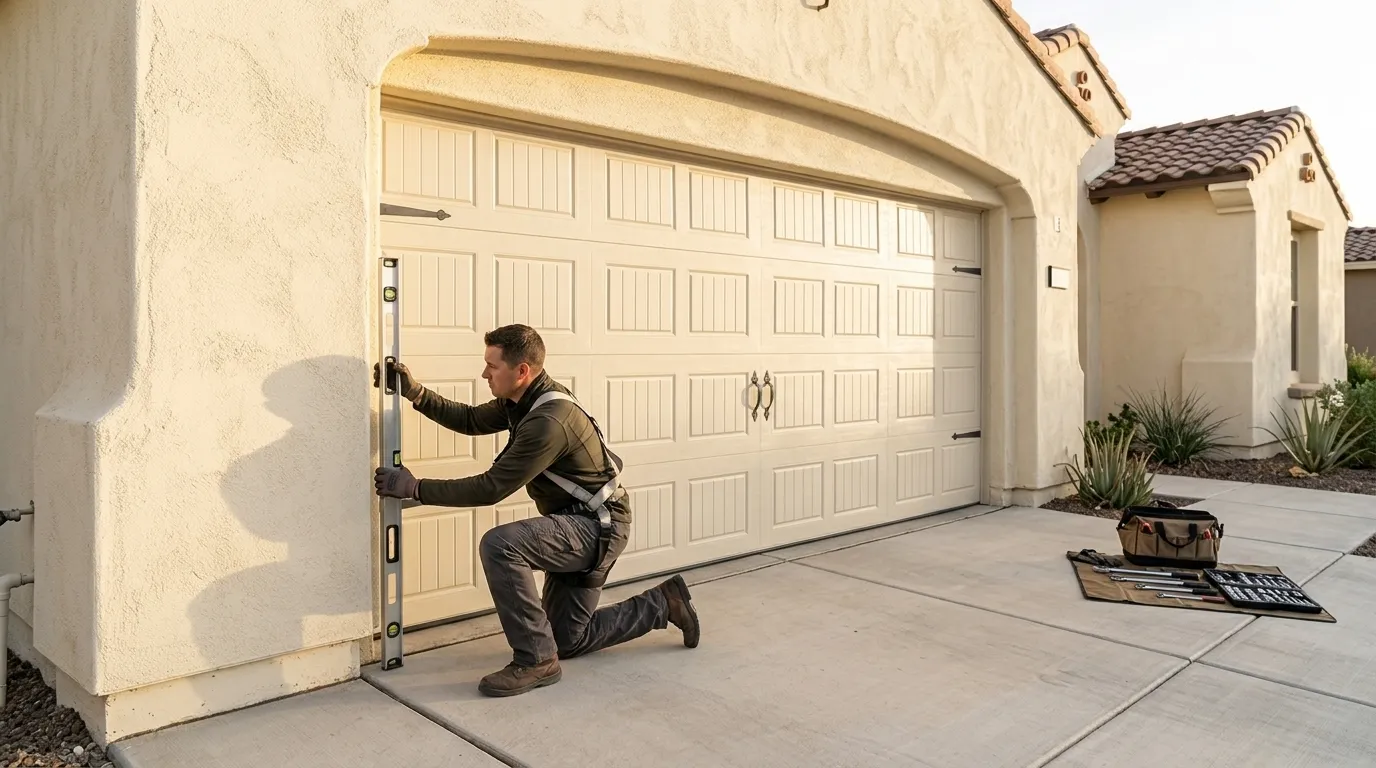
The symptom we see most on these systems isn't a dead opener out of nowhere. It's a door that's started groaning on the way up, or one that hesitates for a second before it catches. That hesitation is usually a spring that's lost tension unevenly, or a track that's walked slightly out of alignment from years of the door settling into its own rhythm. Neither one fails a maintenance check by itself. Both will fail a torsion spring eventually if nobody adjusts for it.
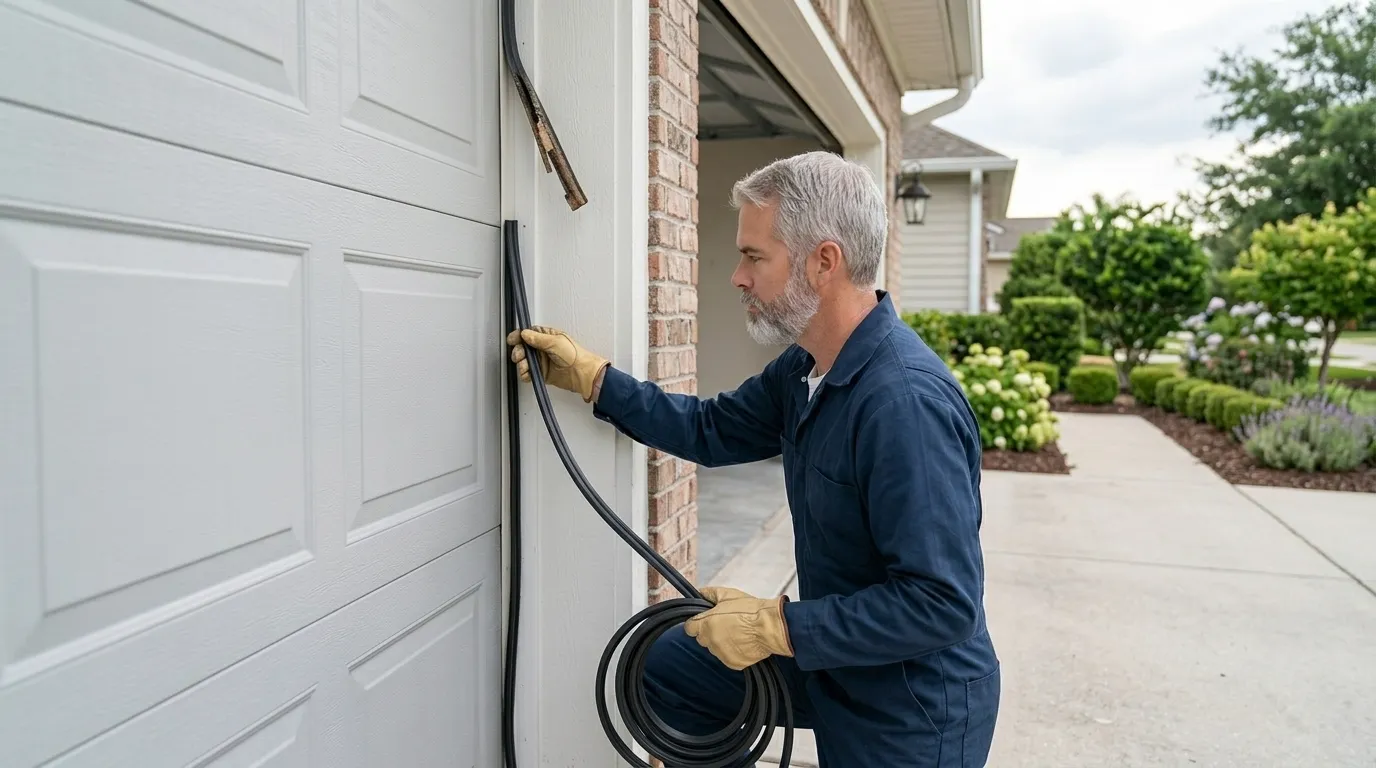
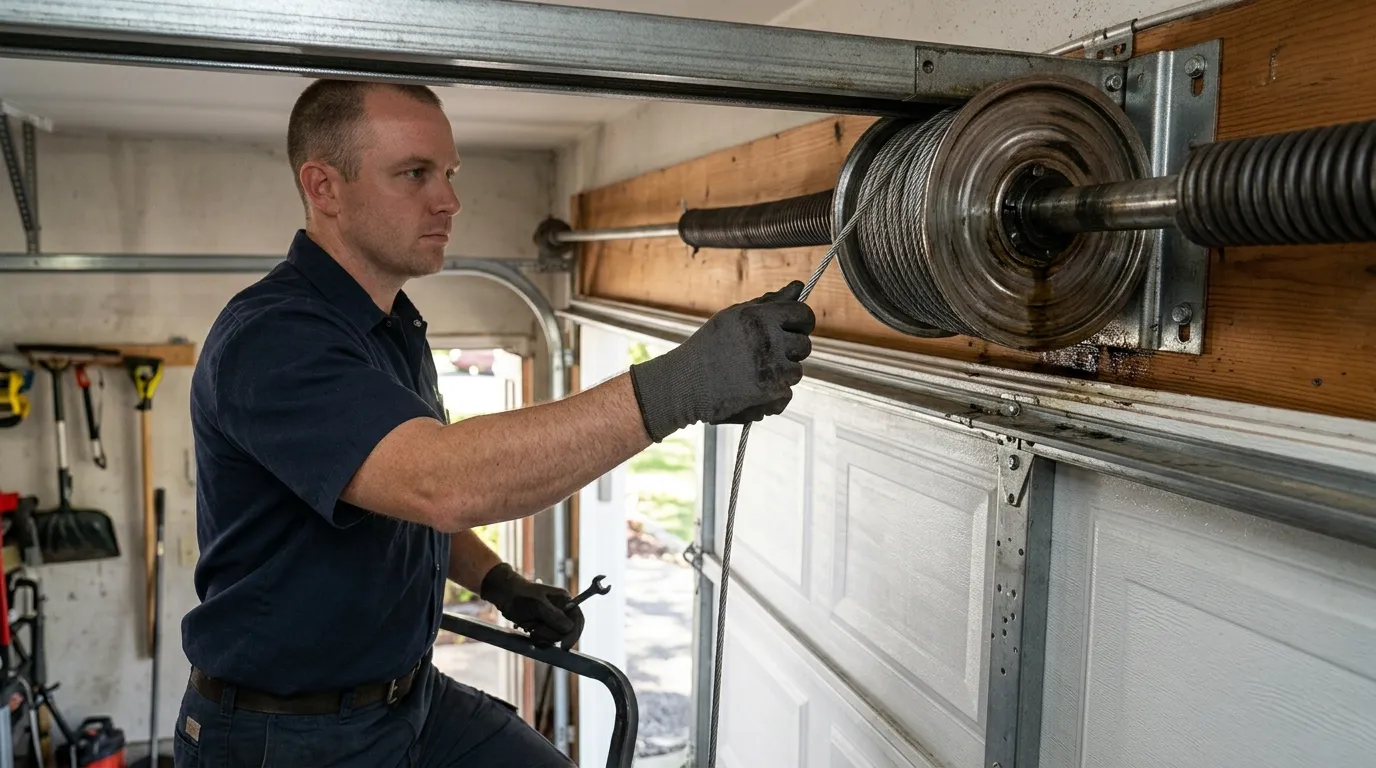
We're in a mild temperate part of Texas here, so we're not fighting frozen tracks or ice-cracked seals like colder regions do. What we do see is rust creeping into the drum and cable ends on doors that have sat in the same garage since the 1980s without a fresh coat of lubricant. That's a slower failure, but it's a real one, and it's exactly what a maintenance visit is supposed to catch before it turns into a snapped cable.
What You Pay
San Benito's median household income sits at $41,445, and it's part of why we see more owners here choosing to maintain a spring or a set of rollers rather than replace the whole opener the first time something sounds off. That's a reasonable call on a door that's mechanically sound underneath the noise.
We don't have a fixed maintenance price to quote you here, because it depends on what we find once we're on site and what the door needs - a lube-and-adjust visit is a different job than one where we're also re-tensioning a spring or squaring up a track. What we can tell you is that maintenance is cheaper than the alternative: a broken torsion spring on a double door, or a cable that snaps under load, both cost more in parts and in the inconvenience of a door stuck shut than a scheduled check would have.
We'll always tell you flat out if a repair doesn't make sense anymore. On a door old enough to be original to a mid-1980s build, there's a point where patching hardware costs more over a year than replacing the worn parts once. We'd rather say that up front than keep billing small fixes on something that needs one bigger one.
What Can Go Wrong
On doors from San Benito's building era, the failure points are pretty consistent. Torsion springs installed in the mid-1980s were sized for the doors and hardware of that period; if a door's been reinforced or the panels replaced since, the spring tension may no longer match the actual weight it's lifting. That mismatch is invisible until the day the spring lets go.
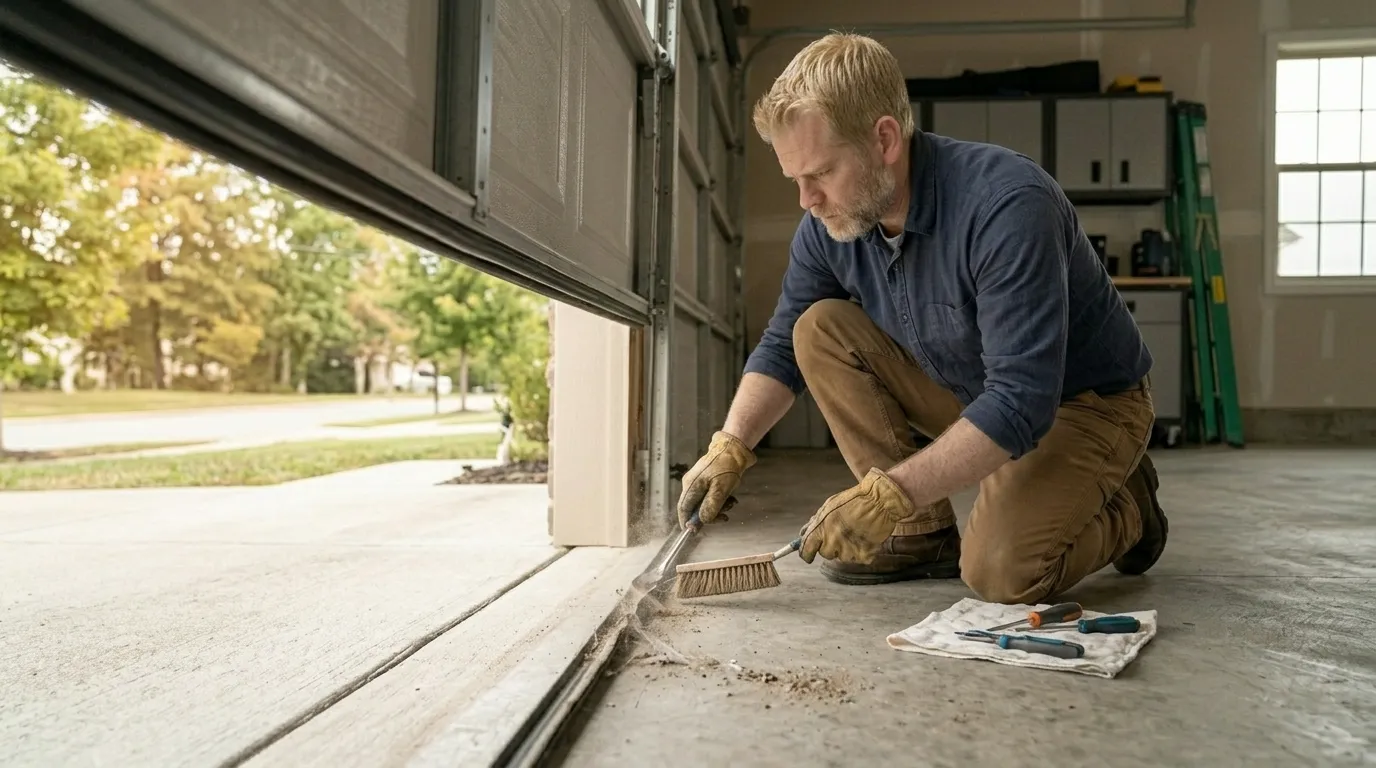
Rollers on original tracks are another common one. Steel rollers from that generation wear grooves into the track over enough years, and once the groove is deep enough, the door starts binding on the way up rather than gliding. Owners often mistake that binding for an opener problem and replace the opener first, when the track was the actual issue.
Cable fraying at the drum end shows up more on older setups too, especially with the mild coastal humidity working on any hardware that hasn't seen fresh lubricant in a while. None of these are dramatic until they are - a frayed cable holds until it doesn't, and there's no warning cycle. That's the case for catching it on a maintenance pass rather than waiting for the door to tell you.
How Long You Are Without the Door
A routine maintenance visit - inspection, lubrication, tension check, track alignment - doesn't put your door out of service at all. You keep using it that day; we're just making sure it keeps working the way it should for another year or two.
If we find something during that visit that needs a part swapped, like a roller set or a cable, the door usually comes back into service the same visit, since those are common parts we carry. A full torsion spring replacement on an older door takes longer on site but still finishes same-day in almost every case.
Where it can stretch out is if a door needs a part that isn't standard stock - some openers and hardware from the 1980s and 90s aren't things every supplier carries anymore, and if we hit one of those, we'll tell you honestly that we need to order it rather than promise a fix we can't deliver that day. That's rare, but it happens on hardware this old, and we'd rather say so than leave you guessing.
How it works
From “it’s stuck” to “it’s fixed”
01
Tell us what’s wrong
Describe the symptom - won’t open, loud bang, opener runs but the door won’t move.
02
On-site diagnosis
A technician tests the door under power and by hand and finds what actually failed.
03
Clear, up-front plan
You get the fix that’s needed and what drives the cost - before any work starts.
04
Repaired & tested
The repair is done, the door is set true and tested, and the work area left clean.
Serving Brownsville, TX - tell us what your door’s doing and we’ll take it from there.
Straight answers about garage door repair in Brownsville. Still unsure? Ask us directly.
How often should I get my garage door serviced in San Benito?
For a door built in the 1980s or 90s, once a year is a reasonable interval, especially if it hasn't been serviced since it went in. That catches spring tension loss, roller wear, and cable fraying before any of them become an emergency.
Do you have a branch in San Benito?
No. We run out of Brownsville, about 15 miles away, and cover San Benito on a scheduled basis rather than with a local truck on standby. Book ahead and we'll give you a window.
Is it worth maintaining an old opener instead of replacing it?
Often yes, if the mechanics are sound and it's just noisy or slow. We'll tell you straight if the opener's actually failing versus just needing lubrication and adjustment - replacing a working motor is money you don't need to spend.
What's the biggest risk with a door this age?
A torsion spring that's out of tension for the door's actual weight, especially if the door's been modified since the original install. It won't show symptoms until it snaps, which is why a maintenance check matters more than waiting for a warning sign.