A look at what a Brownsville Garage Door Pros service call actually includes, tied to the 1980s-90s housing stock and mild climate common across this service area.
A service call isn't a flat fee for a mystery box. It's a diagnosis of the door in front of us, and what that diagnosis turns up depends a lot on when the house was built. Across this service area, housing runs mostly 1983 to 2001, with a median build year around 1986. That means most of the doors we open up still have original or first-replacement hardware from that window - extension or torsion springs sized for panels that are now three or four decades old, openers with circuit boards nobody's made in years.
We don't quote a number before we've seen the door, because a worn roller costs a fraction of a broken spring, and a broken spring costs a fraction of a full opener swap. What we can tell you is that in a service area with 10,532 owner-occupied houses out of 19,980 households and a median household income of $55,387, most homeowners are weighing repair against replacement carefully, not defaulting to whichever is easier. We lay out both options and the real cost difference between them before we touch a tool.
We don't do bathroom-mirror pricing over the phone. If you want a number, we need eyes on the door.
Leaving It Alone
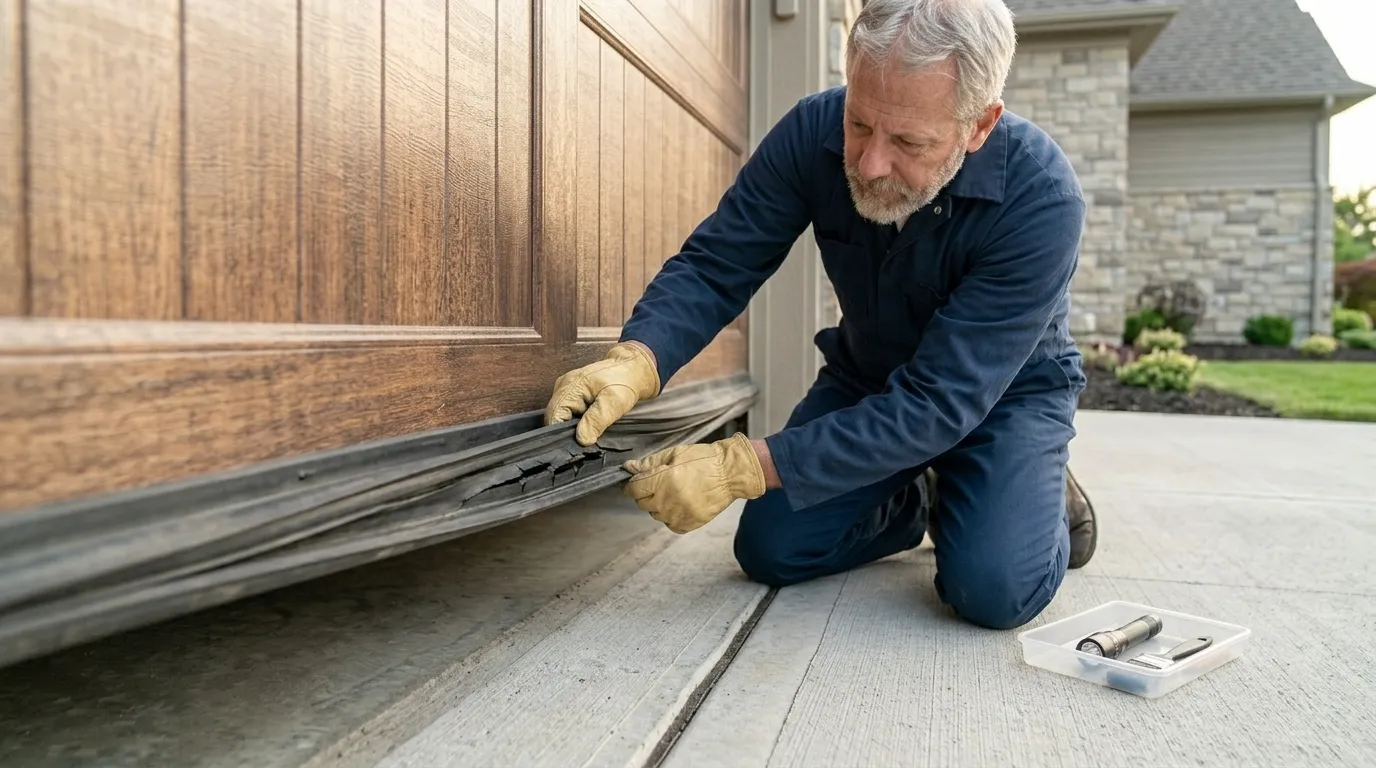
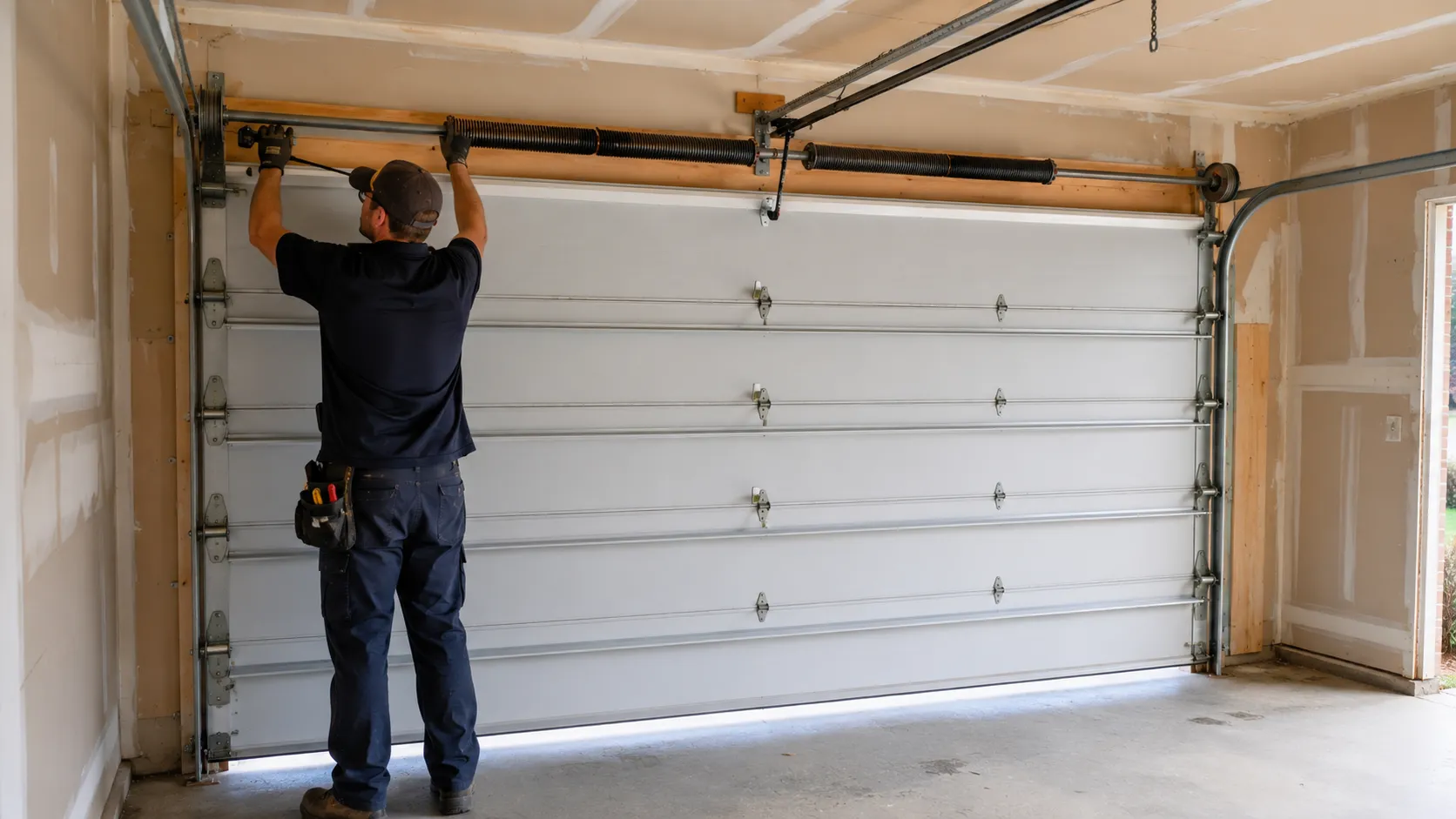
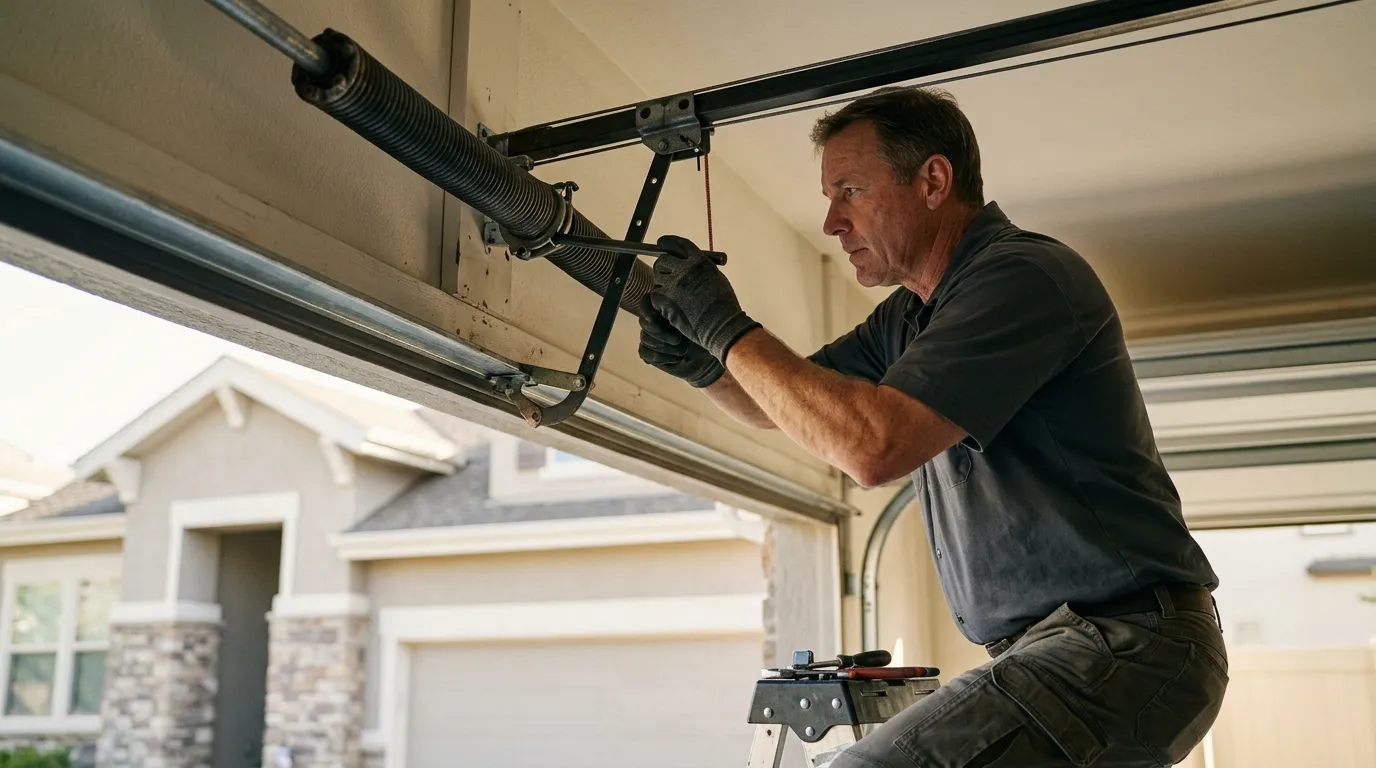
A door that's dragging, squealing, or reversing on its own is telling you something, and in houses from the 1983-2001 era it's usually the same story: original torsion or extension springs finally giving out after decades of cycles, or rollers that were never swapped since the house was built. Leave it alone and the spring doesn't get gentler about failing - it goes from noisy to snapped, usually on a day you needed the car out.
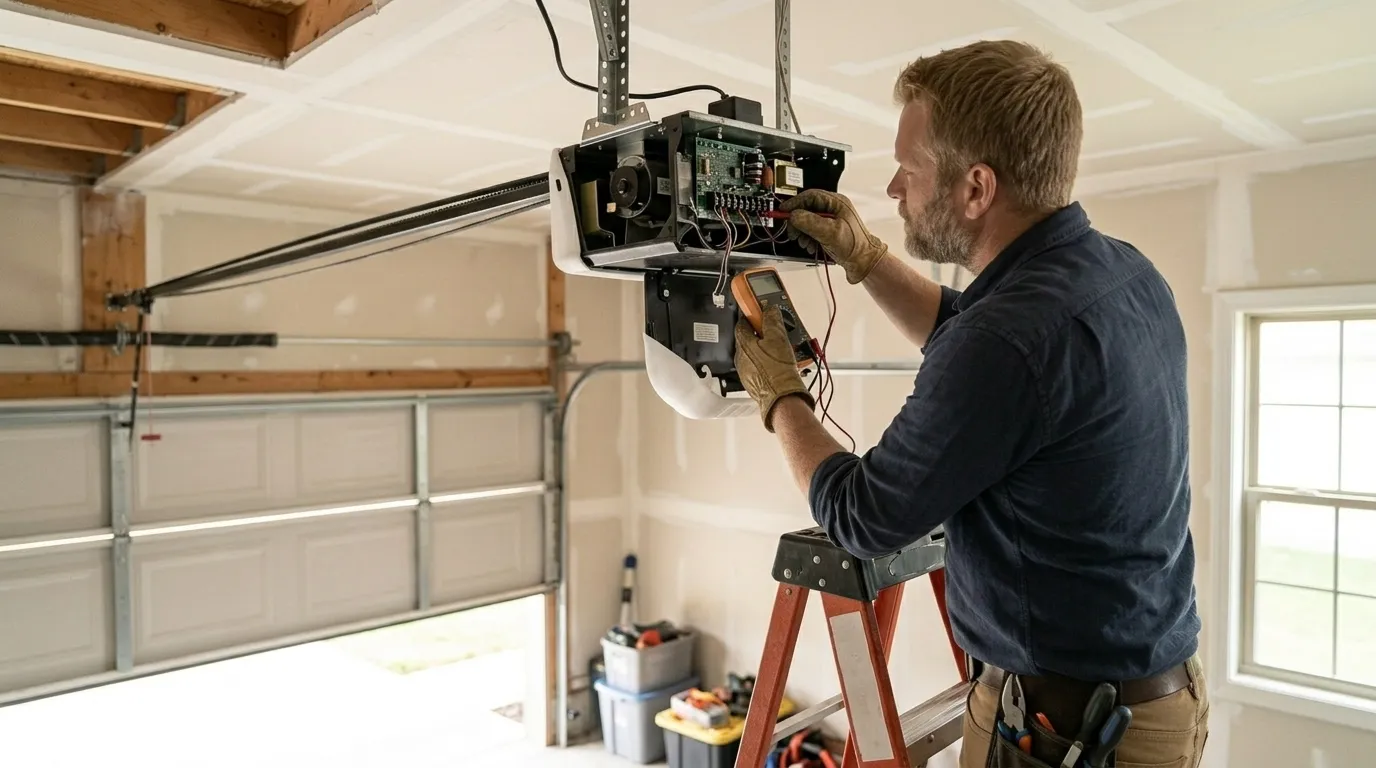
The bigger risk with ignoring it isn't the spring itself, it's what a snapped cable or off-track panel does to the opener trying to compensate. An opener built to lift a balanced door will burn out fast trying to lift one that isn't, and that turns a spring job into a spring-plus-opener job.
We're not going to tell you every squeak means a $400 repair. Sometimes it's a dry hinge and a can of the right lubricant fixes it for a year. But if the door's from that original 1980s-90s build era and it's making a new noise, it's worth a look before it decides the timing for you.
The Problem
Most of the calls we run across this service area trace back to the same age of equipment. Housing here is mostly 1980s-90s stock, which means the springs, rollers, and openers we're working on have had thirty-plus years of daily cycles. That's not a knock on the builders - it's just what happens to steel and nylon over that many lift cycles, mild climate or not.
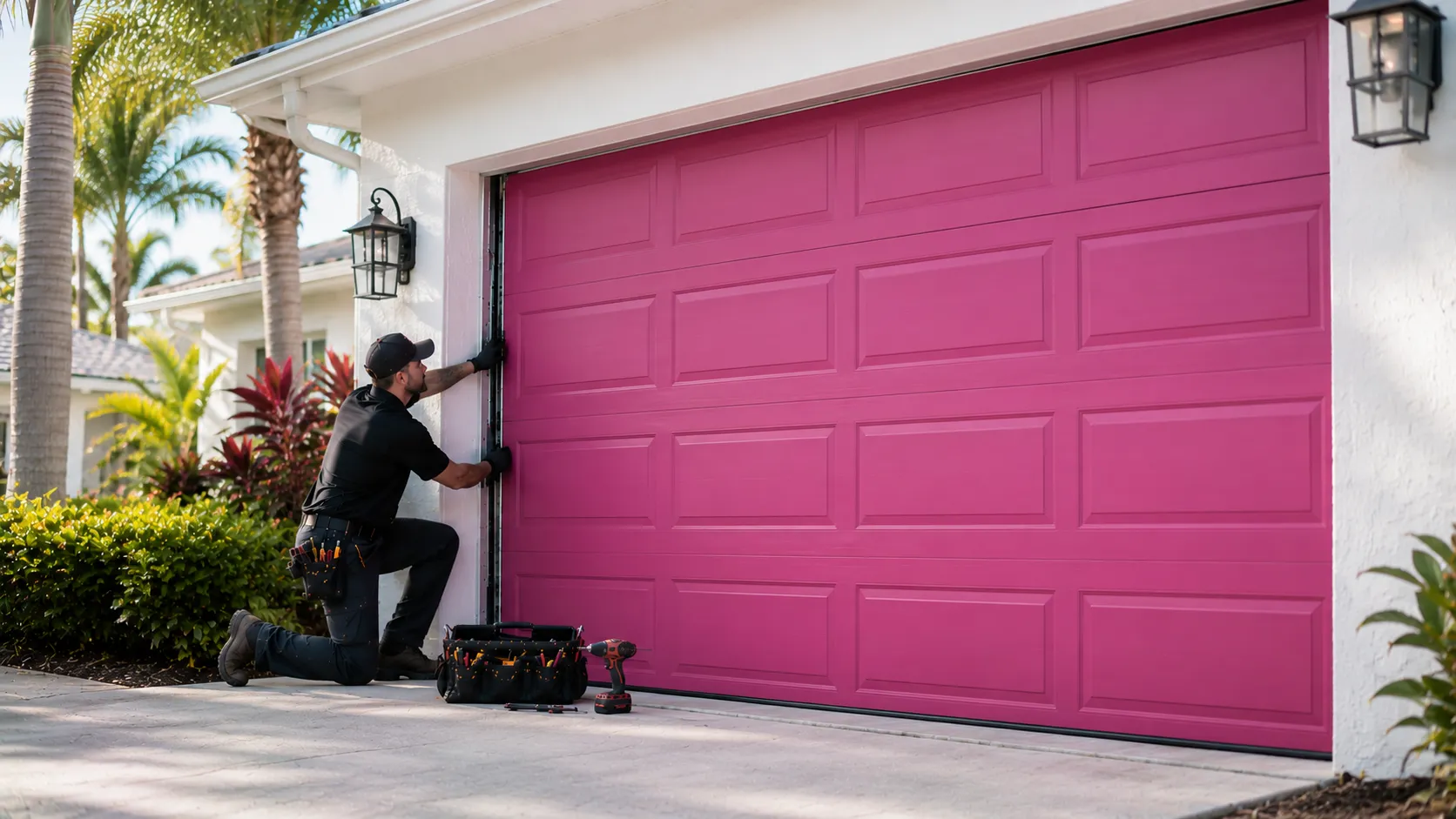
The specific failure varies house to house. Some doors still run on the extension springs common to that era, which wear differently than torsion setups and tend to fail without much warning. Others have been retrofitted with a newer opener bolted onto original track that's slightly out of alignment, which shows up as grinding or a door that binds halfway up.
Here's the honest limitation: if the track or frame has warped enough that the door won't sit square, we're not going to keep adjusting it every six months and calling that a fix. At some point on an original 1980s track, replacement is the actual repair, and we'll say so instead of running the meter.
What the Weather Here Does to It
The service area sits in a mild temperate band, which means we don't deal with the deep freeze-thaw cycles that crack concrete slabs and warp steel tracks the way colder regions do. That's a real advantage - a door here isn't fighting the same seasonal contraction and expansion that shortens spring life up north.
But mild doesn't mean maintenance-free. Steady moderate temperatures mean components don't get the seasonal reprieve that colder climates give hardware a chance to rest during - doors here run close to the same conditions twelve months a year, so wear is steady rather than seasonal. On original hardware from the 1983-2001 build era, that steady cycling adds up the same way, just without the dramatic winter failures other regions see.
So when a customer near Cameron Park or Los Fresnos asks why their door failed without a cold snap to blame, the answer is usually just mileage - thirty years of a garage door doing its job in a climate that never forced it to slow down.
How it works
From “it’s stuck” to “it’s fixed”
01
Tell us what’s wrong
Describe the symptom - won’t open, loud bang, opener runs but the door won’t move.
02
On-site diagnosis
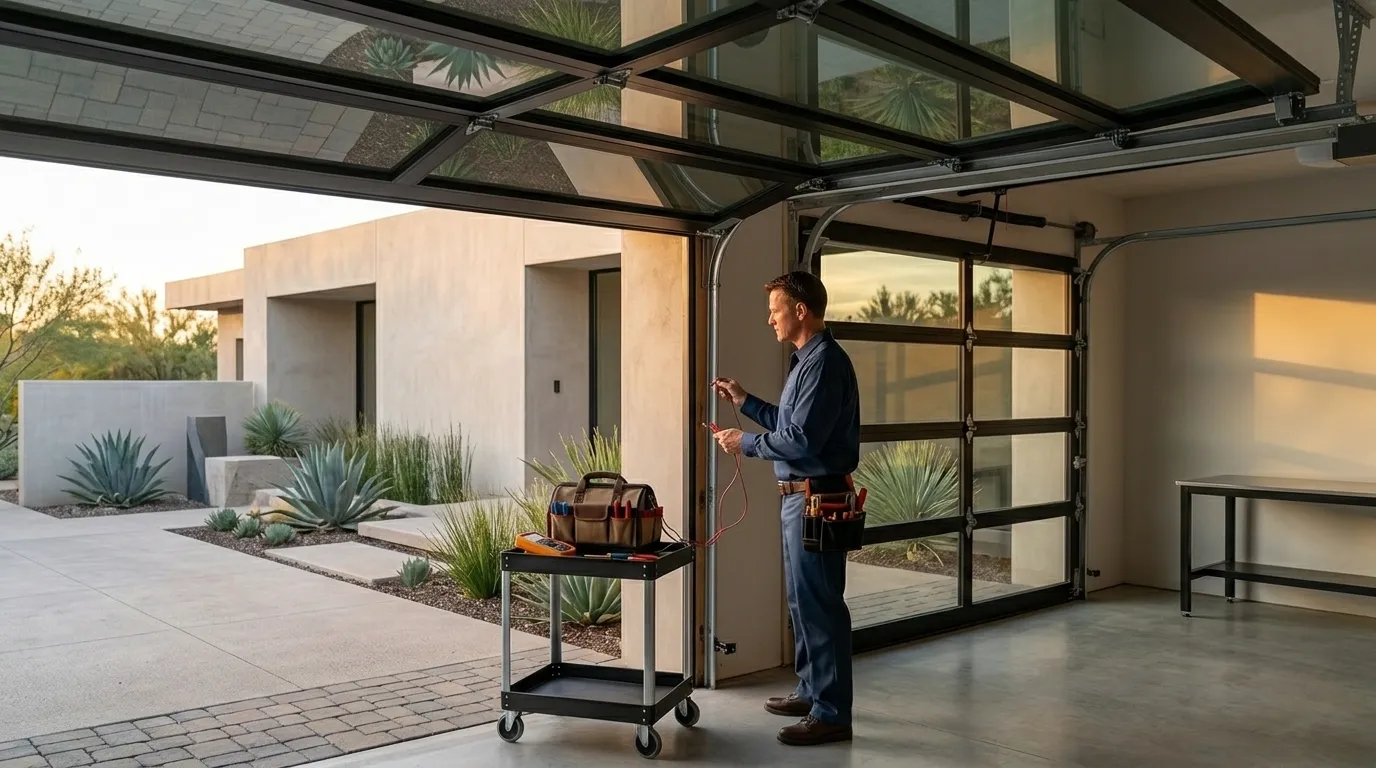
A technician tests the door under power and by hand and finds what actually failed.
03
Clear, up-front plan
You get the fix that’s needed and what drives the cost - before any work starts.
04
Repaired & tested
The repair is done, the door is set true and tested, and the work area left clean.
Serving Brownsville, TX - tell us what your door’s doing and we’ll take it from there.
Straight answers about garage door repair in Brownsville. Still unsure? Ask us directly.
How much does a garage door repair cost in Brownsville?
It depends on what's actually broken, so we don't quote a price without seeing the door. A worn roller and a broken spring are very different jobs. We diagnose first, give you the number, and let you decide before any work starts.
My house was built in the 1980s - is that why my springs keep failing?
Likely, yes. Most homes across this service area date from 1983 to 2001, and a lot of them still run original or first-generation hardware. Springs sized for a door thirty-plus years ago are simply due, regardless of how well they were installed.
Does the mild climate here mean less maintenance?
It helps - you're not dealing with the freeze-thaw cracking that damages tracks and slabs up north. But mild temperatures also mean components run under steady daily use year-round instead of getting a seasonal break, so parts still wear out on their own schedule.
Is it ever not worth repairing an old door?
Yes. If the track or frame has warped enough that the door won't sit square, adjusting it every few months isn't a real fix. On original hardware from the 1980s-90s build era, replacement is sometimes the honest answer, and we'll tell you when that's the case.