Why Brownsville's 1980s-90s Garage Doors Need Different Care
Most Brownsville homes date from 1983-2001, so torsion springs and openers from that era are aging together. Here's what it means for repairs and upkeep.
We don't quote a number here, because we haven't seen your door, but there's a reason cost questions in this area tend to follow a pattern. Most houses across the Brownsville service area went up between 1983 and 2001, and that means a lot of garages share the same generation of hardware: the same style of torsion spring drum, the same class of chain-drive opener, sometimes the same track width. That consistency can make a repair estimate more predictable than it would be in a neighborhood with a mixed bag of 1950s and 2010s construction stacked together.
What moves the price is spring count, door weight, and whether the opener needs replacing along with the spring - not the town you live in. With a median household income of $55,387 in this area, we know a full door-and-opener replacement is a real financial decision, not a small one, and we'd rather walk you through repair-versus-replace math on the door in front of us than guess over the phone.
The honest limitation: we can't give you a phone quote that means anything. Spring count, door material, and opener age all change the number, and getting it wrong either way wastes your time or ours.
Leaving It Alone
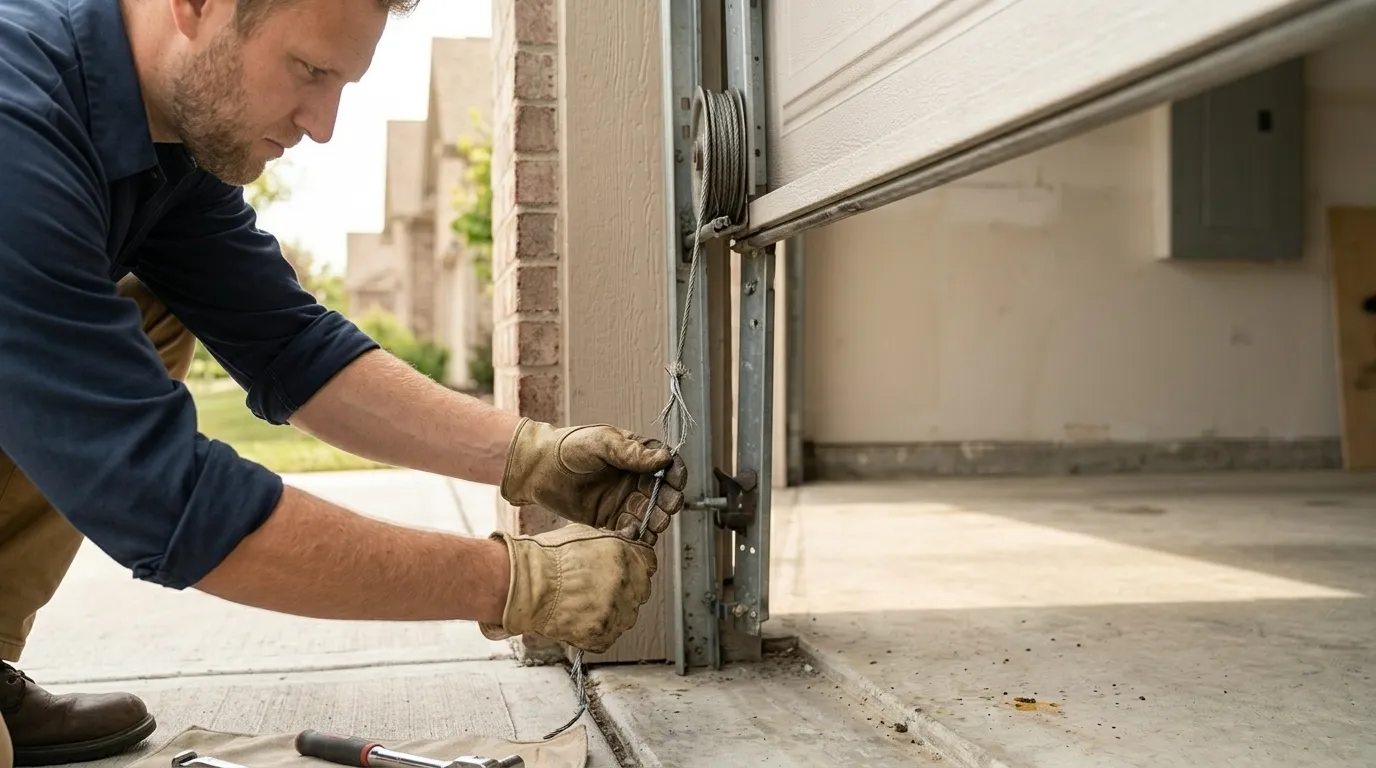
A slow-closing door or a grinding opener doesn't fix itself, and in this part of the service area, ignoring it has a specific shape. Because most houses here were built in that 1983-2001 window, the original torsion springs - if they're still original - are well past the cycle life they were rated for when they went in. A spring that's already worn thin doesn't fail gently. It goes while the door is under full tension, usually the next time someone opens it.
Across the roughly 10,532 owner-occupied houses in this service area, that's not a rare setup - it's the majority setup. Waiting on a noisy opener or a door that drifts off-track by an inch means waiting on hardware that was already due for attention before the symptom showed up. The gears inside a 1990s-era opener wear the same way regardless of what state it's in, but the fact that so much of the stock here is the same age means a lot of these failures are landing in the same few years.
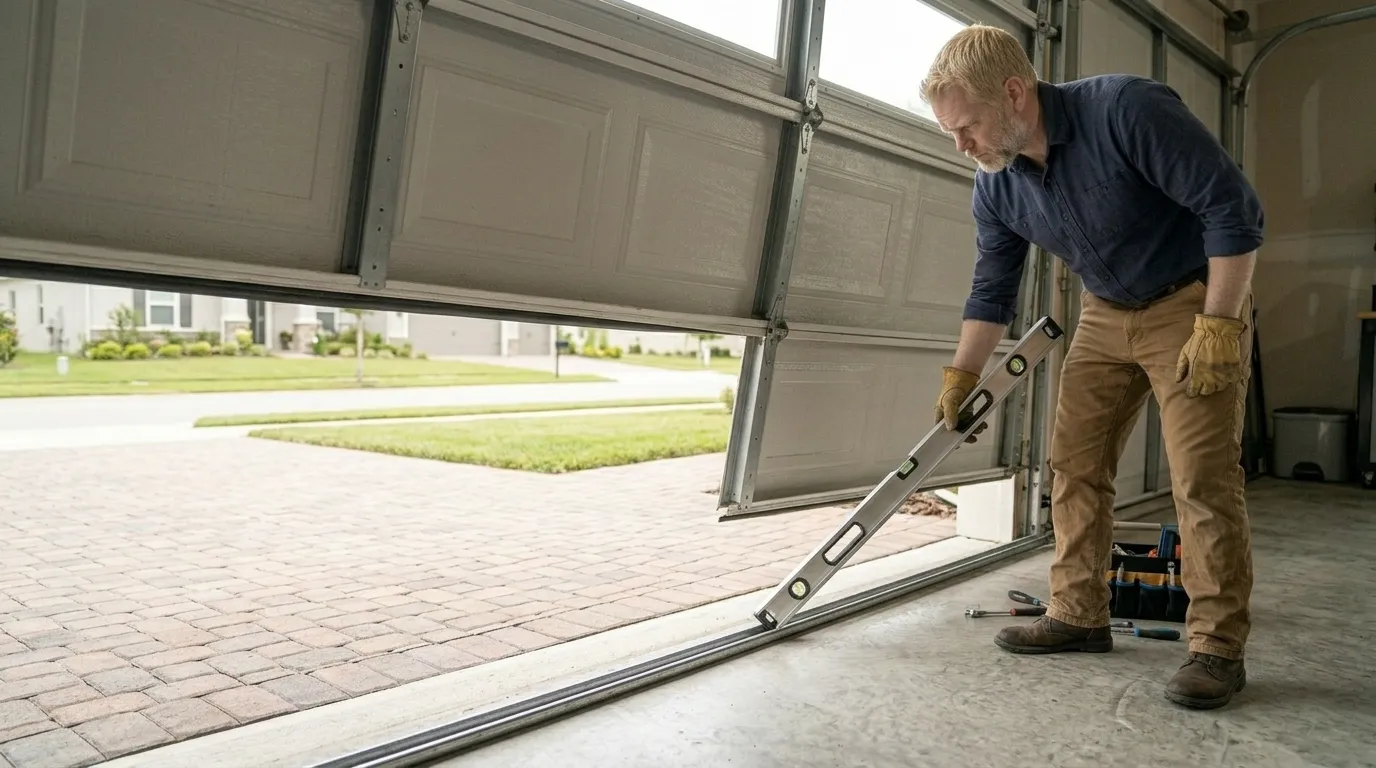
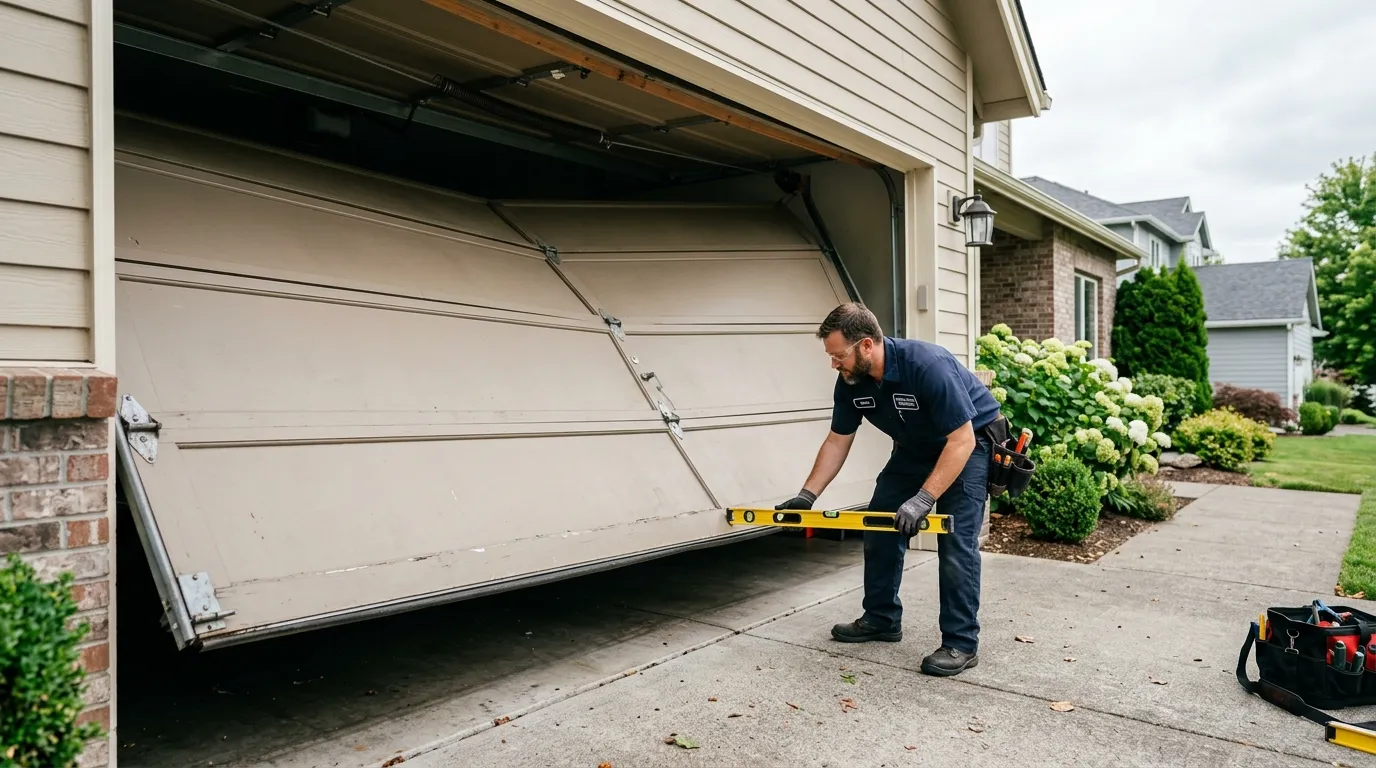
We're not going to tell you every noise means imminent failure - some are just a track that needs a bracket tightened. But a door that's hesitating, reversing, or sagging on one side is telling you something, and on hardware this old, it's worth a look before it's an emergency call.
The Problem
The root of most calls we get in this area traces back to the same fact: a big share of the housing stock, across the ten or so named areas that make up this service territory, was built in the same twenty-year stretch. Factory torsion springs from that period were rated for a set number of open-close cycles, and a door that's been in daily use since the late 1980s or 1990s has usually burned through that rating already, whether or not it's shown symptoms yet.
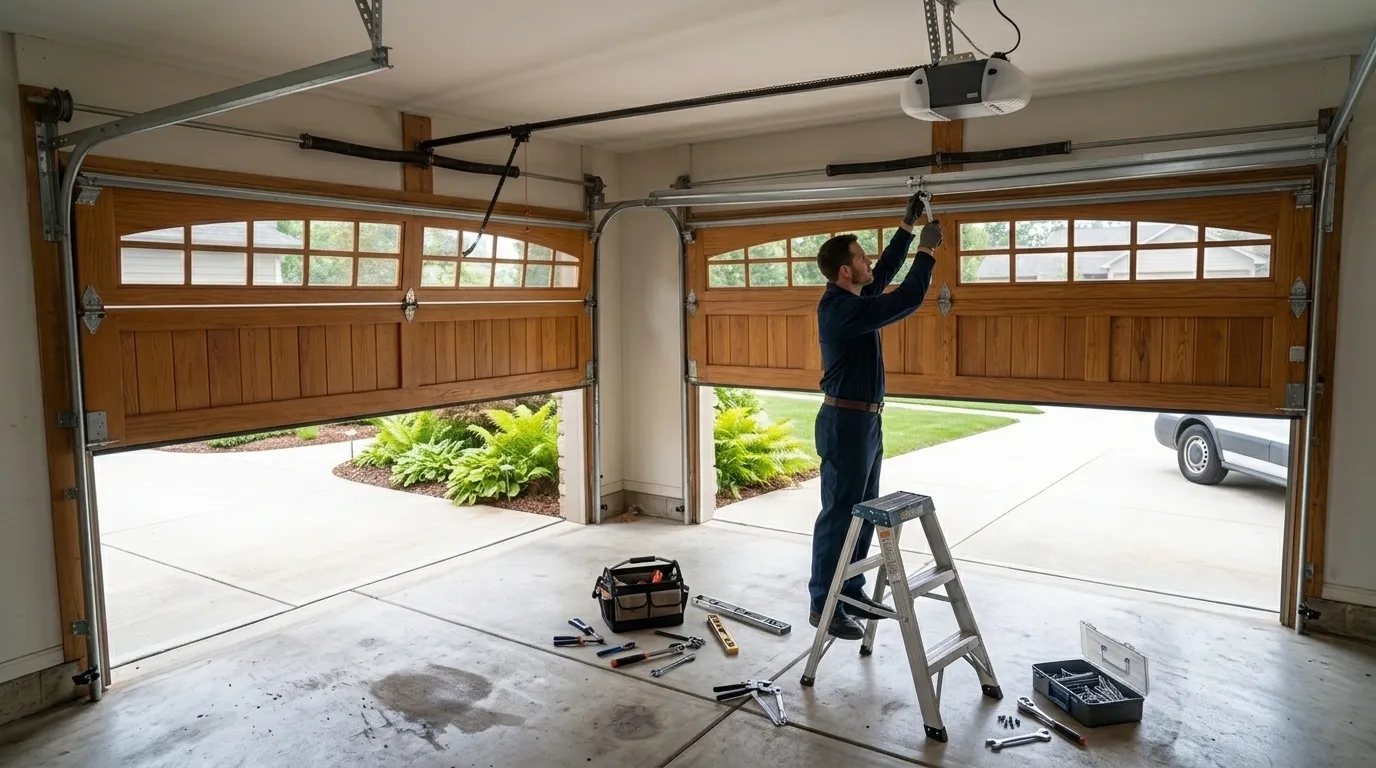
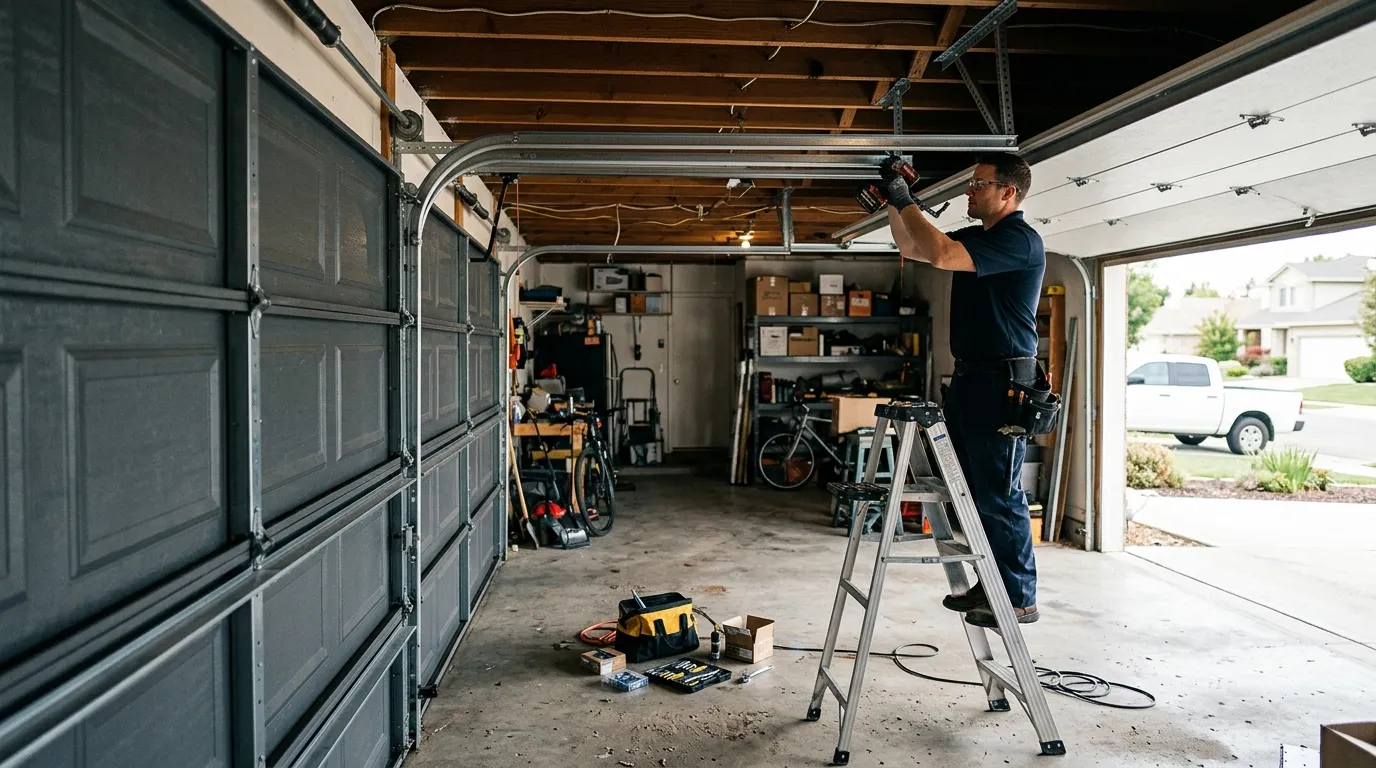
The openers tell the same story. A chain-drive unit installed alongside a house built in 1986 is nearing or past the point where the drive gear, the sprocket, or the logic board starts to go, and it often happens close in time to the spring wearing out - because they went in together and they've been cycling together ever since.
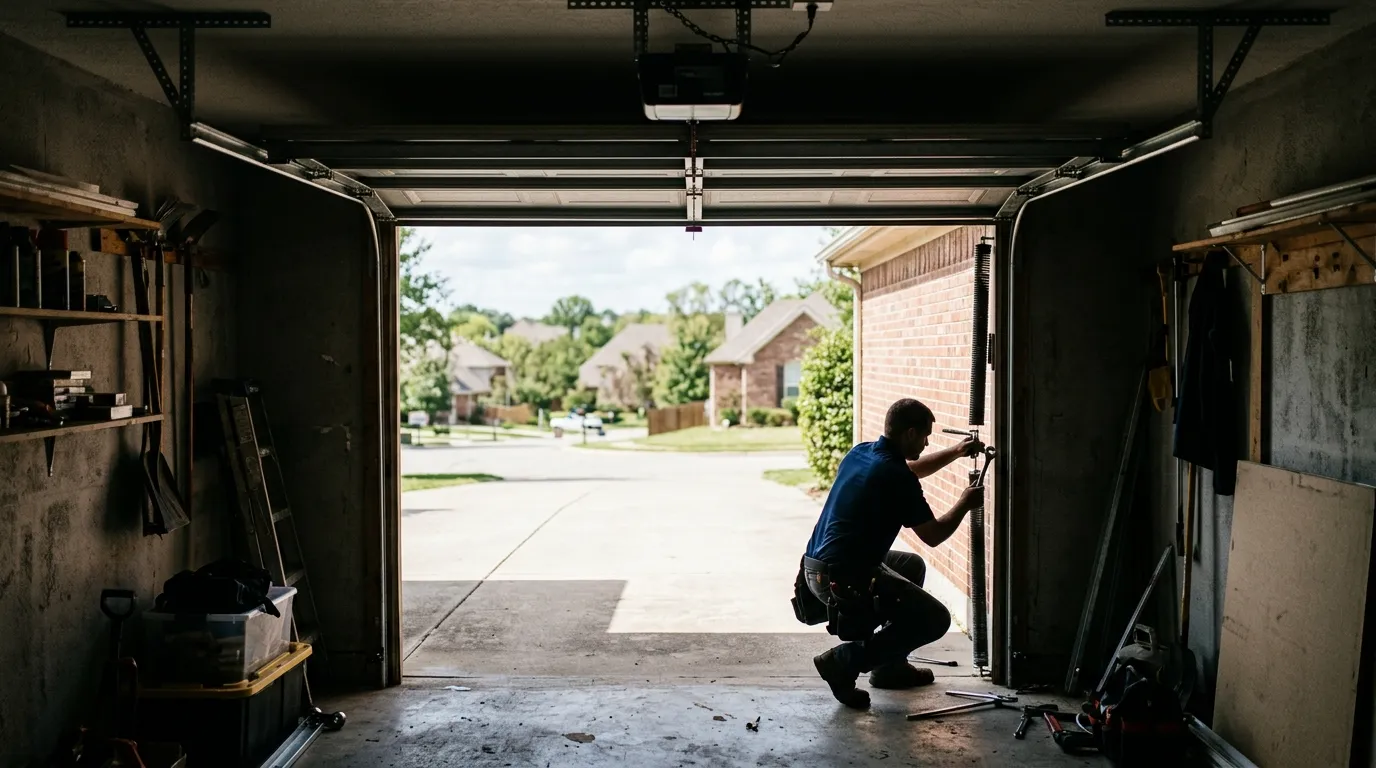
We don't treat every older door as a lost cause. Plenty of doors from this era are structurally fine and just need a spring swap and a tune-up. But when a spring, the opener, and the track are all from the same original install and all showing wear at once, patching one piece often just moves the next failure a few months down the road instead of solving it.
What the Weather Here Does to It
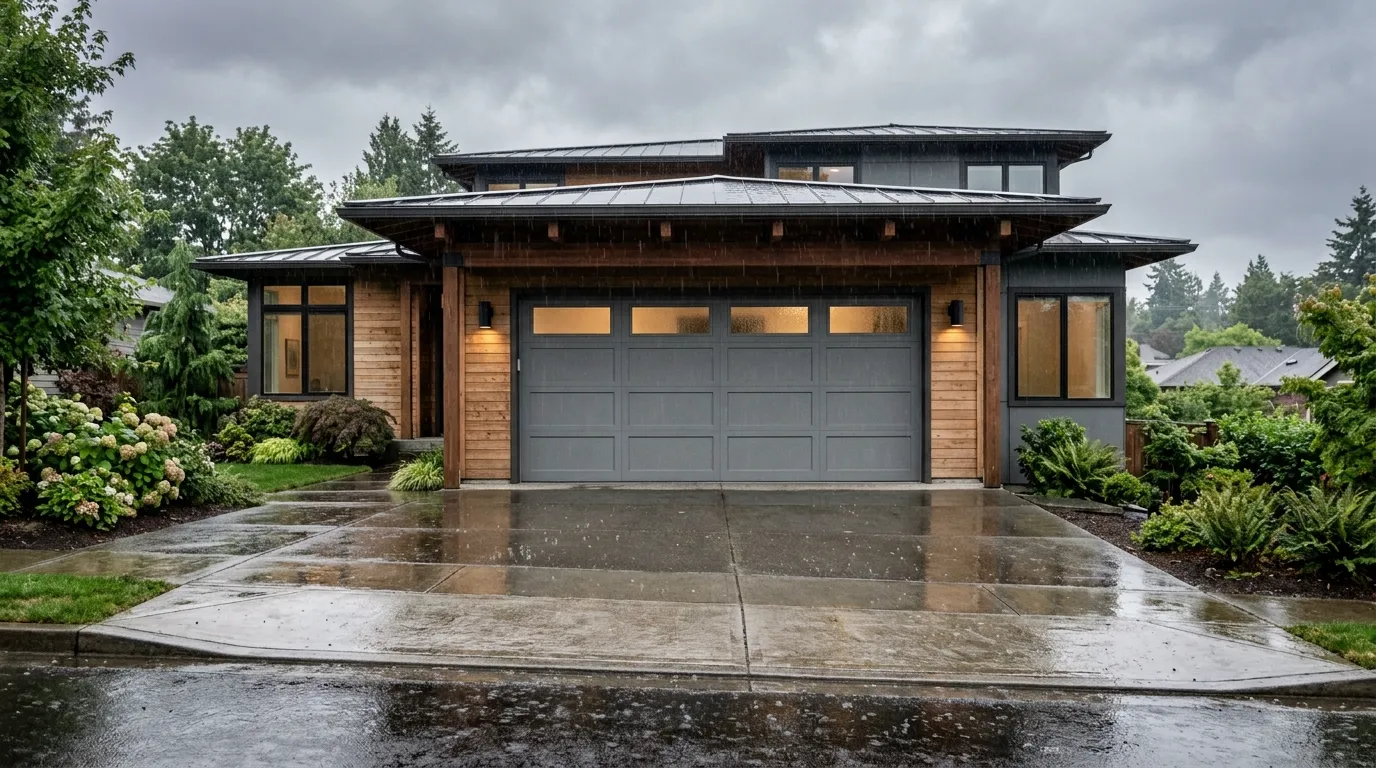
This area sits in a mild temperate band, which spares garage door hardware one of the harder problems doors face elsewhere: the hard freeze-thaw cycle that contracts steel and snaps already-weak springs in winter. That's a real advantage, and it means spring failure here is driven mostly by cycle count and age rather than a cold snap catching a worn spring at its weakest.
But mild and steady isn't the same as gentle. Consistent heat and humidity dry out spring and roller lubricant faster than a place with real winters, and they take a toll on rubber weatherstripping and seals through UV exposure and heat rather than cold cracking. A door that looks fine mechanically can still have a bottom seal that's gone brittle and no longer keeps the garage sealed the way it did when the house was built sometime in that 1983-2001 stretch.
We can't point to a specific temperature record or storm history for this claim - we don't have that data in front of us - so we'll leave it at what we know: steady heat plus decades-old hardware means lubrication and seals need more regular attention here than a one-time repair addresses.
How it works
From “it’s stuck” to “it’s fixed”
01
Tell us what’s wrong
Describe the symptom - won’t open, loud bang, opener runs but the door won’t move.
02
On-site diagnosis
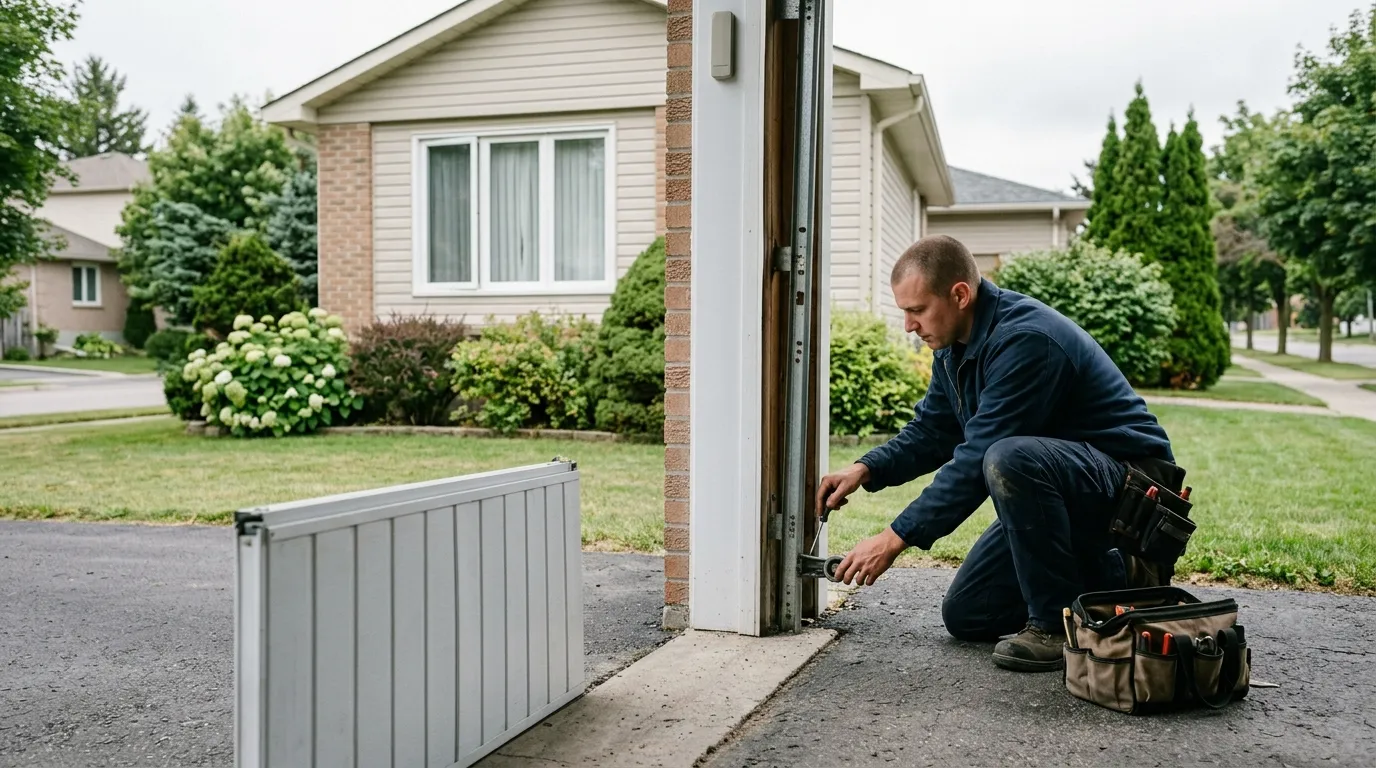
A technician tests the door under power and by hand and finds what actually failed.
03
Clear, up-front plan
You get the fix that’s needed and what drives the cost - before any work starts.
04
Repaired & tested
The repair is done, the door is set true and tested, and the work area left clean.
Serving Brownsville, TX - tell us what your door’s doing and we’ll take it from there.
Straight answers about garage door repair in Brownsville. Still unsure? Ask us directly.
My house was built in the late 1980s - does the original spring need to be replaced even if it hasn't broken yet?
Not automatically, but it's worth checking. Torsion springs are rated for a set number of cycles, and a door original to a house from that era has usually put a lot of cycles on that spring already. We'd rather look at it and tell you it's fine than have you find out it's not fine while the door is halfway up.
Do garage doors in this area need different maintenance because of the climate?
The mild temperate climate here means you're not dealing with freeze-related spring failure the way colder regions are. But steady heat and humidity dry out lubricant and wear down rubber seals faster, so those parts still need regular attention even without hard winters.
Why does the age of my neighborhood matter for a garage door repair?
Most houses across this service area were built between 1983 and 2001, so a lot of garages share the same generation of spring, track, and opener hardware. That means the failures we see tend to cluster by age rather than by brand, which helps us know what to expect before we even open the panel.
Should I repair the opener or replace the whole thing?
It depends on the opener's age and what's actually failing - a bad sensor is a quick fix, a dying gear or logic board on a unit installed decades ago usually isn't worth chasing. We'll tell you honestly when a repair is just delaying a replacement you'll need soon anyway.