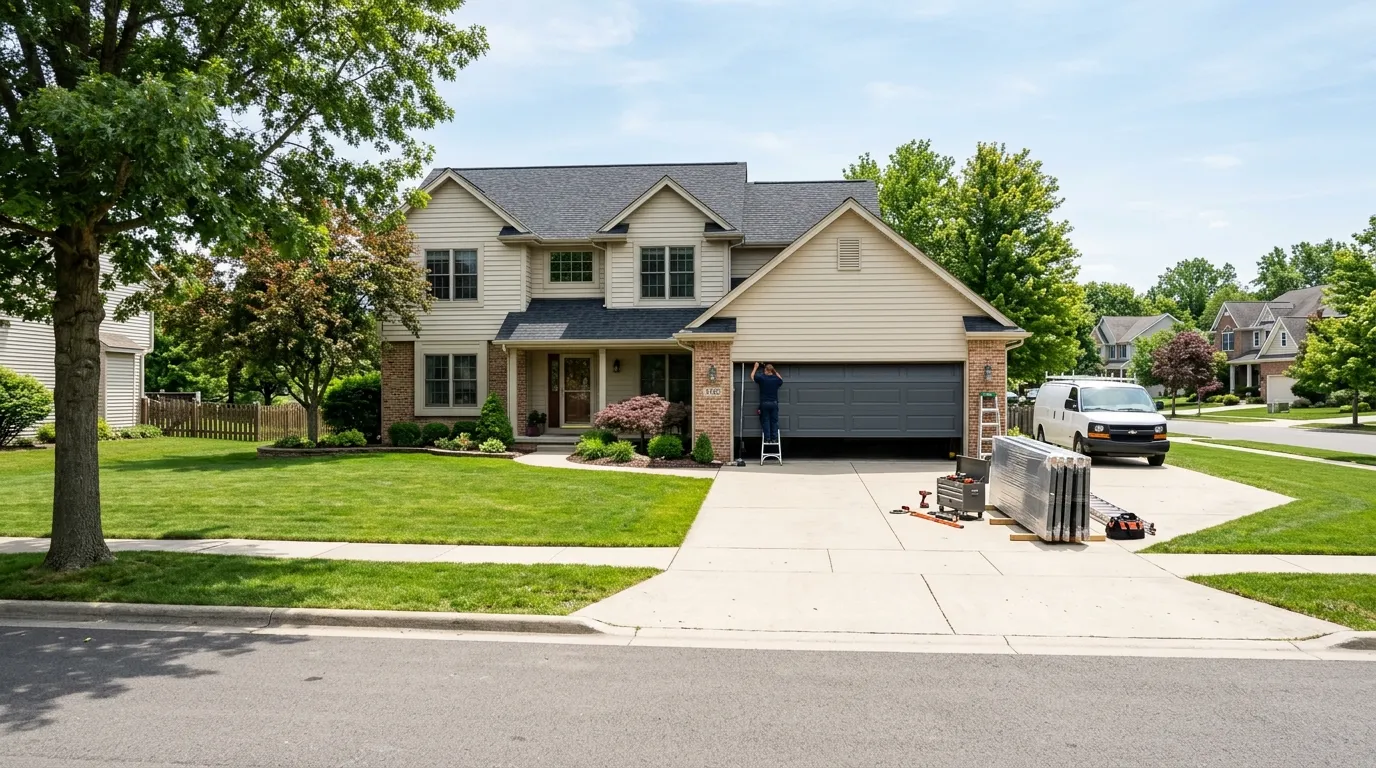
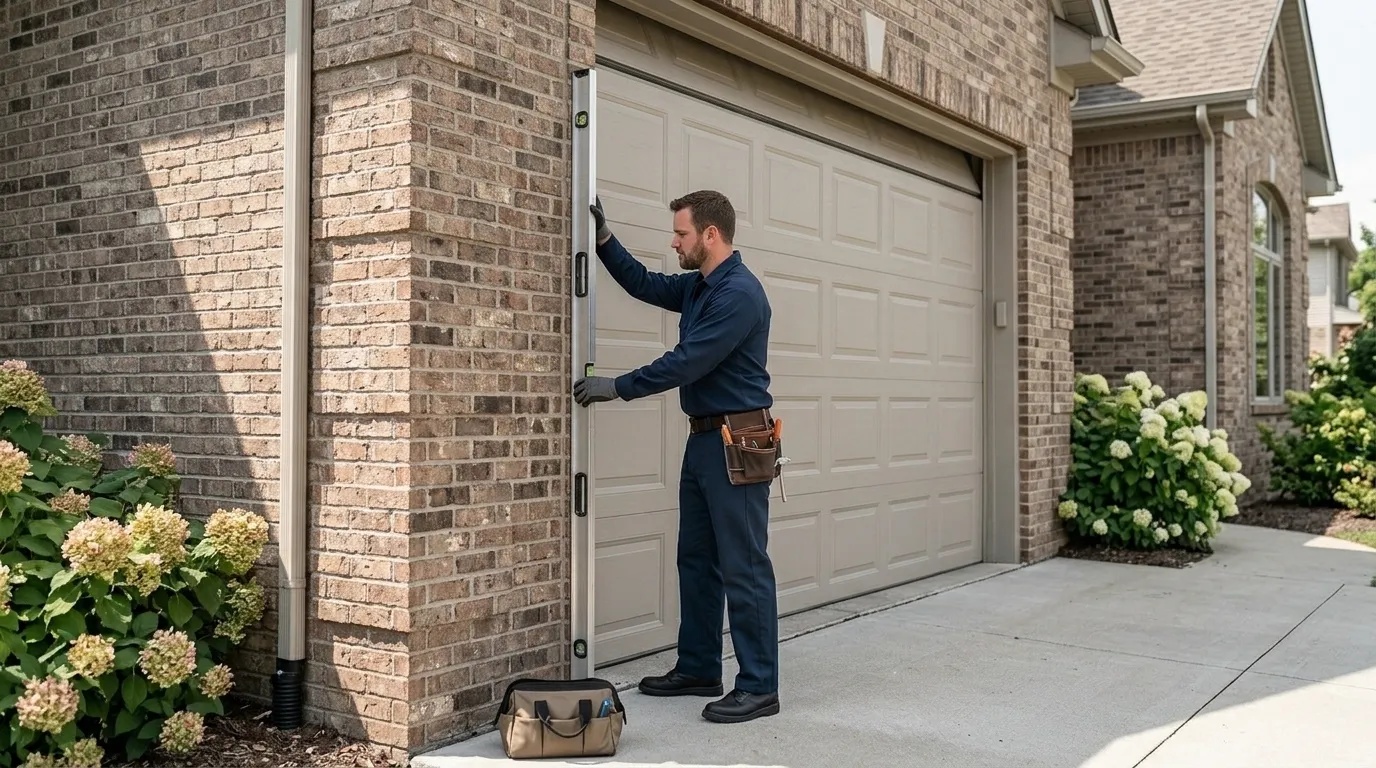
We don't quote a number until we've looked at the door, because what's wrong with a torsion spring costs nothing like what's wrong with a bent track, and both show up on doors this age. What we can tell you: across the service area median household income sits at $55,387, and that number shapes a lot of the calls we get. Owners want to know if a repair buys them another five years or if they're patching something that's going to fail again in six months. On a house built in the 1983-2001 window - which covers most of the stock out here - the original opener and springs are past the point where a single part swap solves it. Once the drum, the cable, and the rollers are all original, fixing one piece often just moves the failure to the next one. We'll tell you straight if that's where your door is, instead of running up a bill on a door that's better off replaced. If your door still tracks straight and the panels aren't cracked, a repair usually makes sense. If the frame's racked or the panels are delaminating from years of sun, replacement is the honest answer, even though it costs more up front.
Leaving It Alone
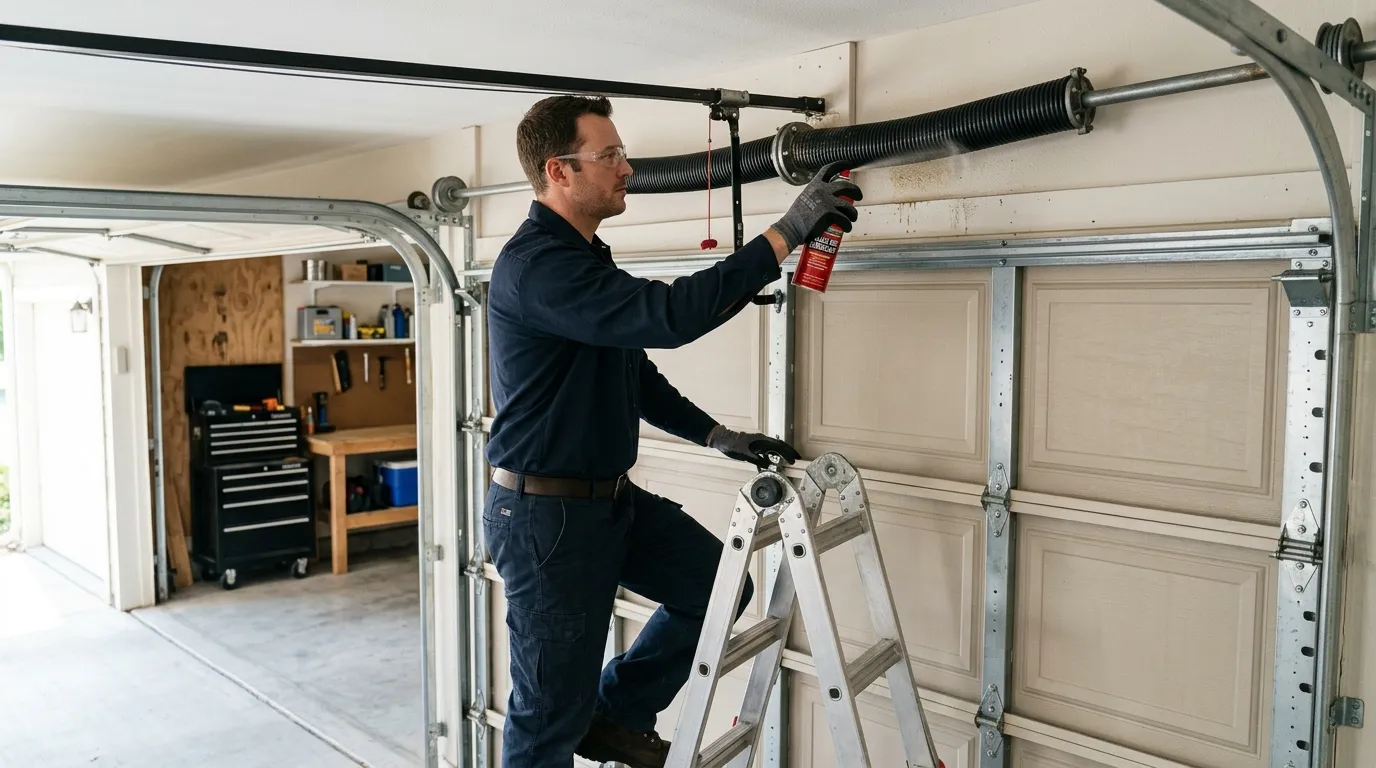
A door that's sticking or dropping unevenly on one side isn't going to fix itself, and out here it doesn't fail quietly. The mild temperate climate means metal doesn't snap from cold the way it does up north - it fatigues instead, slowly, through daily heat cycling and humidity. A torsion spring that's lost 20 percent of its tension will keep working until the day it doesn't, and when it goes on a door this old, it usually takes a cable or a bent track section with it. Rollers on original 1980s and 90s hardware are often nylon that's gone brittle from decades of sun; they don't crack all at once, they crumble a little more every open-and-close cycle until one jumps the track. Ignoring a slow drift toward one side for a few more months usually means a bigger repair bill later, not a smaller one. The honest exception: if the door still opens and closes evenly and you're just hearing more noise than you used to, that's often just old rollers and a lubrication job, not an emergency. Not every noise means the door is about to fail.
The Problem
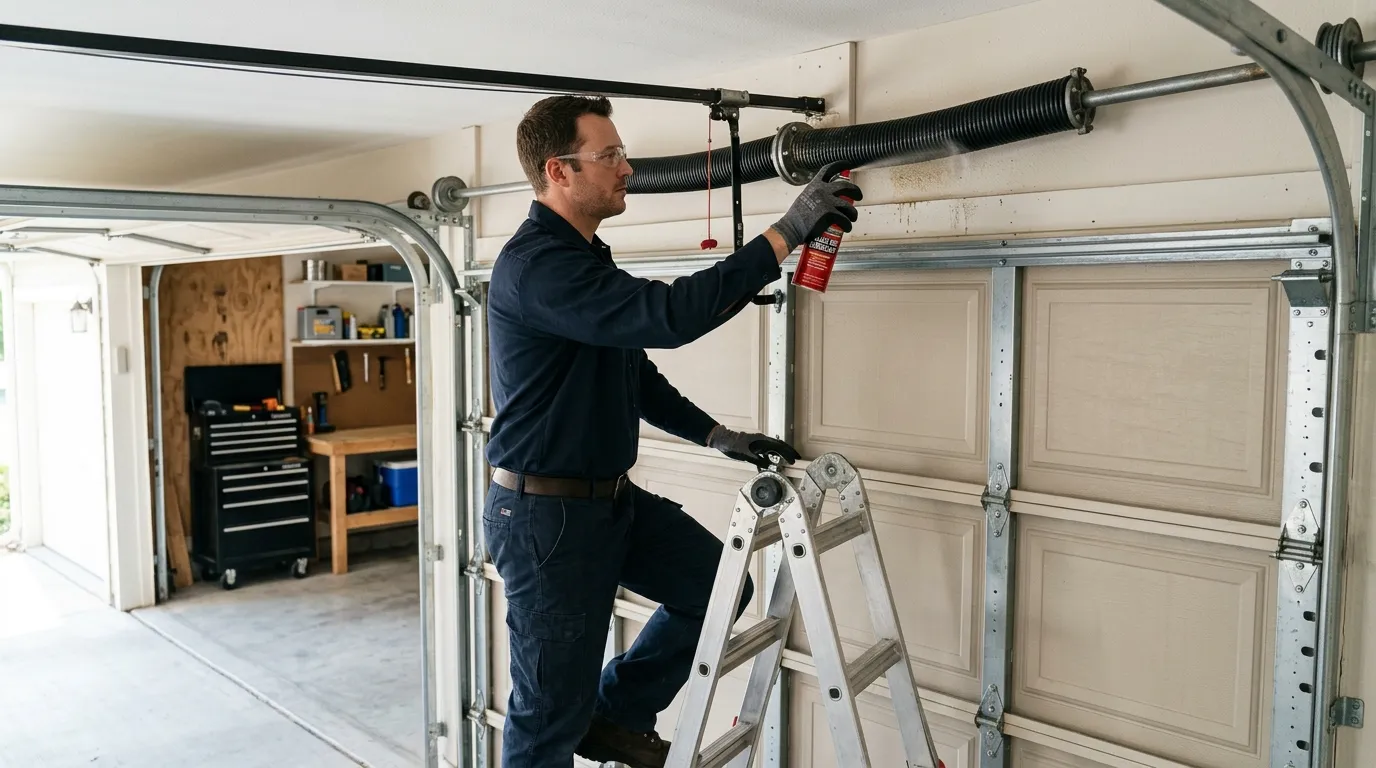
Most of the houses we get called to were built between 1983 and 2001, median year 1986, which puts a lot of original garage door hardware at 30 to 40 years old. That's openers with chain drives instead of belts, springs sized to specs nobody rechecks, and steel doors with foam that's degraded from decades of Gulf humidity working through the seams. The doors themselves are usually fine structurally - steel from that era holds up - but the moving parts underneath were never built to last four decades, and most owners never had them swapped. We see the same failure pattern across the ten or so neighborhoods we cover: worn spring, then cable, then the safety cable that's supposed to catch a broken spring is missing entirely because it wasn't required when the door went in. That last part matters. A door without a spring containment cable is a real hazard if a spring lets go, and it's common enough on houses from this era that we check for it on every call, whether or not that's why someone called us.
What the Weather Here Does to It
Brownsville's climate is mild and temperate - no hard freezes, no freeze-thaw cracking the way colder places see. That sounds like good news for a garage door, and mostly it is. But mild doesn't mean gentle. Steady heat and Gulf humidity work on rubber weatherstripping, foam insulation, and plastic rollers year-round instead of just in a few brutal months, so those parts age out on a slower, steadier curve rather than failing suddenly. Panels facing west or south take the most direct sun exposure and are usually the first to show fading, warping, or seal separation on a two-car door. None of this is dramatic weather damage - there's no hailstorm story here - it's just consistent wear that adds up faster than most owners expect on a door installed in the 80s or 90s. If you're noticing daylight around the edges of a door that used to seal tight, that's the weatherstripping giving out from sun exposure, not a sign the door itself is failing structurally.
How it works
From “it’s stuck” to “it’s fixed”
01
Tell us what’s wrong
Describe the symptom - won’t open, loud bang, opener runs but the door won’t move.
02
On-site diagnosis
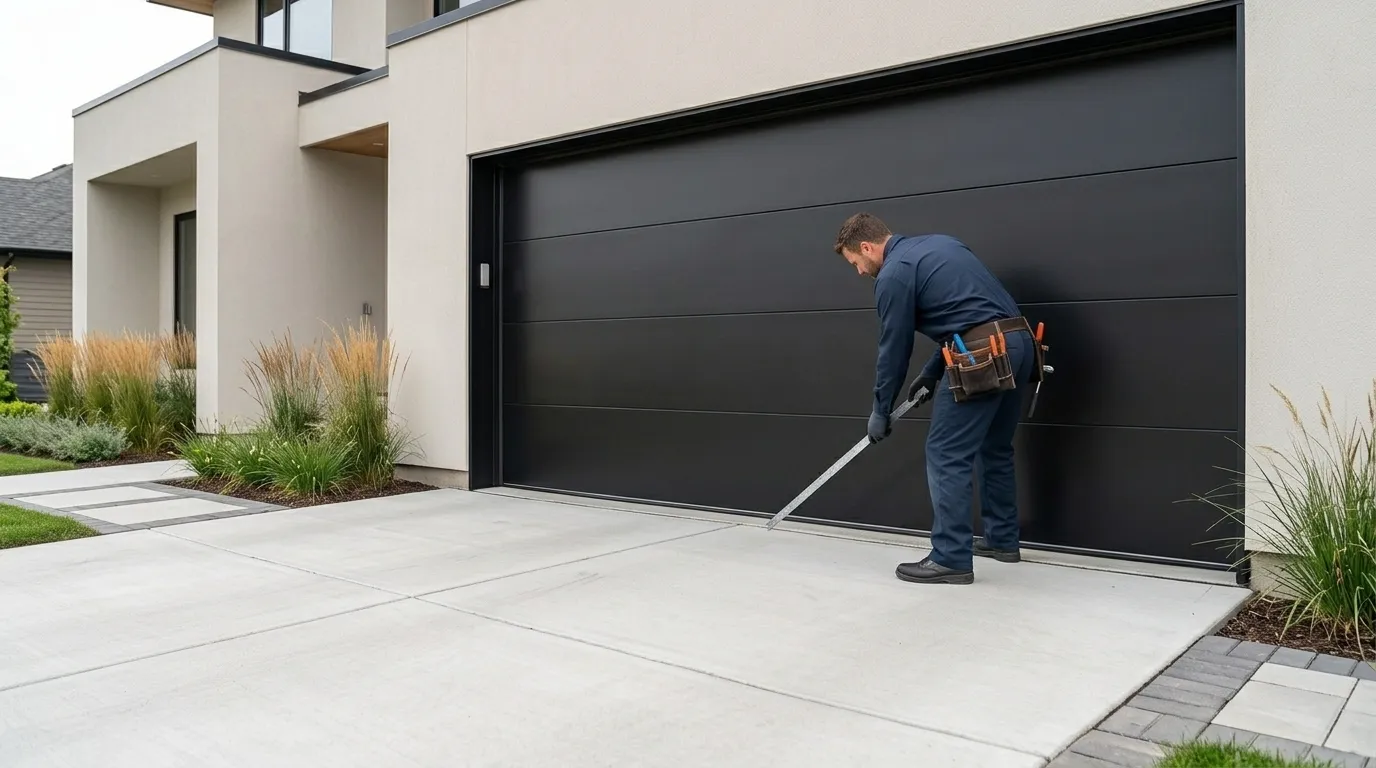
A technician tests the door under power and by hand and finds what actually failed.
03
Clear, up-front plan
You get the fix that’s needed and what drives the cost - before any work starts.
04
Repaired & tested
The repair is done, the door is set true and tested, and the work area left clean.
Serving Brownsville, TX - tell us what your door’s doing and we’ll take it from there.
Straight answers about garage door repair in Brownsville. Still unsure? Ask us directly.
My garage door is from the 90s and still works fine. Do I need to do anything?
Not necessarily. If it opens evenly, doesn't grind, and the panels aren't warped, keep using it. Original hardware from that era can still be sound. Worth checking whether it has a spring containment cable, since a lot of doors from the 80s and 90s were installed without one, and that's a cheap fix worth doing before anything breaks.
Is it worth replacing an old door instead of fixing it?
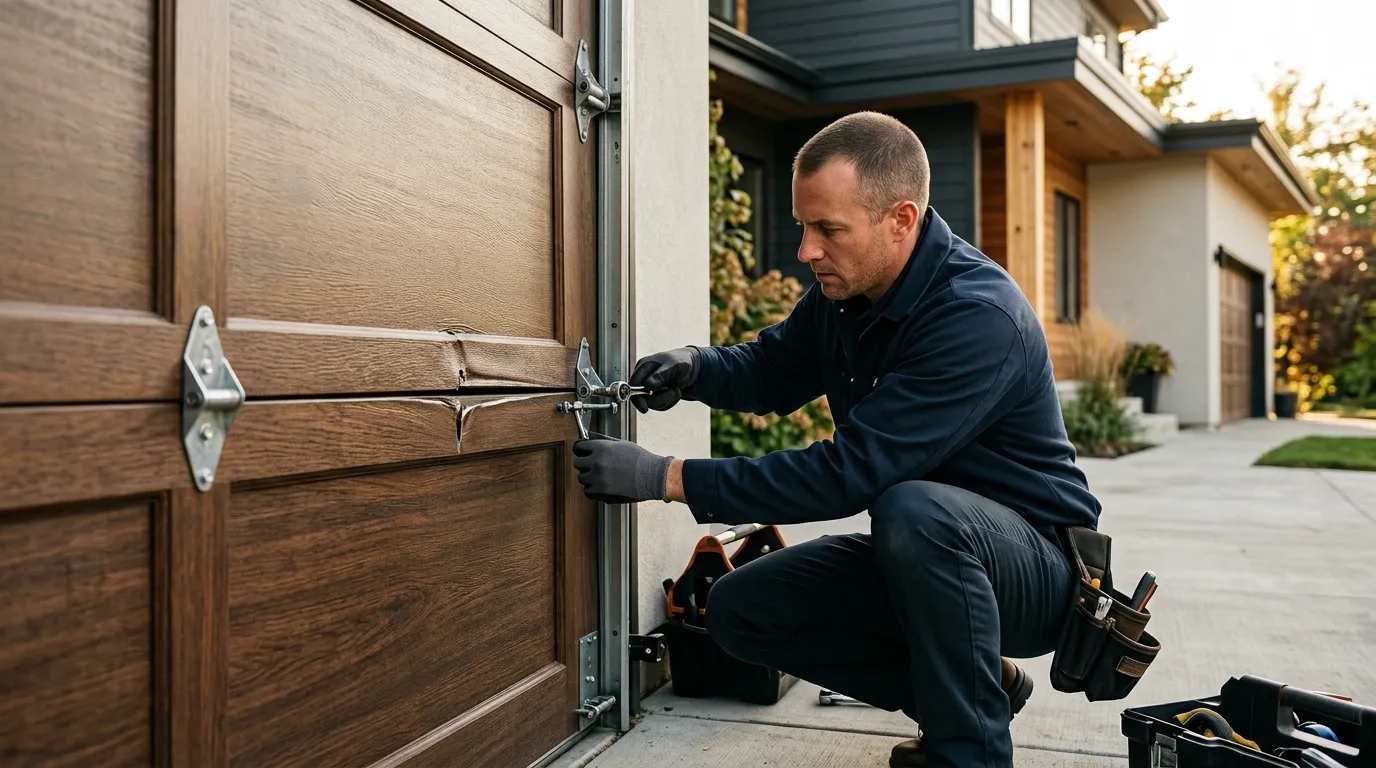
Depends what's wrong. A worn spring or roller on a structurally sound steel door is almost always worth fixing. A racked frame, delaminated panels, or an opener that's failed more than once in a year usually means you're better off putting that money toward a new door instead of another round of patching.
Why does my door seal worse than it used to, even though nothing broke?
Weatherstripping and foam seals degrade steadily under sun and humidity, even without a hard freeze to crack them. On a door installed in the 1980s or 90s, that seal has had 30-plus years of heat cycling. It's a wear part, not a failure, and it's a straightforward swap.