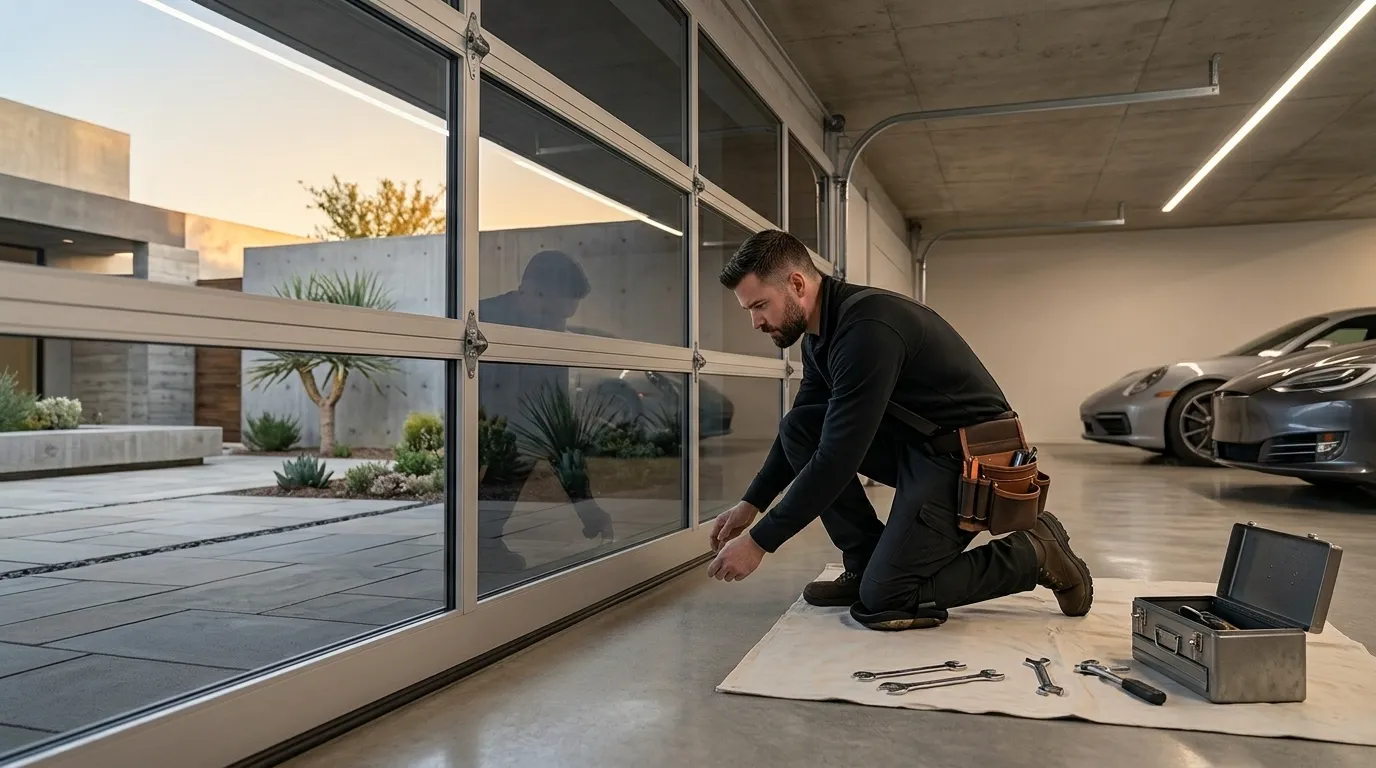
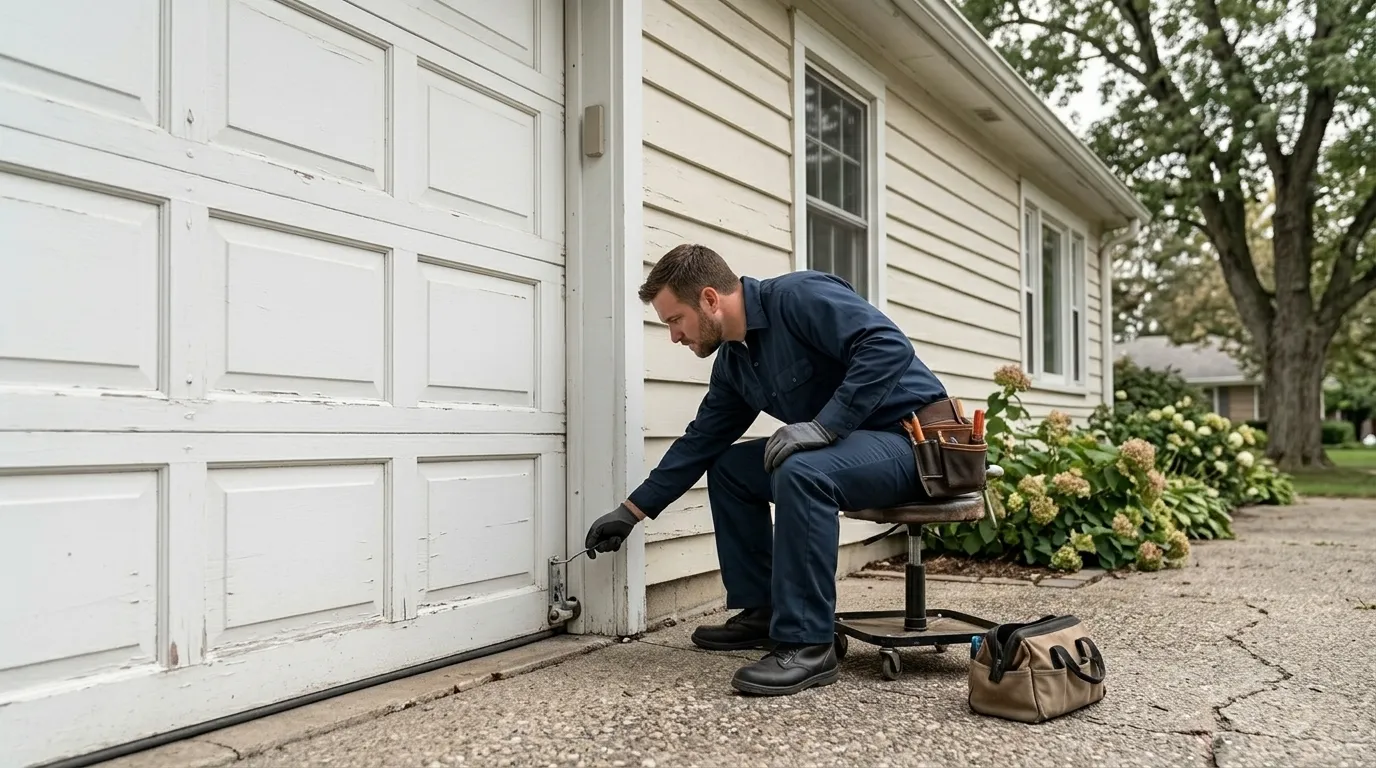
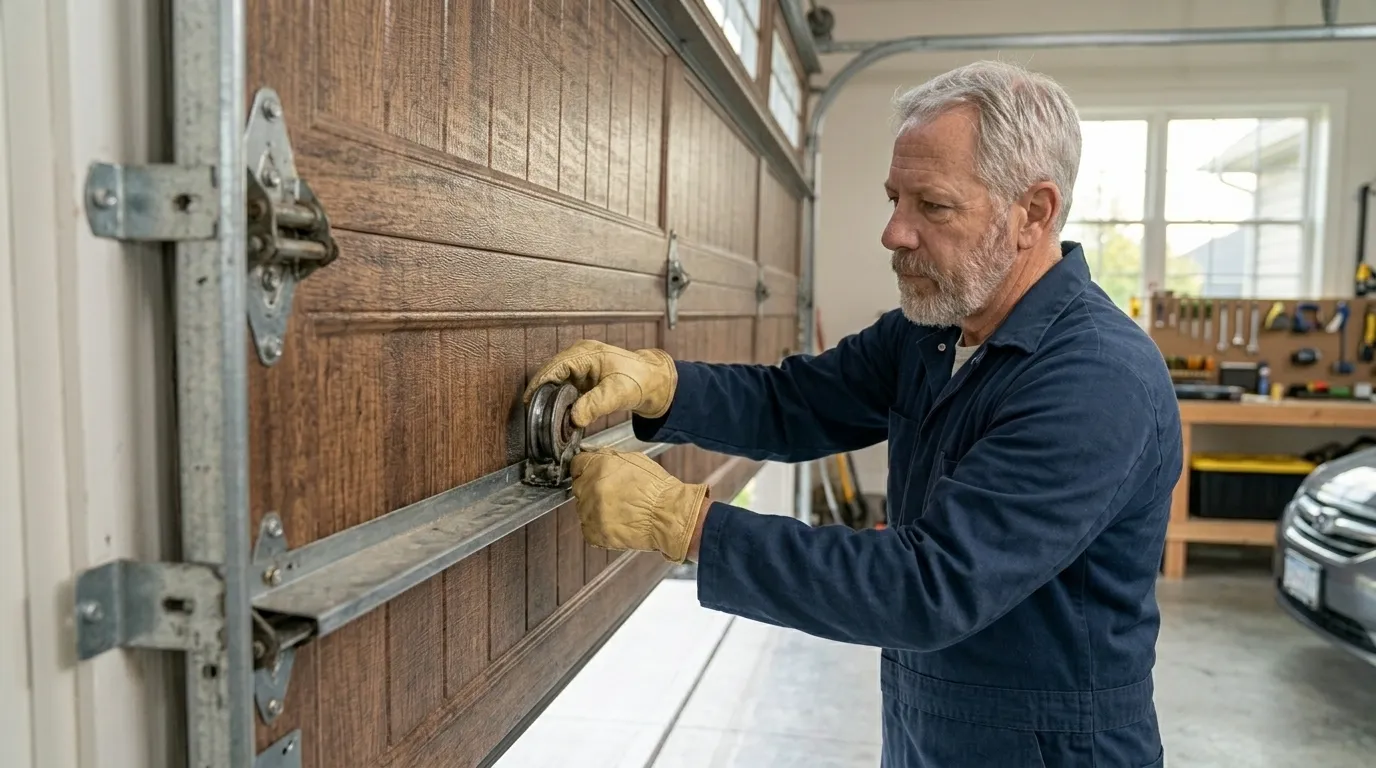
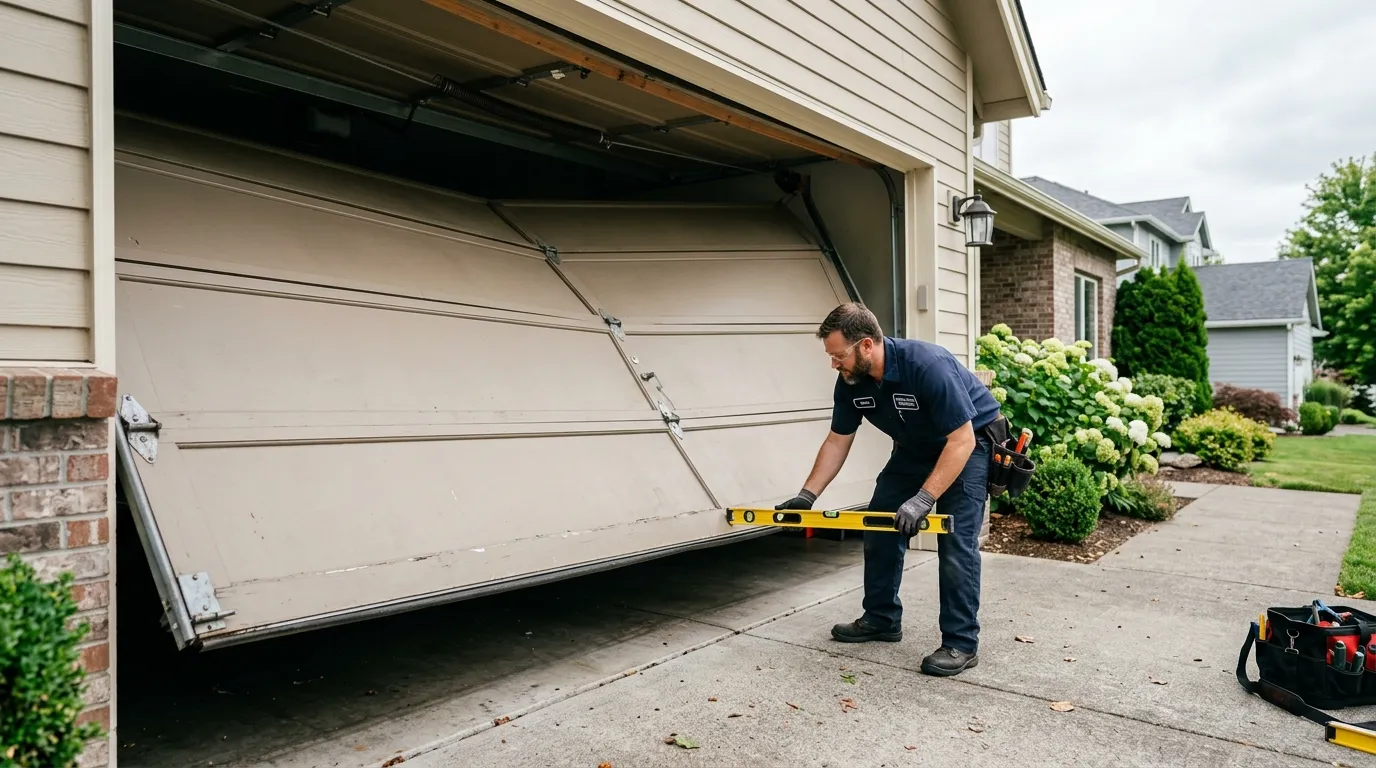
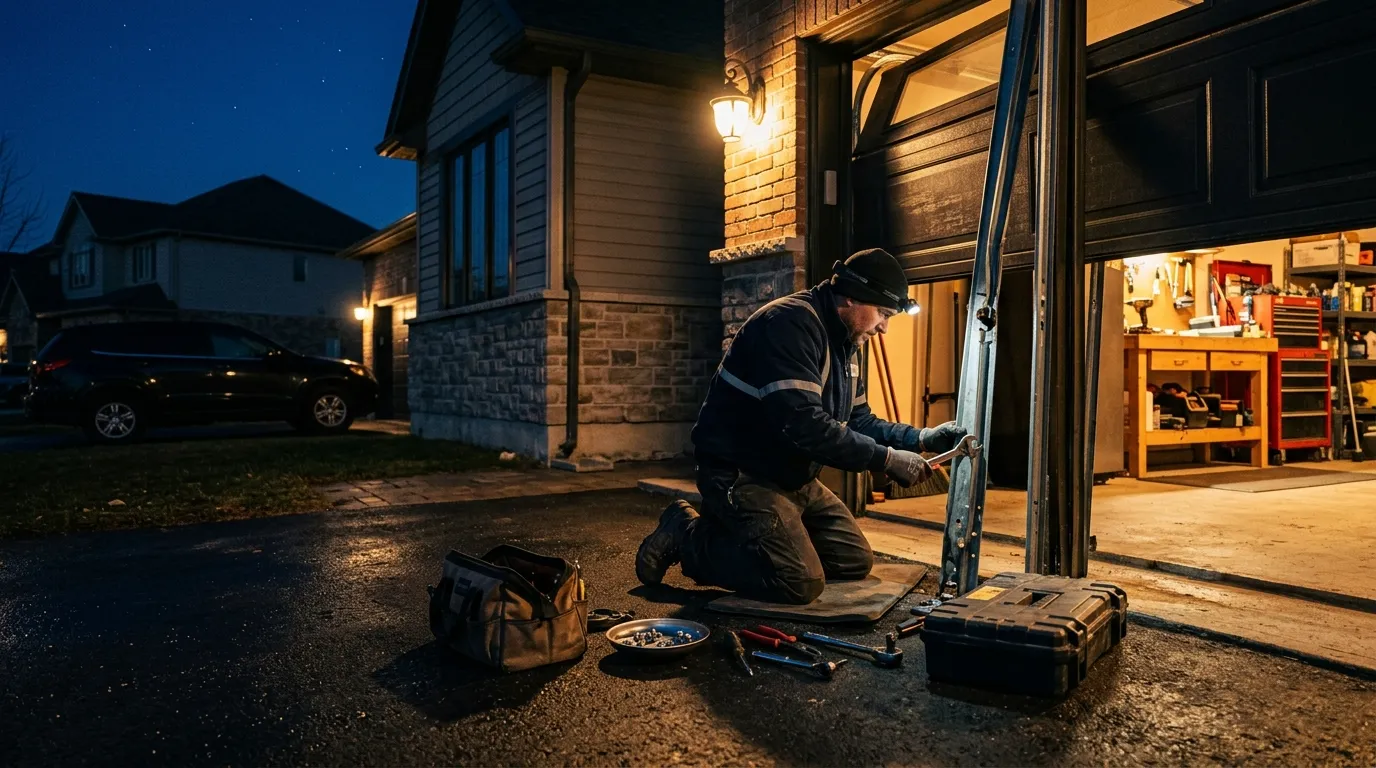
The door won't go up, or it goes up and slams down, or the opener runs but the door doesn't move. Sometimes it's a loud bang from the garage before anything else happens - that's usually a torsion spring letting go. Other times it's slower: the door gets heavier to lift by hand every month, rollers grind in the track, or the opener strains and reverses partway up.
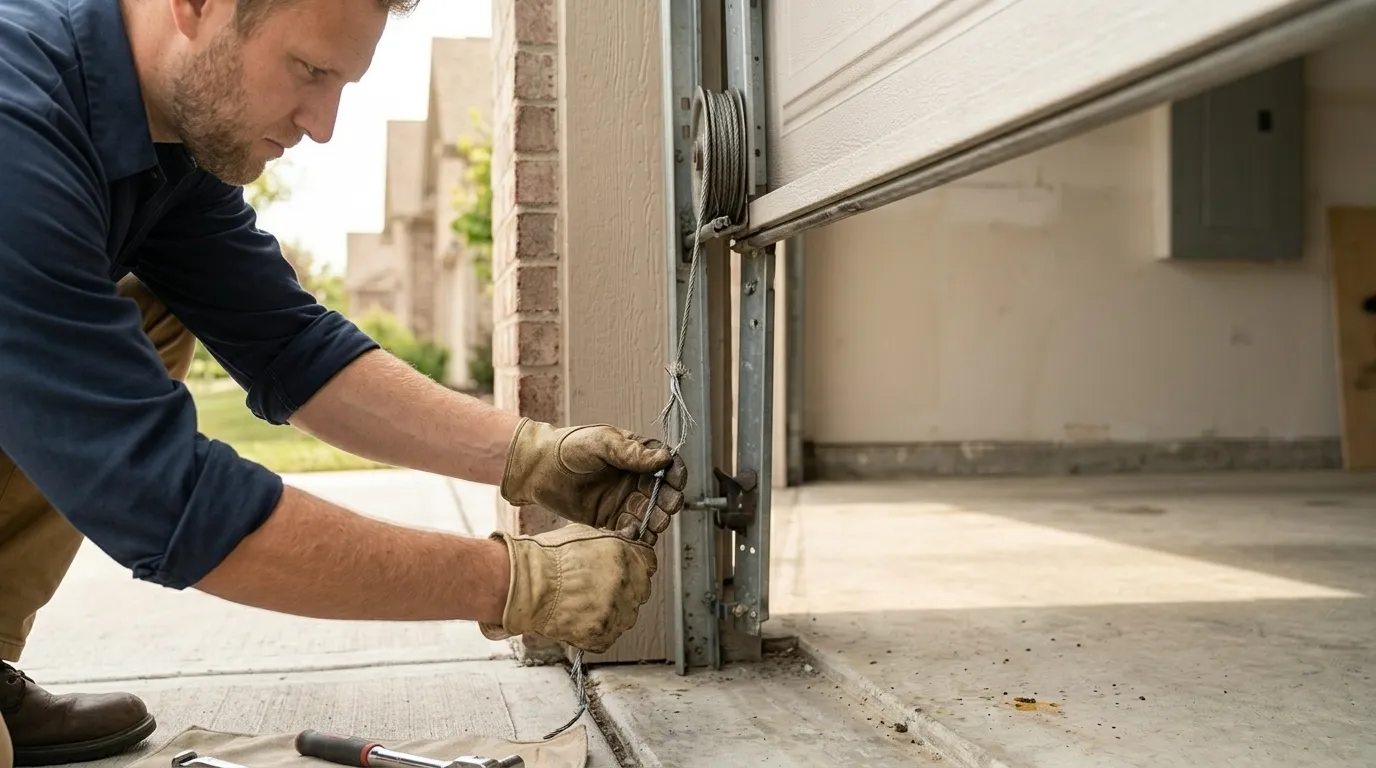
Most of the calls we get in Brownsville are one of these three: a broken torsion spring, a cable that's frayed or jumped its drum, or an opener that's fighting hardware it was never sized for. The reason it's usually one of these three and not something exotic comes down to what's actually installed in this area's garages - a lot of it dates to the same building wave, and a lot of it is original.
If your door makes a metallic pop and won't budge, don't force it with the opener. That's how a cable snaps or a bottom bracket tears loose, and that turns a spring job into a bigger repair.
What You Pay
We don't have a flat number to hand you here, and we'd rather say that than make one up. A broken spring on a standard door costs less than a bent track, a bad cable, or an opener that needs replacing outright - and where your door falls depends on what's actually failed and what's still good underneath it.
What we can tell you: in a service area where median household income runs around $55,387, most of the calls we take are repairs, not full door replacements. Owners fix the spring, the cable, or the opener logic board, and the door goes another decade. Full replacement gets suggested when the panels themselves are rusted through or the track is bent beyond adjustment - not before.
We quote the job after we've looked at it, not before. A phone estimate on a spring job is usually close, but a torn cable or a bent track can hide a second problem behind the first one, and we're not going to guess at that over the phone.
What Causes It Around Here
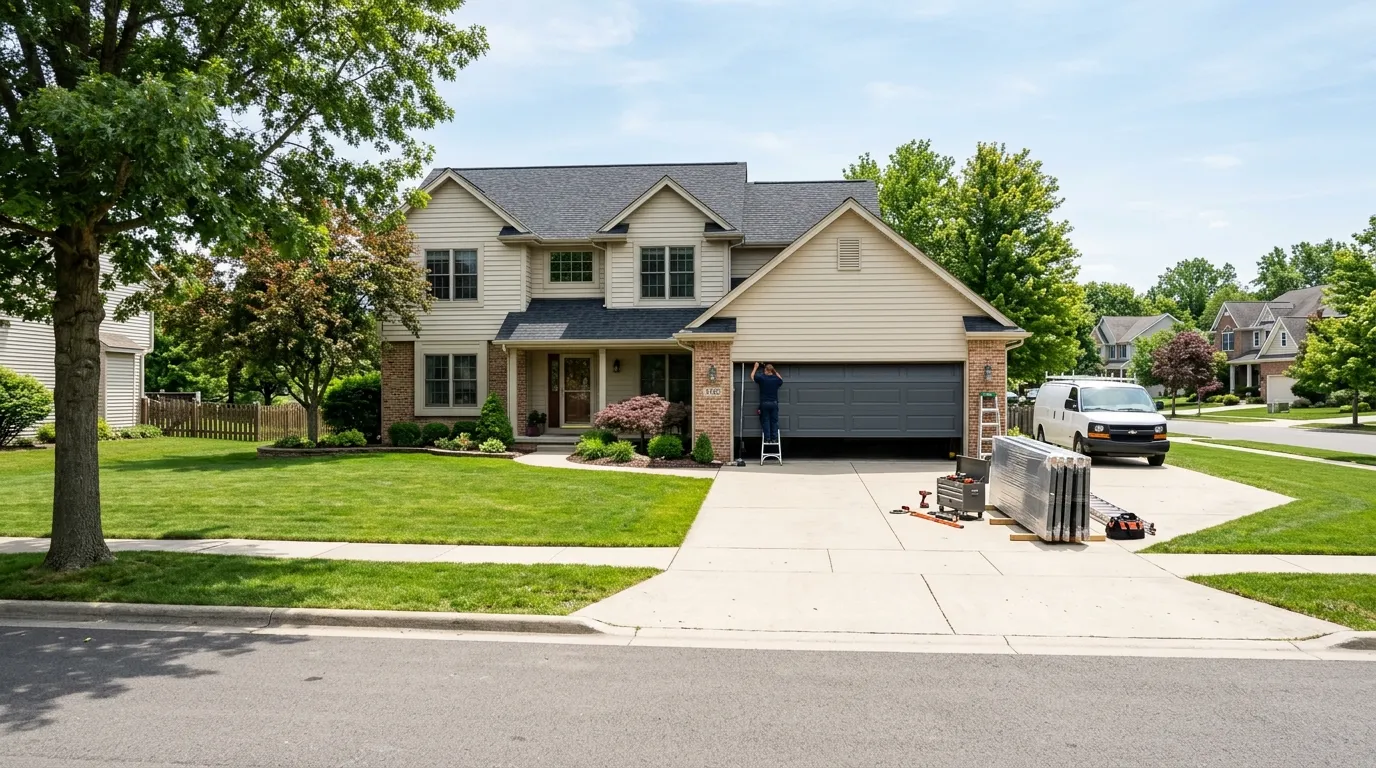
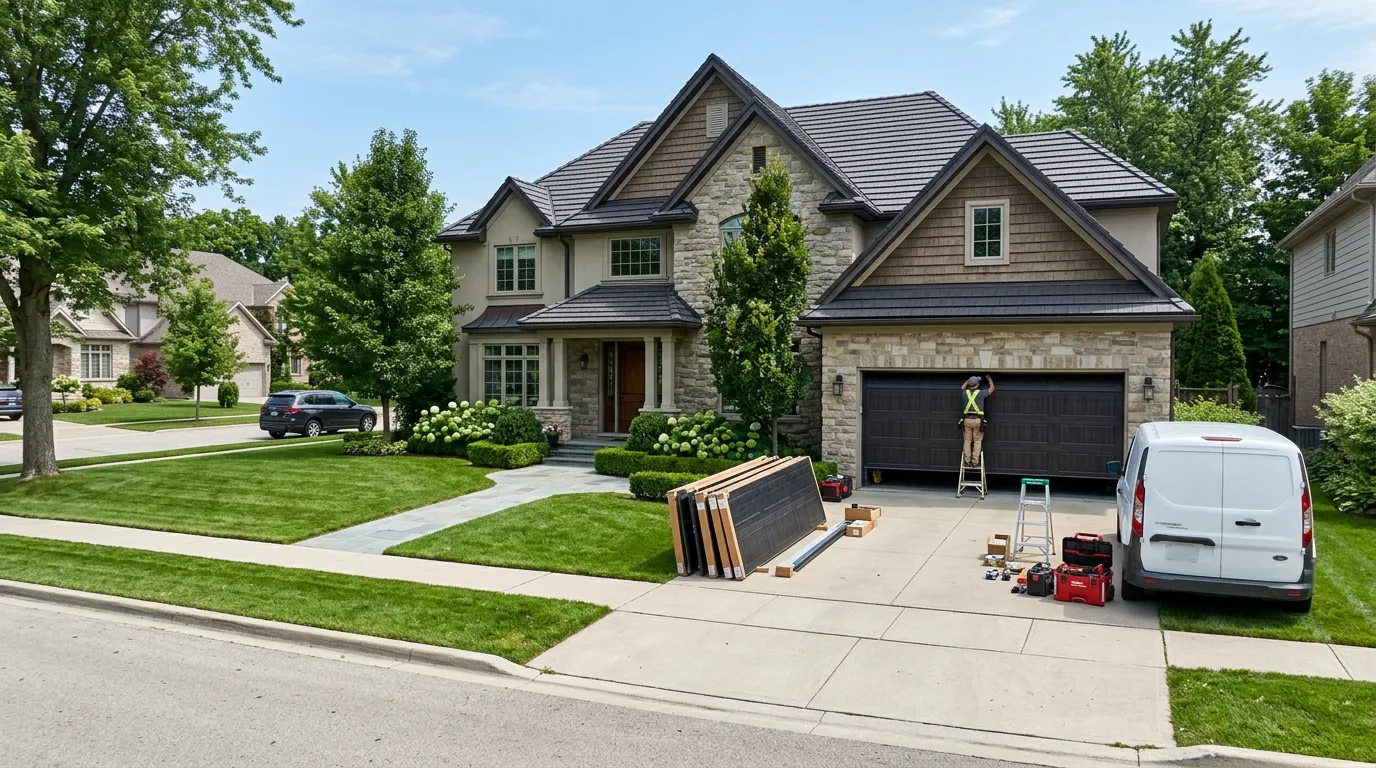
Housing across this service area - Cameron Park, Los Fresnos, Rancho Viejo, Laureles, and the rest of the ten areas we cover - mostly went up between 1983 and 2001, with the median build year landing around 1986. That matters because a lot of those original garage doors are still running their original torsion springs, original rollers, and in some cases original openers.
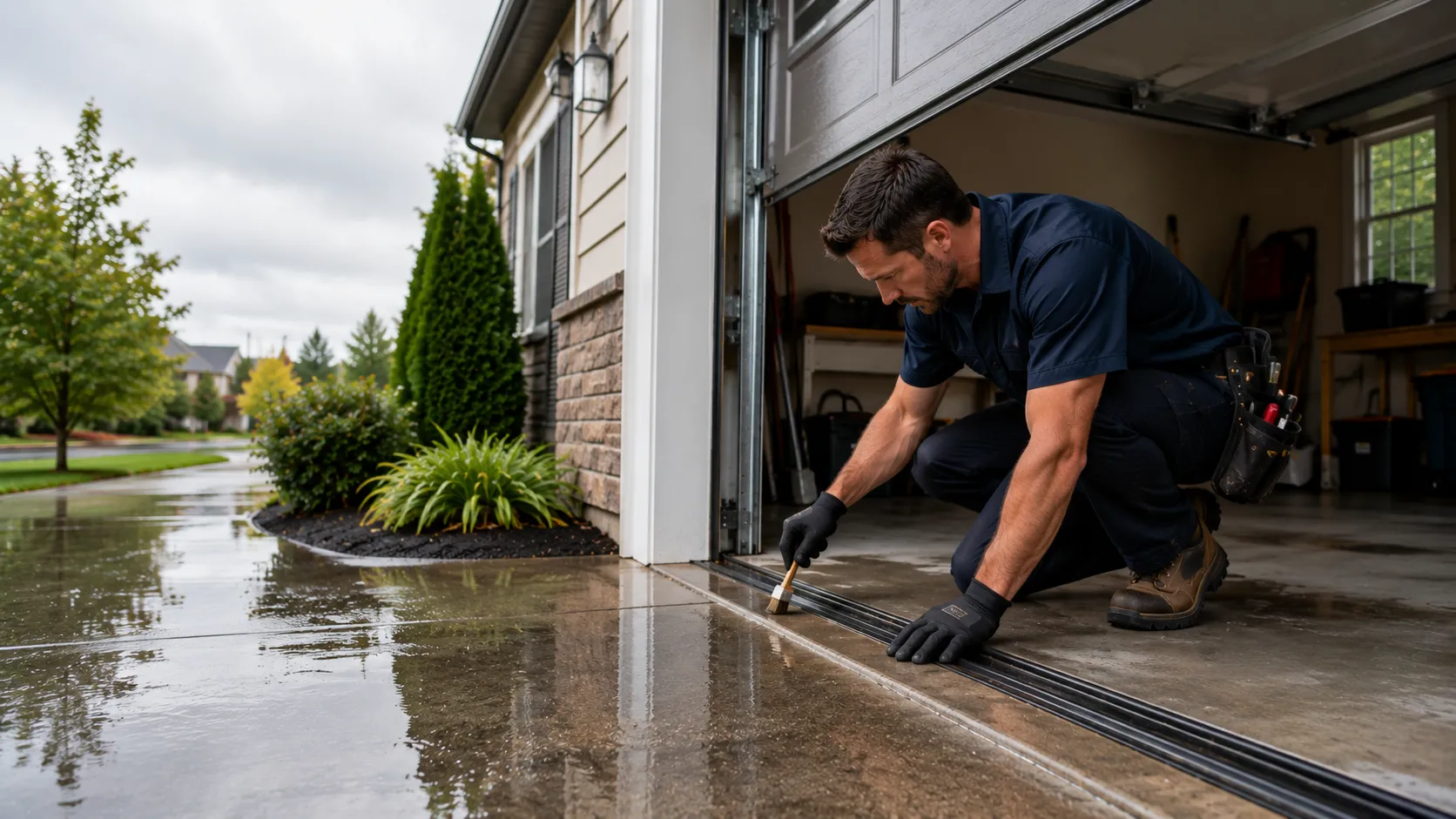
Brownsville sits in a mild temperate band, so we're not dealing with freeze-thaw cracking or hardware seizing in the cold the way colder regions do. What we do get is steady heat and humidity that dries out rubber weatherseal, pits galvanized coating on springs over the years, and lets rust creep into cable ends and hinges faster than a drier, cooler climate would allow. The spring itself doesn't care about temperature much - it fails on cycle count, and a door installed in the mid-80s has had three-plus decades of cycles on it.
So the pattern we see is age-driven, not weather-driven: original hardware from that 1983-2001 build wave finally hitting the end of its life, with humidity accelerating the rust and rubber side of it.
What the Repair Takes
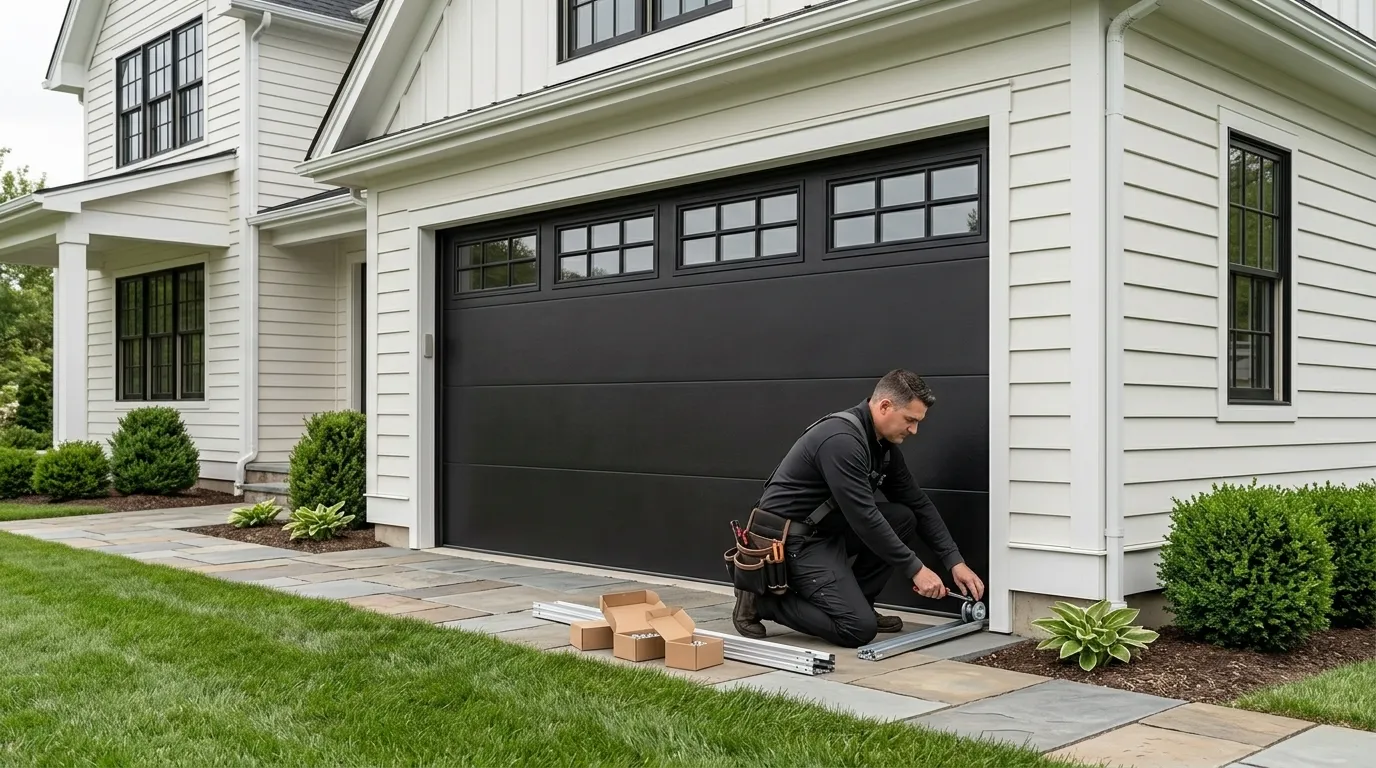
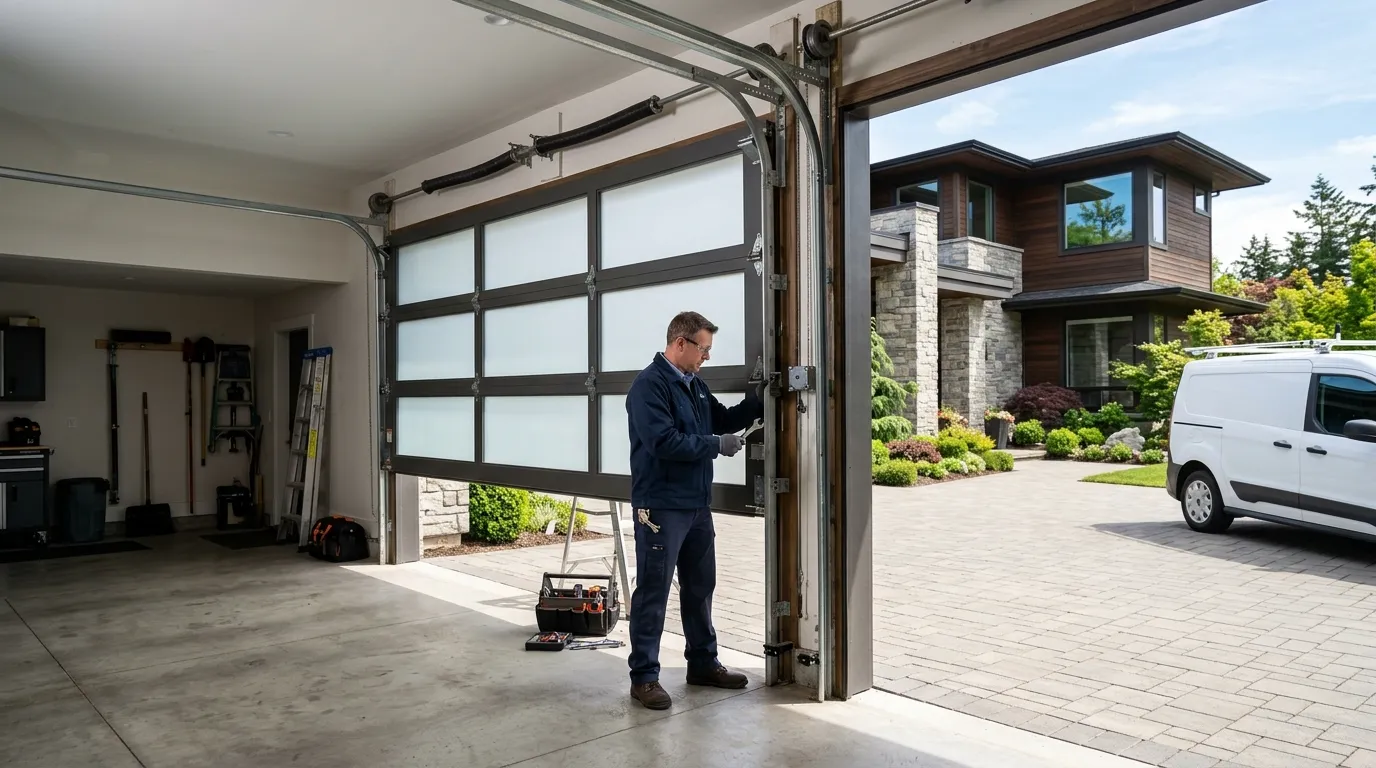
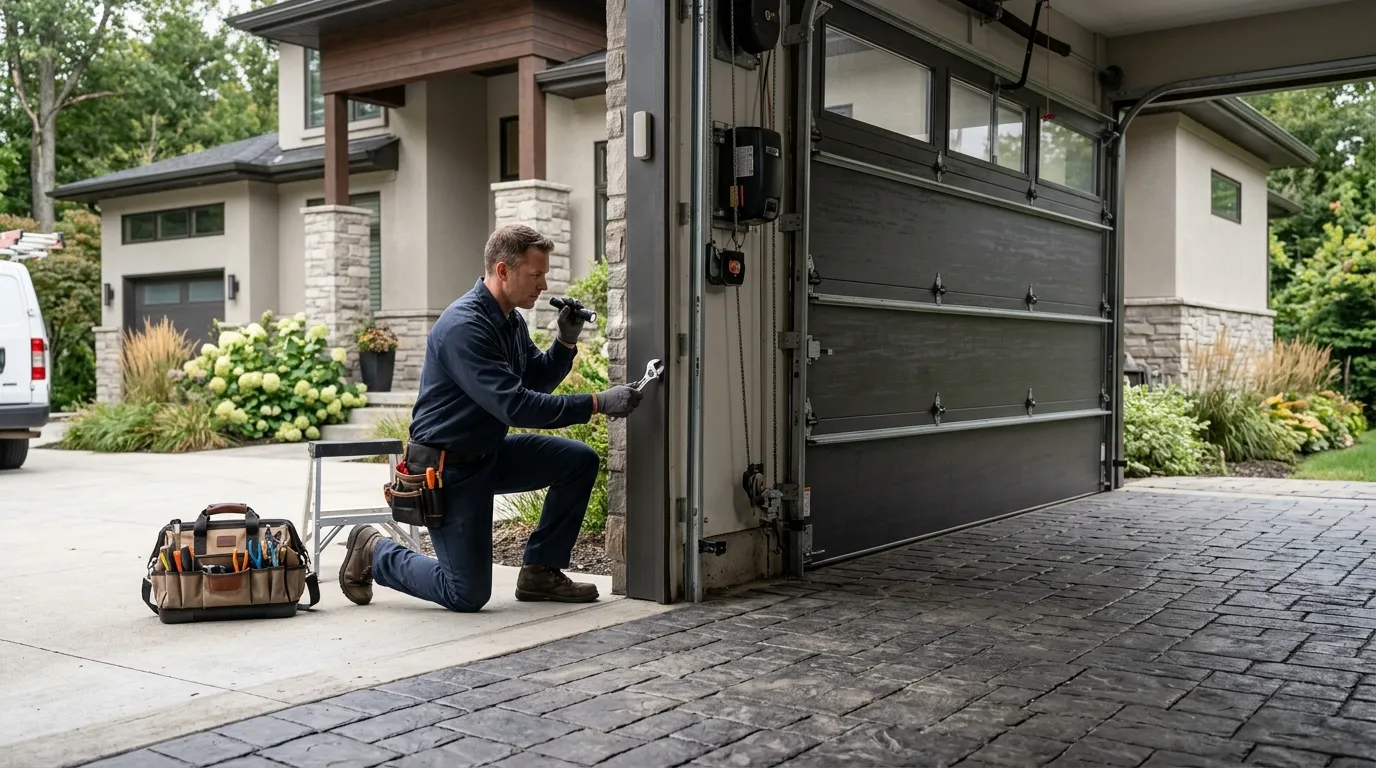
Most spring and cable jobs are a same-visit fix - we bring stock sizes that cover the vast majority of residential doors, including the torsion setups common in the mid-1980s builds around here. We pull the old spring or cable, wind the new one to the correct tension, check the drums and bearing plates while we're in there, and test the door through a full cycle before we leave.
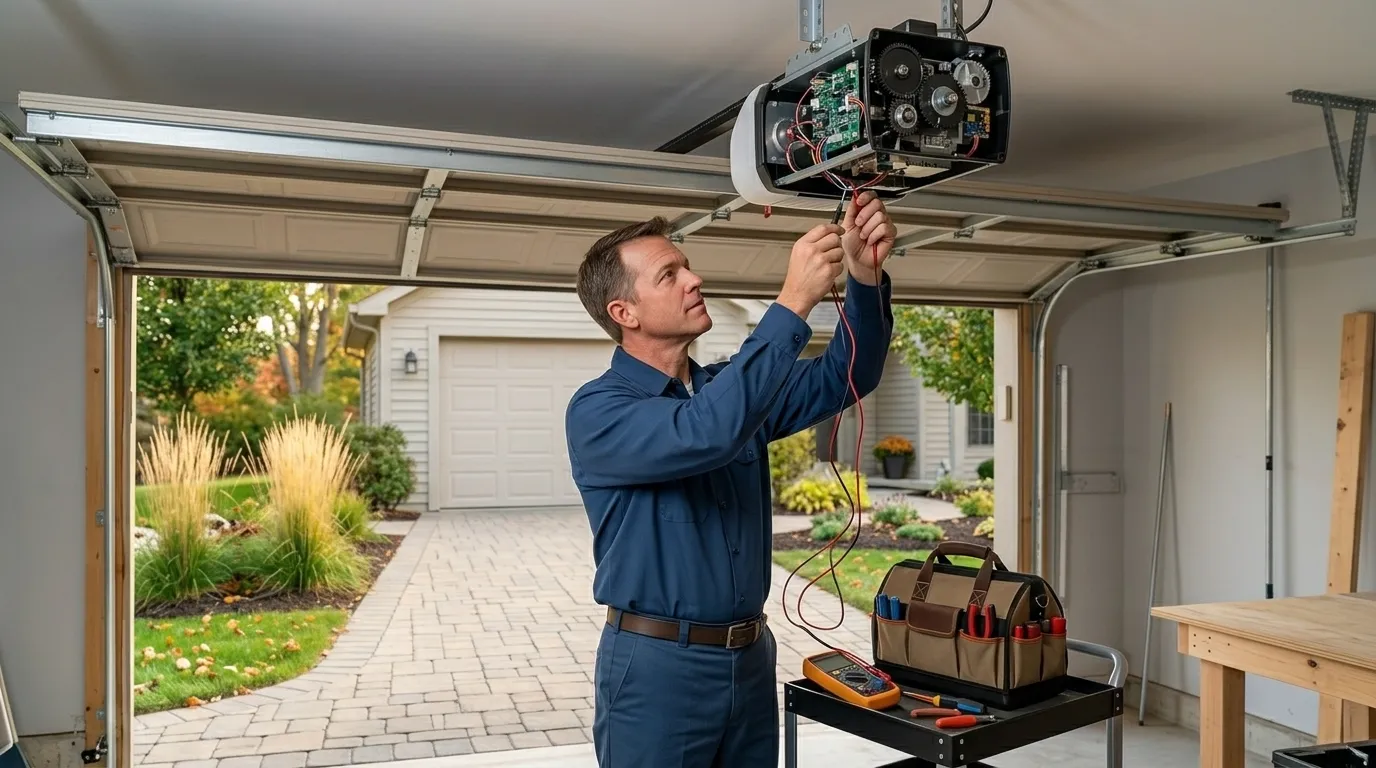
The honest limitation: if your door has an original opener logic board or a spring size that's no longer a standard stock item, that part sometimes has to be ordered, which can push a job out a day or two. It's not common, but it happens more on older original setups than on anything installed in the last ten years.
We also won't recommend a spring-only fix if the track is bent or the bottom panel is cracked - patching one part while the rest of the door is failing just means a second call sooner than you'd like. We'll tell you straight if that's what we're looking at, and let you decide what to do with that information.
How it works
From “it’s stuck” to “it’s fixed”
01
Tell us what’s wrong
Describe the symptom - won’t open, loud bang, opener runs but the door won’t move.
02
On-site diagnosis
A technician tests the door under power and by hand and finds what actually failed.
03
Clear, up-front plan
You get the fix that’s needed and what drives the cost - before any work starts.
04
Repaired & tested
The repair is done, the door is set true and tested, and the work area left clean.
Serving Brownsville, TX - tell us what your door’s doing and we’ll take it from there.
Straight answers about garage door repair in Brownsville. Still unsure? Ask us directly.
Why did my spring break with no warning?
Torsion springs fail by cycle count, not by a single event, so there's rarely a warning beyond gradual heaviness in the door. A lot of the springs failing now in this area are original to houses built in the 1983-2001 wave, meaning they've simply run out their rated life.
Does Brownsville's climate affect garage door parts?
Yes, though not through freezing. The mild temperate climate here doesn't crack hardware with cold, but steady heat and humidity dry out rubber seals and accelerate rust on cables and spring coatings faster than a drier climate would.
Is it cheaper to repair or replace my door?
It depends on what's actually failed. A broken spring or cable is a repair. A rusted-through panel or a badly bent track often costs more to patch than to address properly. We look at the door before quoting either direction.
How fast can someone come out?
We don't have a fixed response time to quote here, so call and we'll tell you what's available same day.